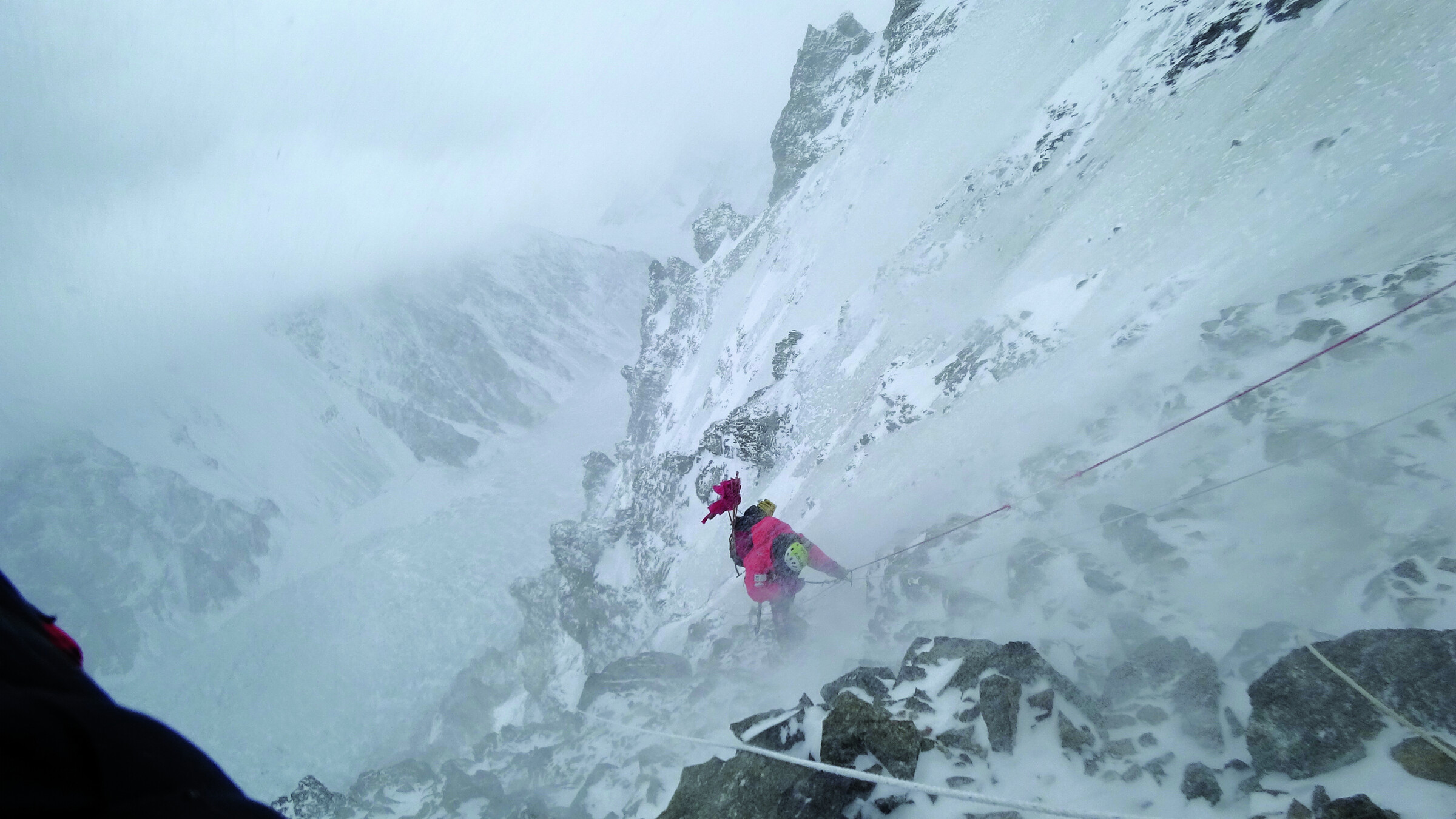
Meaningful firsts are a naturally diminishing resource in high-altitude mountaineering. The last of the world’s 14 highest mountains, those that reach a height of 8,000 meters (26,247 feet) or more, was climbed in 1964. All have long since been climbed without supplemental oxygen, and all have been soloed. The winter summits took longer, but by 2016 all but one of the 8,000-meter peaks had been climbed in winter.
The holdout is K2, at 8,611 meters (28,251 feet) the second-highest mountain in the world and the most challenging of all the high peaks. That makes a winter ascent of K2 a rare double superlative: the world’s most formidable mountain, in the most unforgiving season. And that’s made this last great prize the object of considerable national effort, recalling the early days of Himalayan climbing.
The prize is especially dear to Polish climbers, who have been chasing winter 8000ers for three generations. “Here in Poland we say that scaling K2 in winter is like putting somebody on the moon,” said Polish
2,500 words to go
You’re just getting to the good part.
This story — and 42 issues of them — opens with a subscription.
Either one picks up right where you left off.
Join 7,000+ readers · Independently owned · Since 2008
Already a subscriber? Sign in