Three Square
A classically trained chef turned backpacking food entrepreneur crafts Japanese- and Southeast Asian-inspired meals for fall days, whether cool or warm
Hawaiian Roll Breakfast Sliders
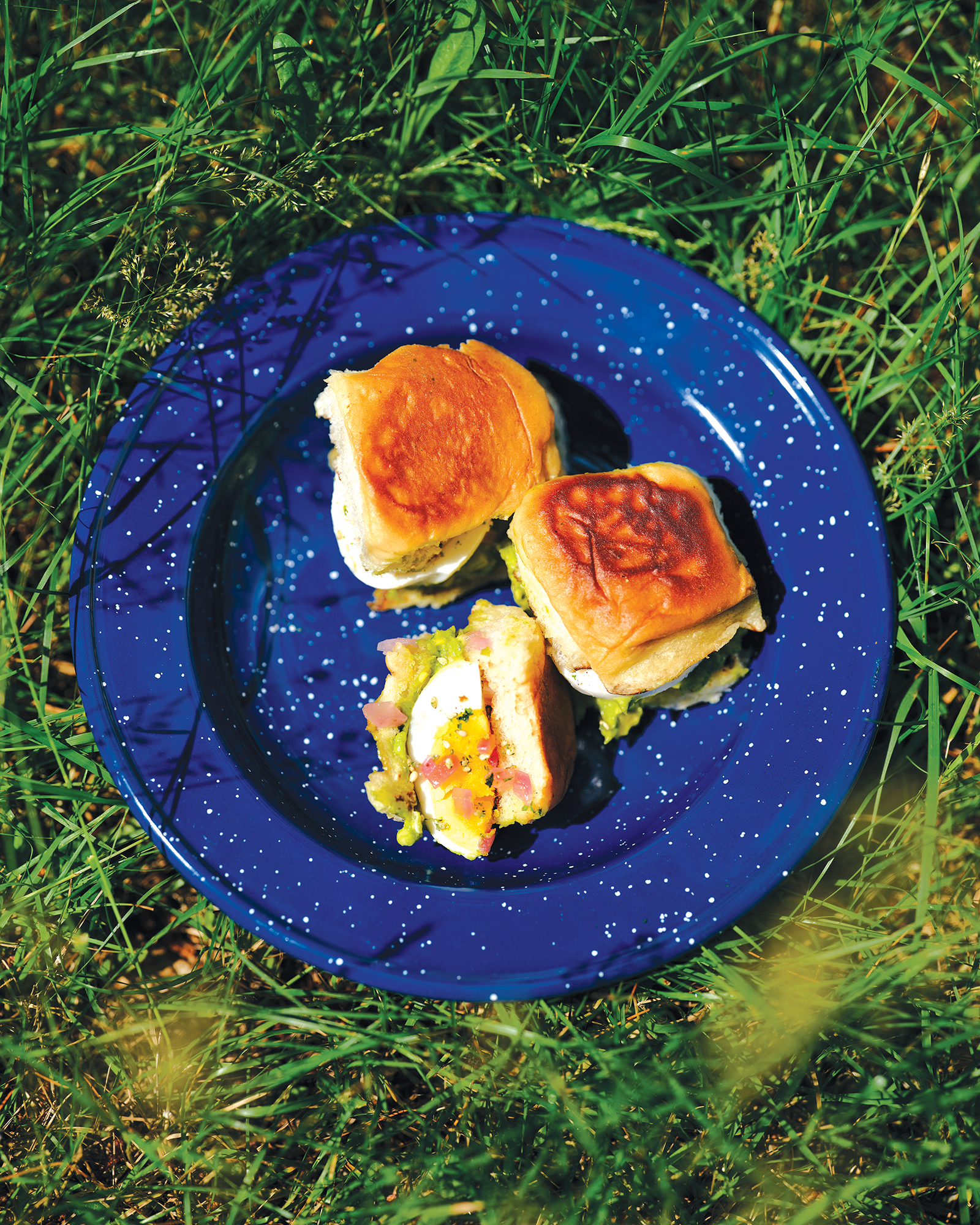
Breakfast sandwiches are often greasy, which doesn’t always sit well when hoofing it over a high-altitude pass. These vegetarian sliders, stuffed with mashed avocado, are every bit as satiating as breakfast sammies loaded with meat and cheese—but with the good fat of avos. Furikake seasoning blends sesame seeds, fish flakes, seaweed, and salt for a delightfully savory flavor; it’s available at most well-stocked grocery stores.
- ½ cup diced red onion
- ½ cup unseasoned rice wine vinegar
- 1 teaspoon sugar
- ½ teaspoon salt
- 6 hard-boiled eggs
- 2 ripe avocados
- 1 teaspoon Furikake seasoning
- 12-pack of Hawaiian sweet rolls
- 1 tablespoon unsalted butter
- At home: Start by pickling the red onions. In a small container, add the rice wine vinegar and the salt and sugar to the diced onions. Cover and leave at room temperature for 24 hours.
- At camp: Peel the hard-boiled eggs, then slice each of them lengthwise into 4 pieces. Set aside. In a bowl, mash the avocados. Add the Furikake to the avocado and mix well.
- Remove sweet rolls from packaging and, keeping the sheet of rolls intact (don’t separate them into individual rolls), cut the sheet in half. In a sauté pan, on medium-high heat, melt half the butter. Don’t let the butter brown. Place the bun tops, cut-side down first, into the pan. Cook until golden brown and turn over and do the same on the other side. Repeat for the bottom buns.
- To assemble the sliders, spread the mashed avocado over the toasted bottoms of the rolls. Lay the egg slices over the avocado mash. Remove the onions from the vinegar, draining the excess liquid. Layer the onions over the eggs. Sprinkle a bit more of the Furikake seasoning over the sliders. Add the roll tops then cut into 12 equal sliders.
Soba Noodle Salad
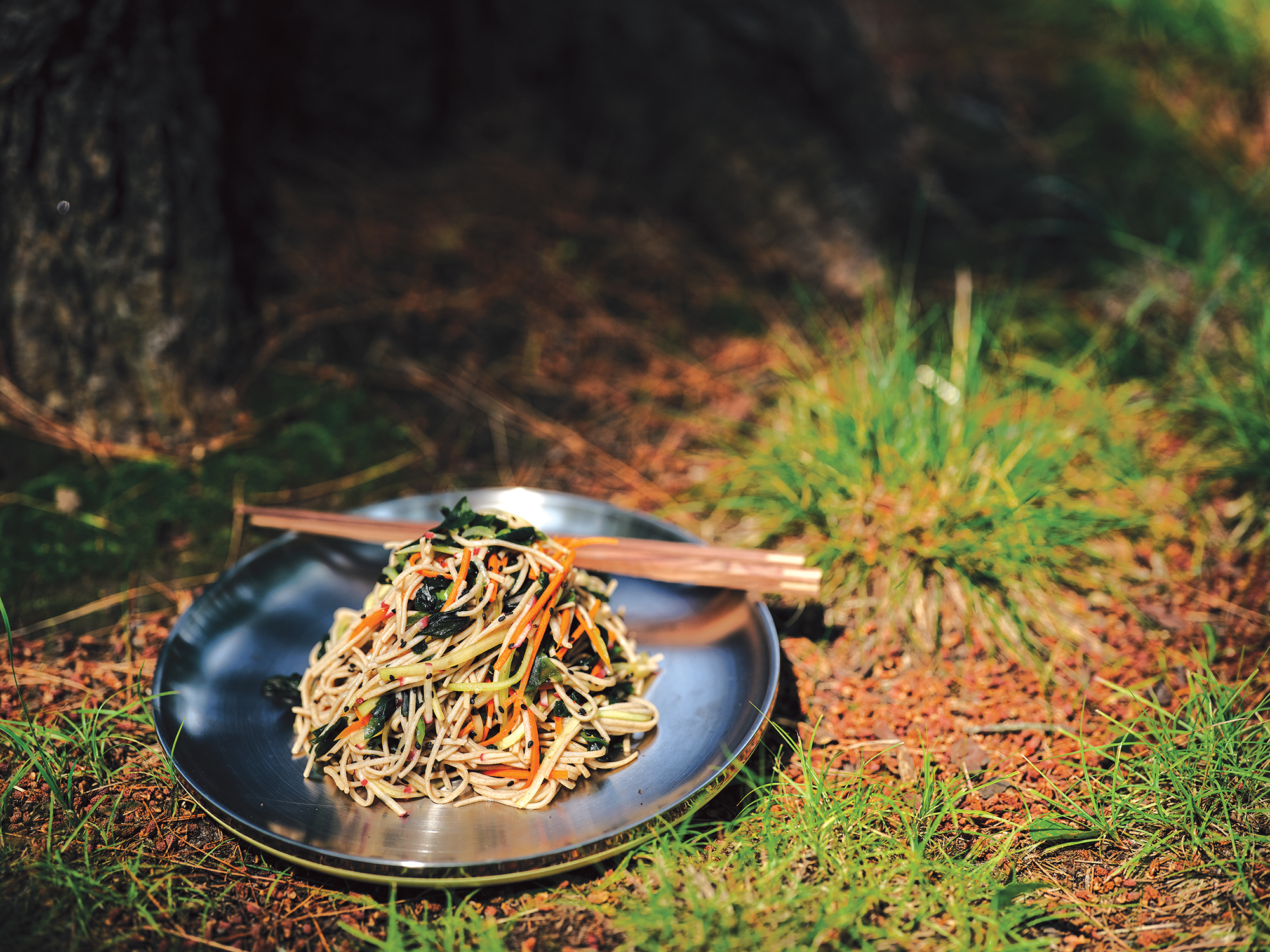
Cool, fresh, and filling, this salad is a fantastic lunch choice for whatever kind of day autumn delivers. Prep for the vegetables can be done at home, with the prepared ingredients sealed in an airtight container. Dashi is a staple in Japanese cooking, and while you can make your own with the quick version here, dashi powder or even liquid dashi can often be found in grocery stores. Wakame is a common edible seaweed, also easily found.
- 6 ounces dashi (see recipe below)
- 2 ounces soy or tamari sauce
- 2 ounces mirin rice wine
- 4 ounces grapeseed oil
- 1 teaspoon wasabi paste
- 8 ounces soba noodles
- 3 medium carrots
- 2 European cucumbers
- 12 radishes
- ¼ cup dried wakame seaweed
- 1 bunch scallions
- 2 teaspoons black sesame seeds
- Togarashi seasoning to taste
- If Making Dashi
- 1 quart water
- 15 grams dried kelp
- 15 grams bonito flakes
- Bring a pot of salted water to boil and cook the soba noodles until your desired degree of softness. Drain, then cool the cooked noodles with cold water.
- While the noodles are cooling, peel and julienne the carrots and cucumbers, then remove the tops and bottoms of the radishes and julienne those, too. Slice the green parts of the scallions thinly on a bias; discard or save the white parts for another use.
- Combine the dashi, mirin, grapeseed oil, and wasabi paste in a large bowl. Add the cooked and cooled noodles, the julienned veggies, and season with sea salt. Toss everything well, then add a sprinkling of Togarashi to serve.
- Dashi: Fill a saucepan with the water, add the dried kelp, bring to near boiling, then remove from heat. Add bonito flakes, then set steep for 15 minutes. Strain, then refrigerate. Will keep for a week.
Curried Smoked Salmon Chowder
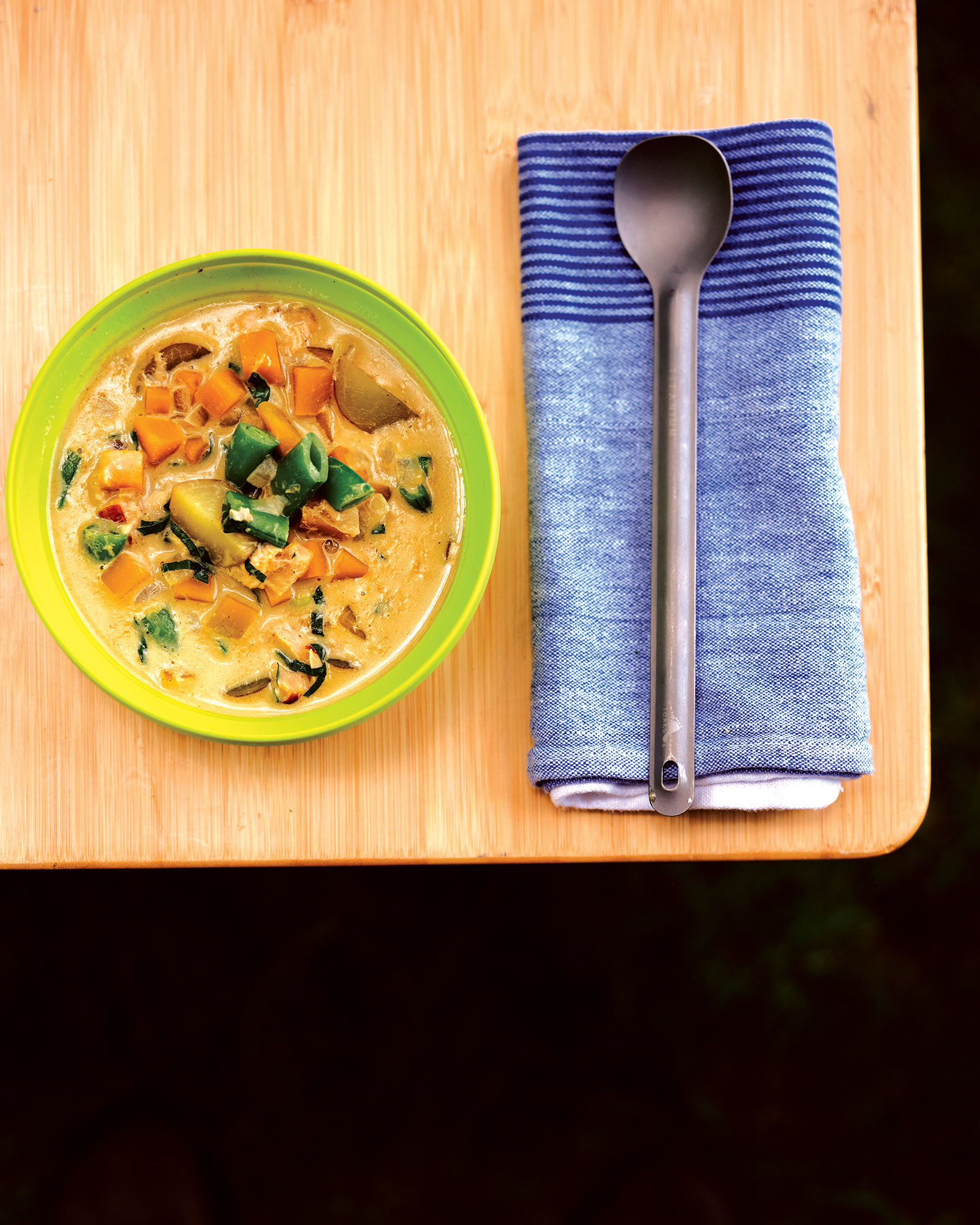
This coconut milk-based chowder satisfies without weighing you down. It has all the velvety smoothness of a typical New England clam chowder, but without the heavy cream. While the base is cooking, you’ll have time to chop some of the vegetables, but much of the prep can be done ahead of time if you prefer. Curry paste heat levels vary by brand, so adjust the amount of paste as necessary.
- 2 medium onions, diced
- 1 tablespoon grapeseed oil
- 1 large garlic clove, finely chopped
- 2 ounces green curry paste
- 2 cans coconut milk
- 1 lemongrass stalk
- ¼ cup fish sauce—or to taste
- 2 teaspoons sugar
- 2 cups dashi
- 15 small red potatoes, quartered
- 8 ounces smoked salmon
- 1 small kabocha squash, diced
- 2 cups sugar snap peas
- 20 leaves Thai basil, chopped
- Salt and pepper to taste
- In a large saucepan or pot, add the oil and sauté the onions on medium heat until translucent. Add the garlic and cook for 5 minutes, stirring so the garlic doesn’t burn. Add the curry paste, stir, and cook 2 to 3 minutes with the onions and garlic. Add the coconut milk and bring to a simmer, but do not boil.
- Add the potatoes, lemongrass, fish sauce, sugar, and 1 cup of dashi. Cook for 10 minutes until the potatoes are medium soft; do not cook through.
- Meanwhile, trim the snap peas and cut into inch-long pieces. Remove the skin from the smoked salmon (if present) and pull apart or chop the salmon into bite-sized pieces.
- Once the potatoes are softened, add the salmon and squash to the pot and cook for 5 minutes. Add the snap peas and basil, then season with salt and pepper to taste. Simmer for 10 more minutes, thin with remaining dashi if the chowder is too thick. Serve in deep bowls.
42 issues. 11 years. Independently owned. Printed on 70lb uncoated paper with a soft-touch cover, solar-powered, and shipped in a brown paper envelope. Free domestic shipping.