Three Square
Fresh Off the Grid takes the family car-camping trip up a notch: blueberry-banana pancakes, BBQ jackfruit sandwiches, and a camp stove paella
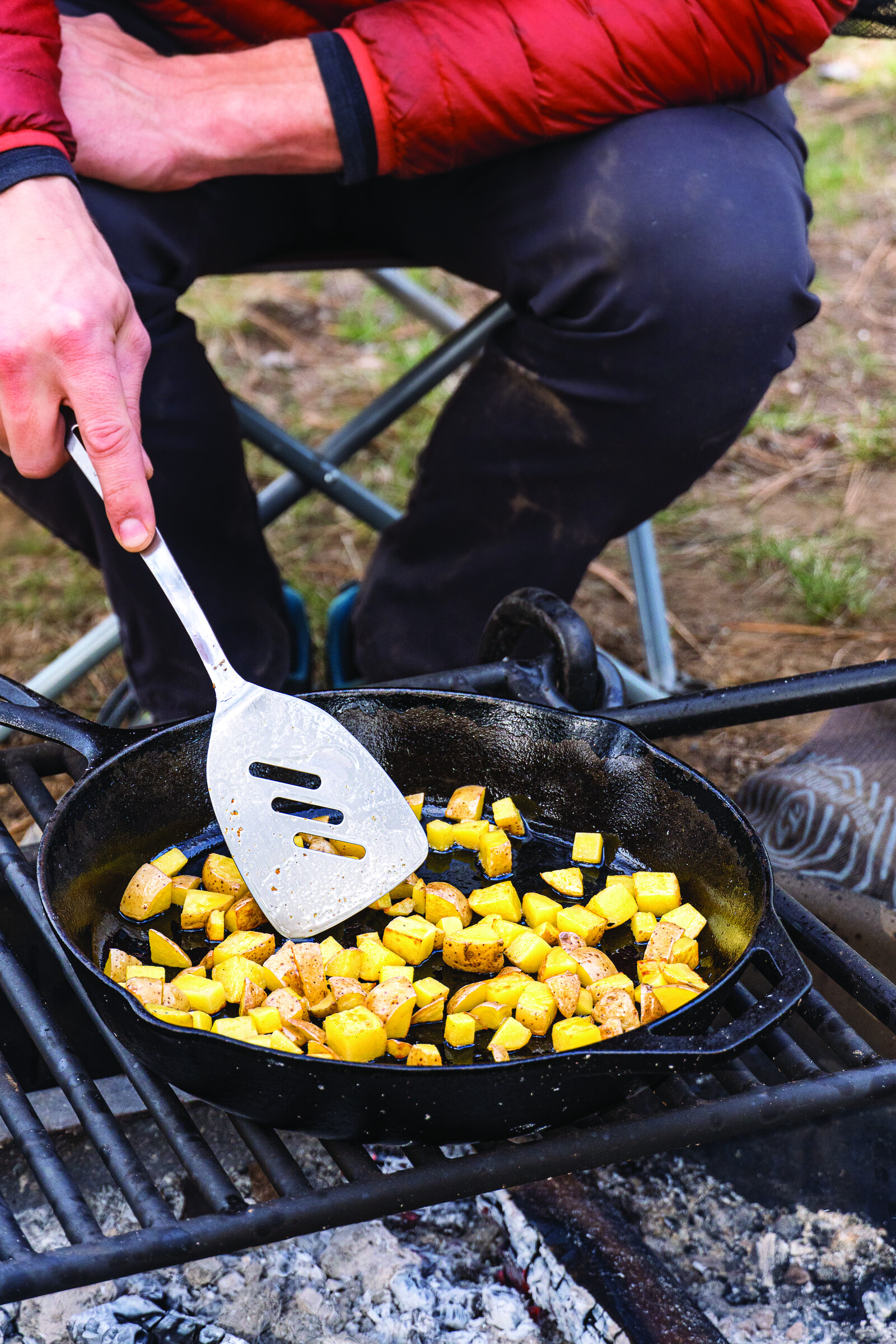
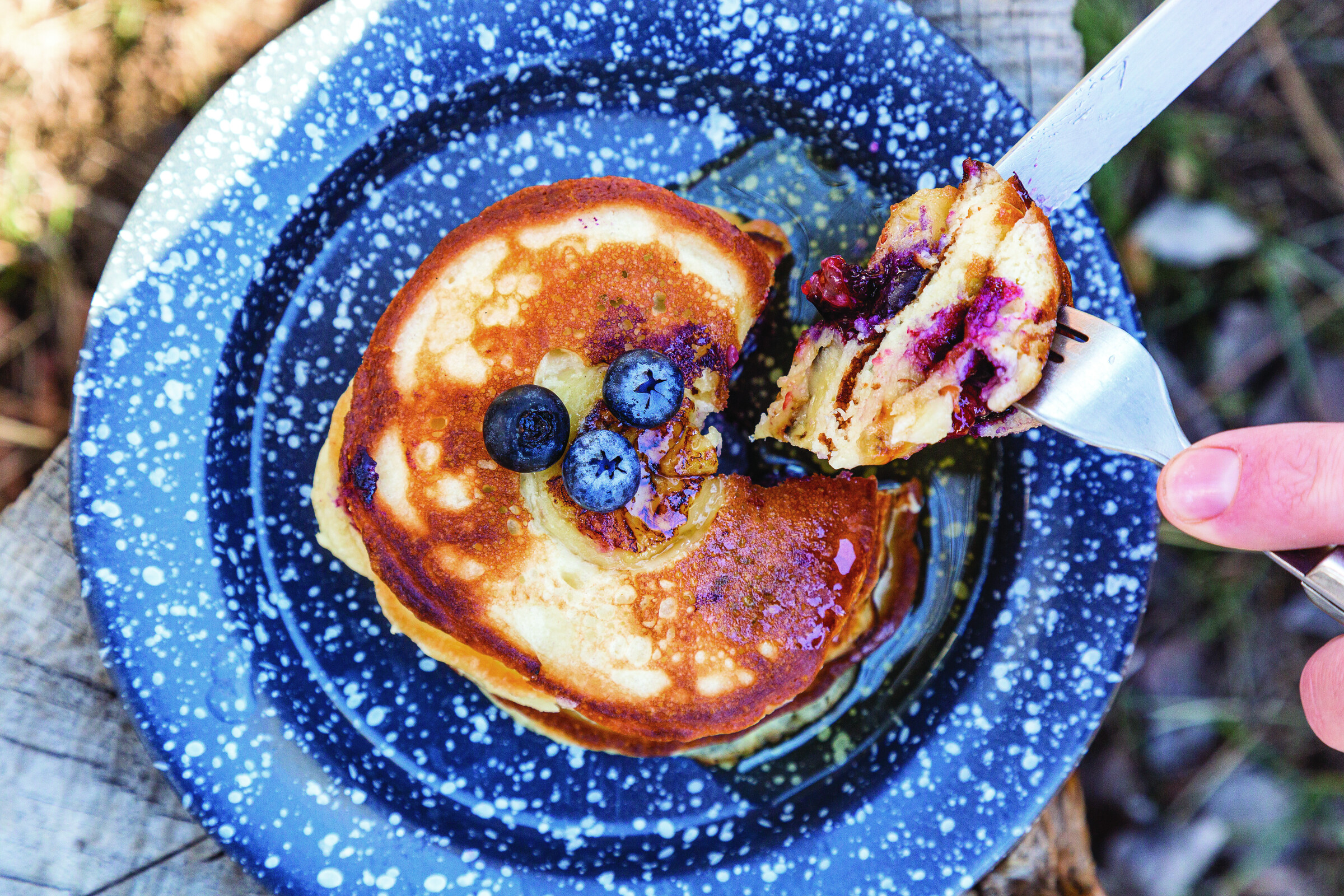
Blueberry and Banana Pancakes
Though they seem simple, pancakes can go wrong in a surprising variety of ways, especially in camp. Thick, unevenly cooked, scorched onto the pan—we’ve seen (and done) it all. Don’t let that stop you. Anyone can make soft, fluffy camp pancakes with perfectly crispy edges. This recipe will show you how to succeed every time.
A well-seasoned cast-iron skillet can work, but a nonstick skillet is the ideal choice for pancakes. The conductive metal (usually aluminum) offers better heat distribution, counteracting the hot spots caused by undersized camp stove burners.
Our recipe produces soft and fluffy pancakes, but the secret to crispy edges comes from using oil. That’s right, oil. Pancakes should be cooked at medium heat, and while we love the taste of butter, its smoking point is too low. We recommend coconut oil, which tolerates more heat and imparts a nice, subtle flavor. The key is to use plenty of it. We aim for around one tablespoon per batch of pancakes. You want to be able to roll the oil around in the pan so it coats the edges of your batter.
While some cooks serve fruit fresh on top, we prefer to cook the blueberries and bananas with the pancakes. This produces a slight caramelization on the banana and gives the blueberries a saucy, jam-like quality.
The trick is how you add the fruit. If you just dump everything into the bowl of batter, it will sink to the bottom. A proper blueberry-banana pancake must be assembled by hand. We place a few banana rounds on the skillet, pour the batter on top of them, then sprinkle the blueberries on top of the batter. This allows for even distribution of fruit and a bit of artistic expression if you’re so inclined.
- 1 cup flour
- 2 tablespoons sugar
- 1½ teaspoon baking powder
- ½ teaspoon salt
- 1 cup milk
- 1 egg
- 1 banana, sliced into ¼-inch pieces
- ½ cup blueberries
- Coconut oil
- To Serve
- Maple syrup, jam, butter, honey, or agave
- At home: Combine the flour, sugar, baking powder, and salt in a small sealed container.
- In camp: Whisk the egg and milk together in a bowl with a fork. Add the dry ingredients and stir to combine, taking care not to over-mix (some small lumps in the batter are okay).
- Heat a nonstick skillet on your camp stove over medium-low heat. Add one tablespoon of coconut oil to the skillet and swirl to coat the pan. Place a few banana slices in the pan, then cover with one-quarter cup of batter per pancake and sprinkle some blueberries onto each cake. Cook until the tops begin to bubble and the sides are set, two or three minutes. Flip the pancakes and cook the other side until golden. Repeat with the rest of the batter, adding oil to the pan as needed.
- To serve, stack the pancakes and top with maple syrup, jam, butter, honey, or agave.
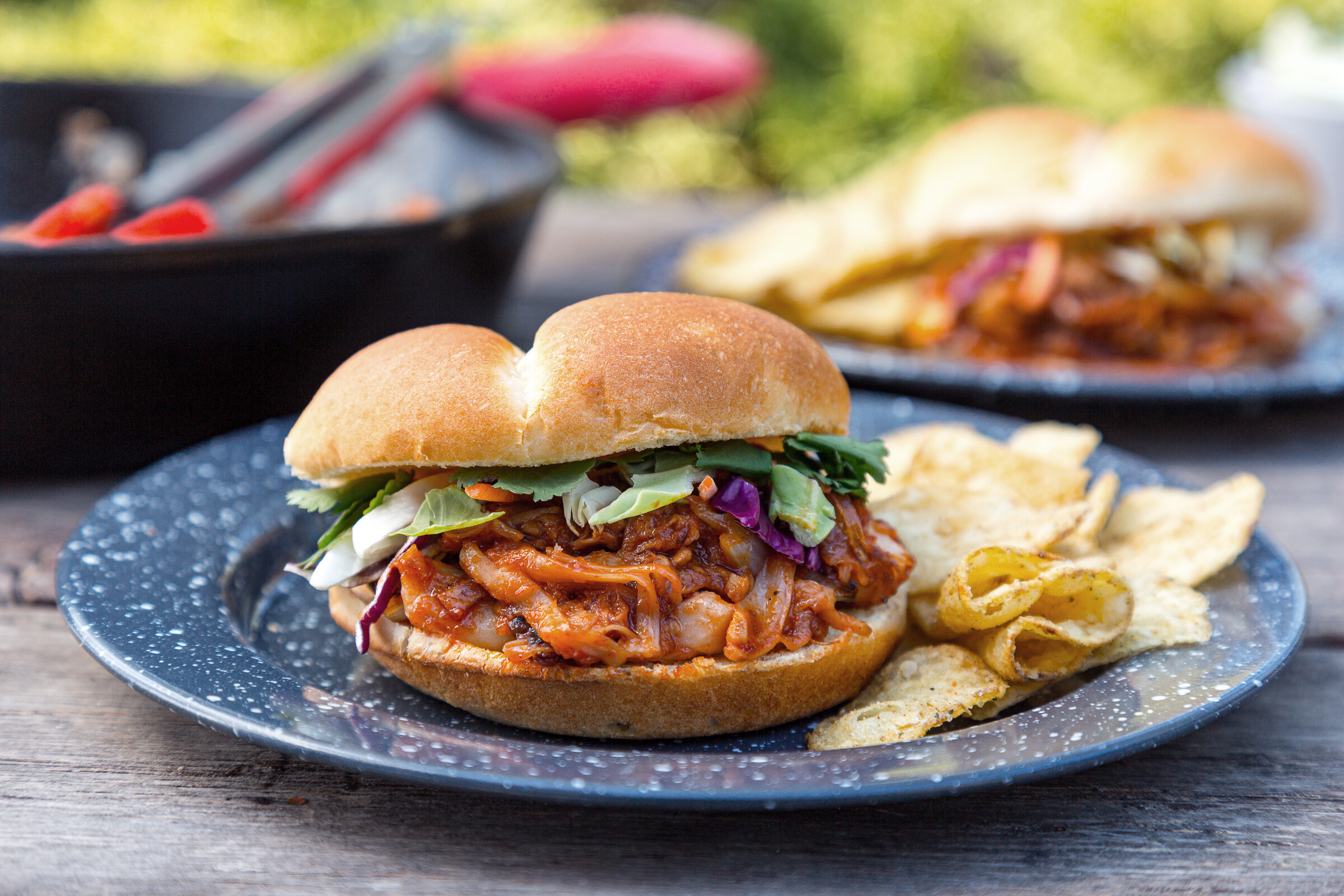
BBQ Jackfruit “Pulled Pork” Sandwiches
This vegan alternative to a pulled pork sandwich makes a great one-skillet lunch, and while pulled pork takes hours of slow-roasting, this jackfruit version can be ready in 20 minutes.
Your favorite store-bought BBQ sauce will work fine, but we think homemade is worth the extra effort. Ours is made with standard pantry ingredients and can be prepared in camp or at home. Just pour the tangy-sweet elixir into a sealable container and bring it in your cooler.
Canned green jackfruit can be found at Trader Joe’s and many natural grocers. Drain the brine and blot the fruit dry using a paper towel. The drier you get it, the better it will crisp. There will be some tough fibrous bits, which you should discard.
We like to add a simple slaw to give the sandwiches a crunchy texture. Store-bought slaw or thinly sliced cabbage mixed with mayo will do.
While largely a matter of personal preference, the bun is also critical. We find sliders too small and larger hamburger buns too bready, so we opt for Hawaiian rolls. Medium-sized, soft, chewy, and slightly sweet, they pair perfectly with the tangy BBQ sauce.
- 20-ounce can green jackfruit, drained and shredded
- 1 medium yellow onion
- 2 tablespoons oil
- ½ teaspoon sea salt
- BBQ Sauce
- ¼ cup ketchup
- 1 tablespoon vegan Worcestershire sauce
- 1 tablespoon maple syrup
- 1 or 2 tablespoons vinegar-based hot sauce
- ½ teaspoon salt
- ½ teaspoon smoked paprika
- ¼ teaspoon garlic powder
- ¼ teaspoon onion powder
- To Serve
- 2 buns
- Shredded cabbage or store-bought slaw
- Fresh cilantro
- At home: Combine all the BBQ sauce ingredients in a small sealable container and pack it in your cooler.
- In camp: Drain the jackfruit and, using clean hands, shred the pieces, removing any tough bits. Dice the onion.
- Heat the oil in a skillet over medium heat and add the jackfruit and onion. Sauté until it begins to turn golden, then add one-half teaspoon salt. Cook until the jackfruit begins to brown on the edges, then add the BBQ sauce and toss to coat.
- To assemble, divide the jackfruit filling between the two sandwich buns, then top with the slaw and cilantro.
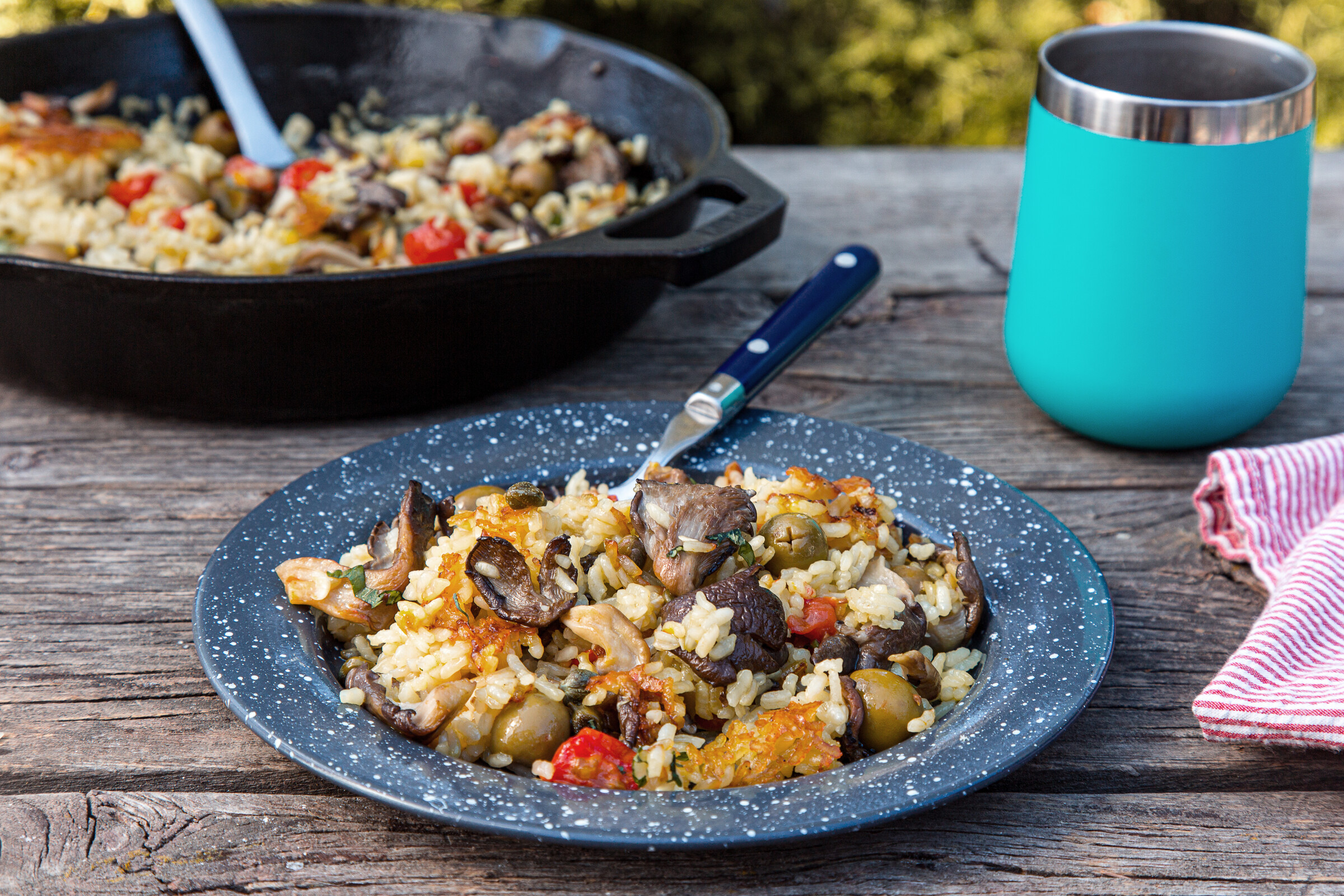
Camp Stove Paella
This plant-based version of the classic Spanish rice dish uses an assortment of salty and briny ingredients to imitate the seafood-forward flavor profile of the original. The result is a vegan meal that’s ideal for camping.
While paella is something of a freewheeling art form, we insist on two things: saffron and socarrat. For us, the aroma of saffron is intrinsically linked to paella, while the crispy bottom crust of rice—the socarrat—is an essential element of the dish. Otherwise it’s just rice with stuff in it.
Preparing this meal starts with a burst of activity followed by a long, slow simmer, so prep your mushrooms, garlic, tomatoes, and olives and have your water premeasured. (We like to add our saffron to the water, so it carries the flavor throughout the dish.)
- 3 tablespoons olive oil, divided
- ¼ pound mushrooms (preferably oyster), halved if large
- 3 cloves garlic, roughly chopped
- 1 cup cherry tomatoes, halved if large
- ½ cup Manzanilla olives
- 2 tablespoons capers
- ¾ cup medium grain rice
- 2¼ cups water or broth
- pinch of saffron
- ½ teaspoon salt
- Place a cast-iron skillet on your stove over medium-high heat and pour a tablespoon of oil to coat the bottom of the skillet. Once the oil is hot, add the mushrooms. Sauté until browned, about 5 minutes. Add the garlic and sauté until fragrant, about 30 seconds.
- Add the remaining oil and the rice and cook for 2-3 minutes, stirring occasionally, until the rice begins to become translucent at the ends.
- Pour the water or broth into the skillet and season with salt and a pinch of saffron. Add the capers, cherry tomatoes, and olives and stir well. Simmer undisturbed until all of the liquid is absorbed, 20-30 minutes.
- Toward the end of the cooking time, you will hear the rice crackling—this is your indicator that the socarrat is forming. Cook for a few more minutes to ensure the socarrat has developed (check the center with a spoon to feel the crust forming).
- Remove from the heat and use a sturdy spatula to scrape the socarrat off the bottom of the pan and incorporate it into the dish. Serve immediately.
42 issues. 11 years. Independently owned. Printed on 70lb uncoated paper with a soft-touch cover, solar-powered, and shipped in a brown paper envelope. Free domestic shipping.