Three Square
A honeymoon on the John Muir Trail reminded our chefs what we look for in trail food: calorie-dense, as fresh as dehydrated fare can be, and of course, a variety of texture and flavor. In preparation for backpacking season, here are a few of our favorites.
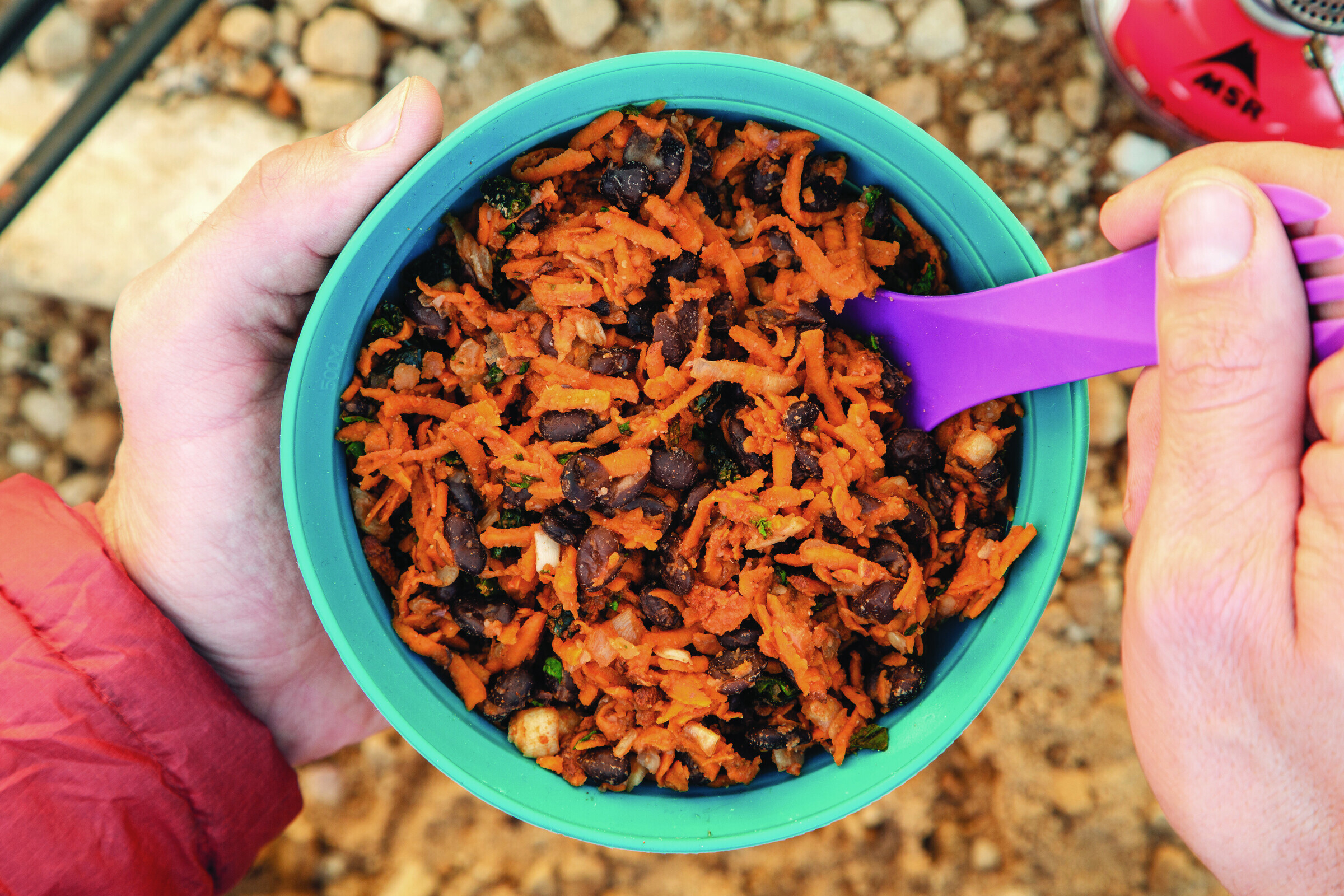
Spicy Southwestern Breakfast Hash
This hearty plant-based breakfast hash is our DIY take on the popular freeze-dried backpacking meal of the same name. We’ve eaten plenty of the prepackaged version and wanted to create a fresher, less-processed variation of our own.
We start with a bunch of fresh ingredients: shredded sweet potatoes, poblano chile peppers, and onions. We spread these on a baking sheet, sprinkle with salt, and place in a 350º F oven to brown the sweet potatoes slightly and remove the raw flavor from the onions and poblano.
Next we transfer the vegetables to the dehydrator, along with a can of black beans and fresh cilantro leaves, and dehydrate overnight. Then we divide the ingredients into two airtight containers and add a medley of spices to each.
In camp, just cover the dry ingredients with water, bring to a boil, cover, and simmer. Then dig into a warm, hearty breakfast hash that’s fresher and a lot less expensive than the store-bought version.
- 3 cups shredded sweet potato
- 1 cup diced onion
- 1 cup diced poblano chile pepper
- 1 can black beans, drained
- ½ cup fresh cilantro
- Per serving
- 2 teaspoons chili powder
- 1 teaspoon smoked paprika
- ½ teaspoon cumin
- ½ teaspoon garlic powder
- ¼ teaspoon salt
- Preheat oven to 350°F.
- Using the large holes on your grater, shred 3 cups of sweet potato. Dice onion and poblano. Spread the sweet potato, onion, and poblano onto two baking sheets lined with nonstick silicone mats and roast for 20 minutes.
- Remove the vegetables from the oven and transfer to dehydrator trays, along with the fresh cilantro and drained black beans, ensuring everything is in an even layer. Dehydrate at 135º F for 8 to 10 hours, or until the vegetables and beans are completely dry.
- Divide the vegetables and beans into two airtight bags or containers, along with 2 teaspoons of chili powder, 1 teaspoon smoked paprika, ½ teaspoon cumin, ½ teaspoon garlic powder, and ¼ teaspoon sea salt in each bag.
- At camp, place the contents of the bag in your cookpot along with just enough water to cover. Bring to a boil, then cover and reduce to a simmer for 8 minutes.
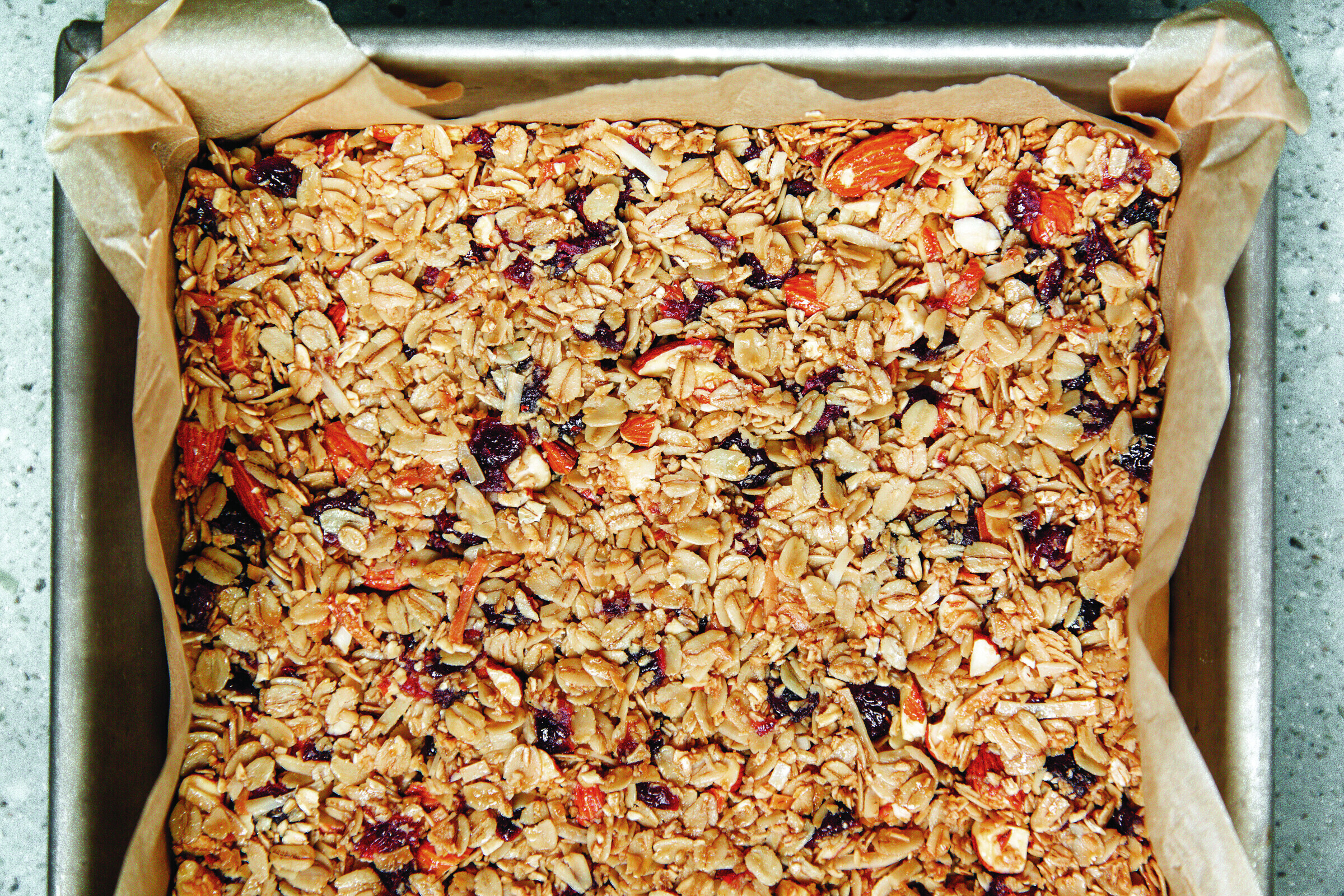
Trail-Ready Cranberry Almond Granola Bars
Most homemade granola bars share the same tragic flaw. They look and taste great in your kitchen but don’t last a mile in your pack. In no time, they revert to their elemental state: granola. That’s not the worst problem to have, but we want an easy-to-grab bar, not a handful of feed.
We tried at least a dozen variations in our quest to make trail-worthy granola bars at home. Traditional baked bars didn’t work. Refrigerated no-bake bars didn’t work. We tried lots of different binders: egg whites, peanut butter, chia seeds, hemp flour, dates, apricots—all without success. Finally, we turned to the culinary equivalent of black magic: candying.
Candying is the carefully controlled process of heating sugars and letting them cool. For home cooks, this usually involves an expensive candy thermometer and a saucepan encrusted in rock-hard crystalized sugar. We wanted to avoid all of that, so we opted for a shortcut: microwaving our sugars in a bowl. This way we could dial in the temperature via the cook time and limit the mess to small, dishwasher-safe bowls. The result was delicious bars tough enough to hold together in a backpack (or withstand a drop to the kitchen floor, among other tests). Finally, we have a home-brew granola bar that can survive the rough and tumble of life on the trail.
- 1½ cups rolled oats
- 2 tablespoons vegetable oil
- ⅛ teaspoon salt
- 2 tablespoons shredded coconut
- ½ cup dried cranberries, roughly chopped
- ⅓ cup almonds, roughly chopped
- 3 tablespoons brown sugar
- 3 tablespoons honey or agave
- Preheat the oven to 350°F and line an 8×8 baking pan with parchment paper so the paper comes up the sides a bit.
- In a food processor, grind ½ cup of the rolled oats into a meal, then combine in a medium bowl with the remaining 1 cup of oats and stir in 2 tablespoons oil and ⅛ teaspoon salt salt. Stir until well coated, then spread on a baking sheet and bake for 10 minutes. Stir and add 2 tablespoons shredded coconut, then bake for an additional 3 minutes or until the coconut is golden. Remove from oven and reduce heat to 300°F.
- Return the toasted oats and coconut to the mixing bowl and add ½ cup chopped dried cranberries and ⅓ cup chopped almonds.
- Measure 3 tablespoons brown sugar and 3 tablespoons honey or agave into a microwave-safe bowl, stir thoroughly, and microwave on high for 1½ minutes. (Our microwave is 1,300 watts; your cook time may vary. Alternatively, you can do this step on a stovetop.) Stir again, pour over the dry ingredients, and mix well.
- Transfer the mixture to the lined 8×8 pan and spread in an even layer. Oil the bottom of a cup and use it to compress the granola firmly into the baking pan. Compacting the mixture helps it all stick together, so don’t skip this step!
- Bake at 300°F for 30 minutes.
- Let cool 10 minutes, then lift the bar out of the pan using the parchment and cut into squares when still somewhat warm.
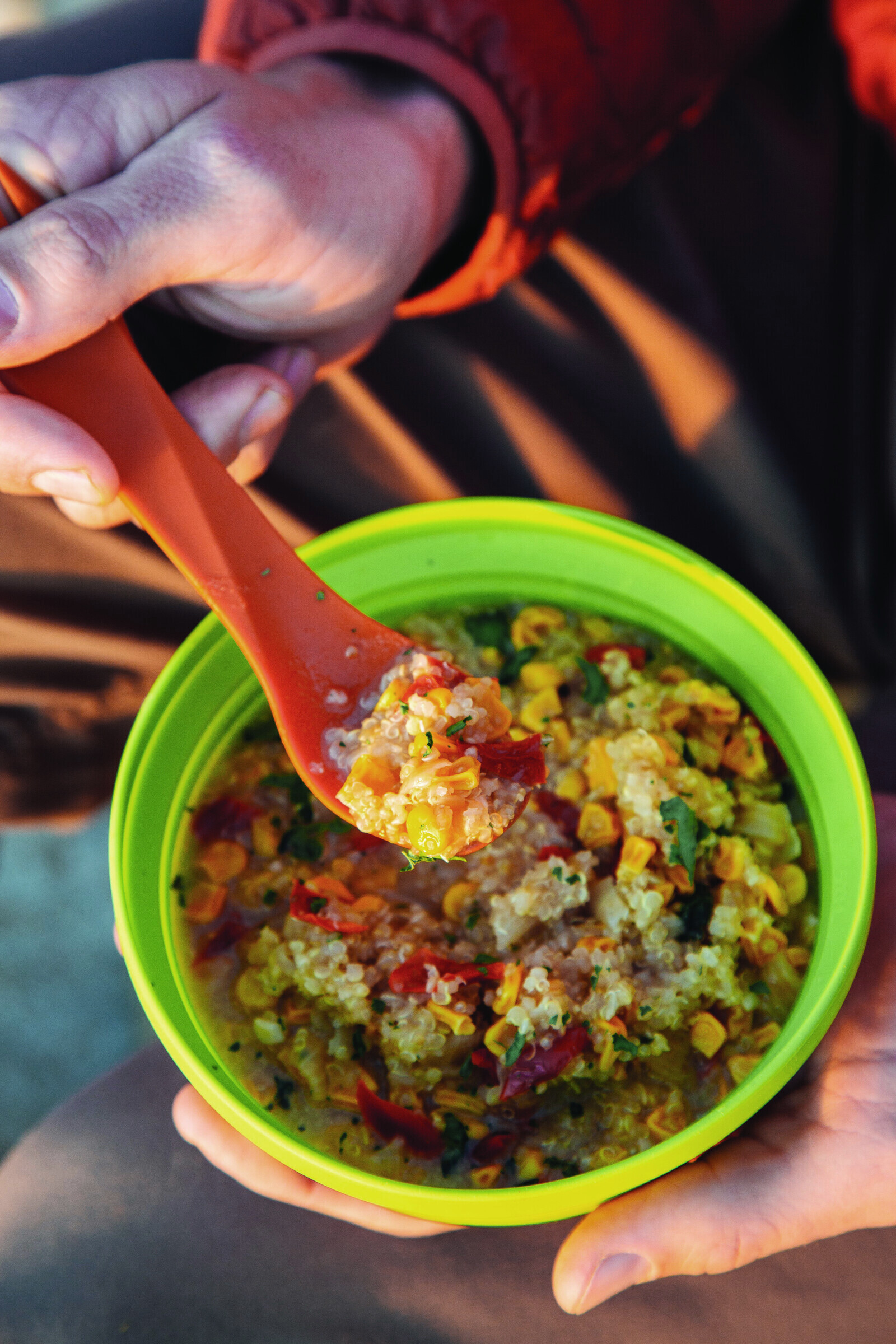
Dehydrated Quinoa Corn Chowder
At the end of a long day on the trail, we want our dinner to be hearty, but not middle-of-winter-in-Siberia hearty. It’s summer after all, and dinner should feel like it. This quinoa and corn chowder strikes the perfect balance between the two.
With sweet corn, red bell peppers, and coconut milk on one side, plus hearty quinoa and potato flakes on the other, this chowder walks the perfect line between sweet and savory.
Precooking the quinoa at home and then dehydrating it reduces the final cooking time and infuses it with the flavor of the broth. It also allows you to get the flavor properly dialed in—especially the salt—so you know how it will taste on the trail.
Once the quinoa-corn-pepper base has been fully dried in the dehydrator, mix it together with the powdered coconut milk and potato flakes. These two ingredients offer a unique flavor, thicken the chowder, and bump up the calorie count.
At camp, add just enough water to cover, bring to a boil, and then simmer. Because this is a soupy meal by nature, the risk of scorching is greatly reduced. The end product is a hearty chowder that tastes like a big bowl of summer.
- 1 teaspoon oil
- 1 bell pepper (1 cup)
- 1 yellow onion (1 cup)
- 3 cloves garlic
- ½ cup quinoa, rinsed
- ½ teaspoon salt
- ¾ cup vegetable broth
- 1 15-ounce can corn with the liquid
- ¼ cup fresh cilantro
- ¼ cup instant mashed potatoes
- ¼ cup coconut milk powder
- In a large pot, heat the oil over medium, then add the onions and bell pepper and sauté until soft. Add the garlic and sauté one minute more, then add the rinsed quinoa, salt, broth, and corn with its liquid. Bring to a simmer and cook for 15 minutes, until the quinoa is tender. Season to taste. Check for seasoning—if it needs a little more salt, add it now.
- Transfer the quinoa to dehydrator trays (if your trays are not solid, line with parchment paper) and spread in a thin, even layer. Place fresh cilantro on a second tray. Dehydrate at 135°F for 8 to 10 hours, or until completely dry.
- Divide the quinoa and cilantro between two airtight bags or containers, adding 2 tablespoons each of powdered coconut milk and instant mashed potatoes to each serving.
- In camp, empty the contents of the bag into a cookpot and add just enough water to cover. Simmer 10 minutes or until the quinoa and corn have rehydrated, adding more water if needed. Enjoy!
42 issues. 11 years. Independently owned. Printed on 70lb uncoated paper with a soft-touch cover, solar-powered, and shipped in a brown paper envelope. Free domestic shipping.