Three Square
DIY dehydrating: strawberry quinoa porridge, roasted pepper hummus, and sweet potato peanut stew
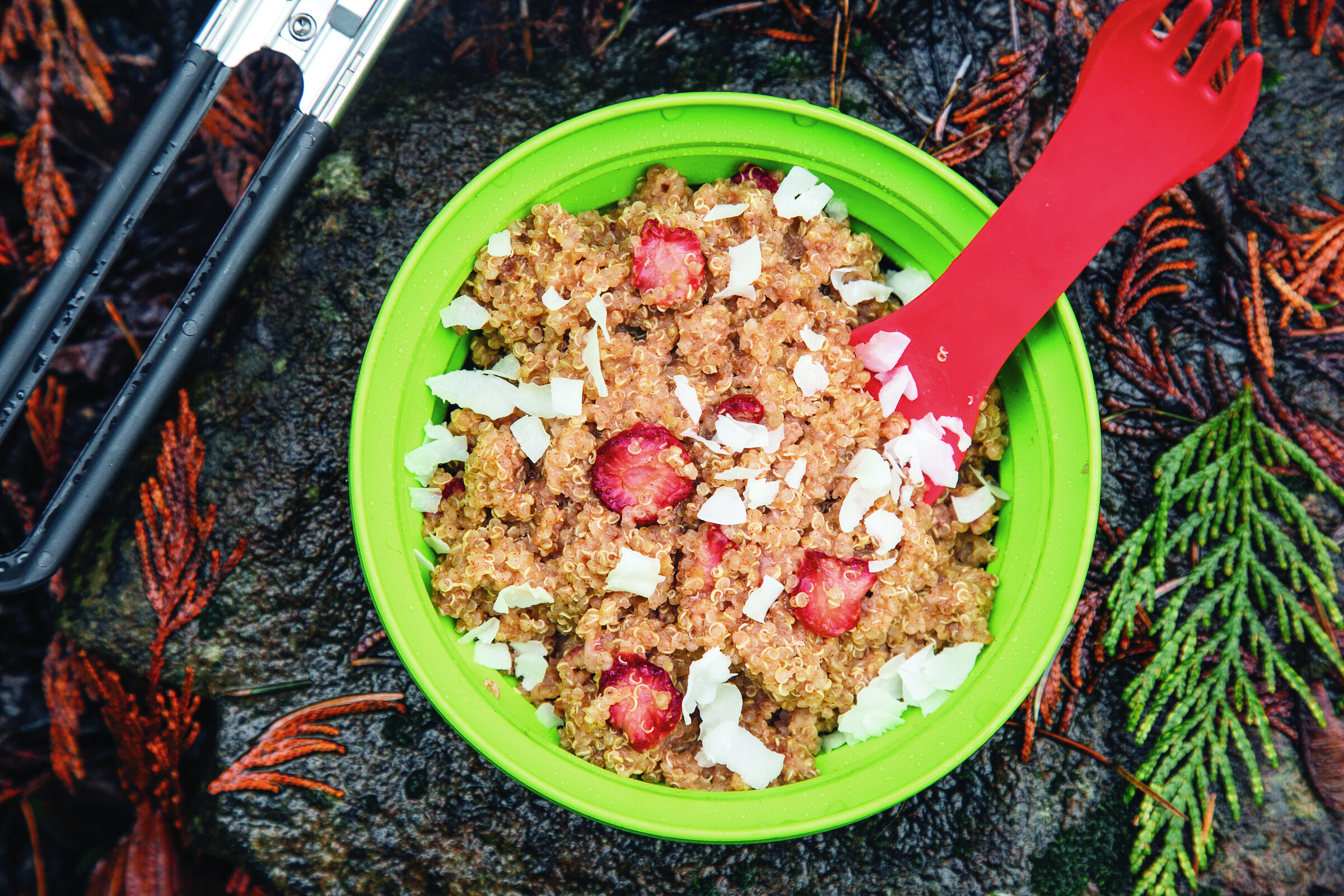
Strawberry and Coconut Quinoa Porridge
Instant oatmeal is a morning staple for many backpackers, ourselves included, but it’s easy to get burned out on it. A nice way to mix things up is by switching to quinoa, which has a slightly different texture and flavor while still making a sweet and delicious morning porridge. The only problem for the camp chef is that cooking raw quinoa is hardly instant.
To accelerate the process, we turned to dehydration. At home, we cooked a large batch of quinoa porridge, adding vanilla, cinnamon, and maple syrup to sweeten it. Once we got the taste just where we wanted it, we spread thin layers onto our dehydrator sheets. We then sliced strawberries and placed them separately on their own sheet. With the temperature set to 145°F, we ran the dehydrator for a few hours. The result is feather-light, precooked, pre-flavored quinoa porridge. Once at camp, you just add water and bring to a boil.
- 2 cups nonfat, nondairy milk
- 1 cup quinoa
- ¼ teaspoon salt
- 3 tablespoons maple syrup
- 1 teaspoon ground cinnamon
- 1 teaspoon vanilla extract
- ½ pound strawberries
- ¼ cup coconut milk powder
- ¼ cup coconut flakes
- At home: Rinse quinoa under water. Bring milk, quinoa, and salt to boil, partially cover, reduce to a simmer for 20 to 25 minutes. Stir every few minutes. Add additional milk or water as needed. Remove from heat, then stir in maple syrup, ground cinnamon, and vanilla extract.
- Meanwhile, thinly slice strawberries and arrange on a dehydrator tray. Once the quinoa is fully cooked, spread into a thin, even layer on dehydrator trays that have been lined with a fruit leather insert or parchment paper. Dehydrate at 145°F for 6 to 8 hours or until the quinoa and strawberries are completely dry. Place in an airtight container or bag with coconut milk powder and coconut flakes.
- At camp: Place a portion of the quinoa porridge in a small pot and add water to cover. Simmer for 10 to 15 minutes or until the quinoa is tender.
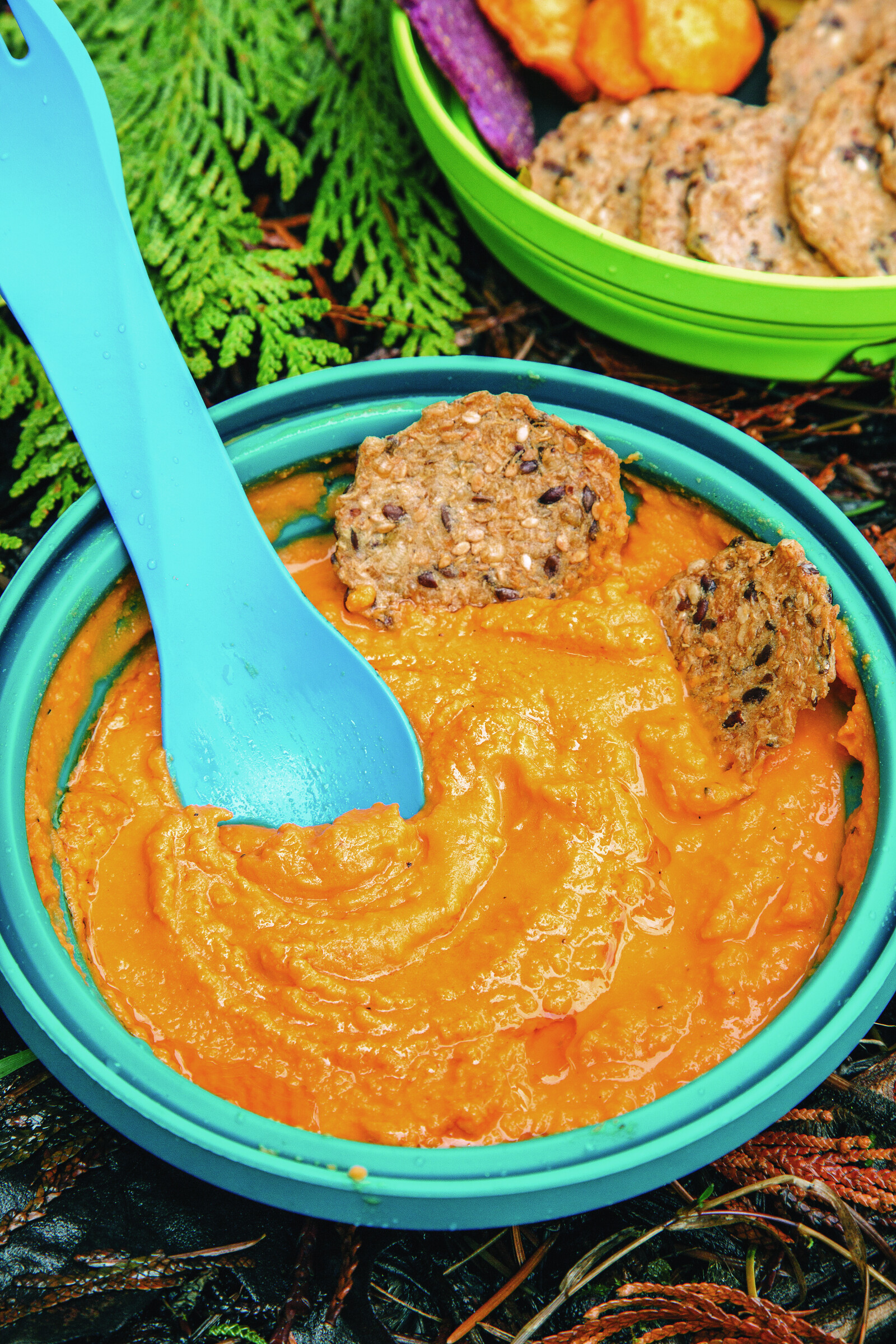
Roasted Pepper Hummus
Backpacking lunches can be tricky. They should be nutritious enough to power you through the rest of the day but simple enough that you don’t need to break out your cooking setup. While we often resort to a snack buffet, this time we wanted to be more intentional with our lunch choices and prepare something we both really enjoy: hummus and chips.
Store-bought hummus is obviously not well suited for the backcountry. It’s heavy and needs to be refrigerated. But by making your own and dehydrating it, you can reduce the weight and make it shelf-stable in the process. Then all you have to do is rehydrate with some cold water and a little bit of olive oil on the trail for a delicious, creamy dip.
- 3 tablespoons sesame seeds
- 14-ounce can chickpeas, drained and peeled* if desired
- ½ cup roasted red peppers
- 1 to 2 cloves garlic, roughly chopped
- Juice from ½ lemon
- ¾ teaspoon salt
- Packed separately
- Olive oil
- Snacks for dipping—crackers, veggie chips, pretzels, etc.
- At home: Place the sesame seeds in a food processor and pulse until they turn into a powder. Add the chickpeas, roasted red peppers, garlic, lemon juice, salt, and ½ cup water. Process until smooth, adding more water as needed to keep it all moving.
- Spread in an even layer on dehydrator trays lined with a fruit leather insert or parchment paper. Dehydrate at 135°F for 4 to 6 hours or until the hummus is completely dry and turns powdery if rubbed between your fingers. Transfer the dried hummus to a blender and pulse a few times until it becomes a fine powder. Package in an airtight container or zip-top baggie.
- At camp: Stir water into the hummus powder until it reaches your desired consistency. Finish with a generous drizzle of olive oil and serve with your favorite snacks.
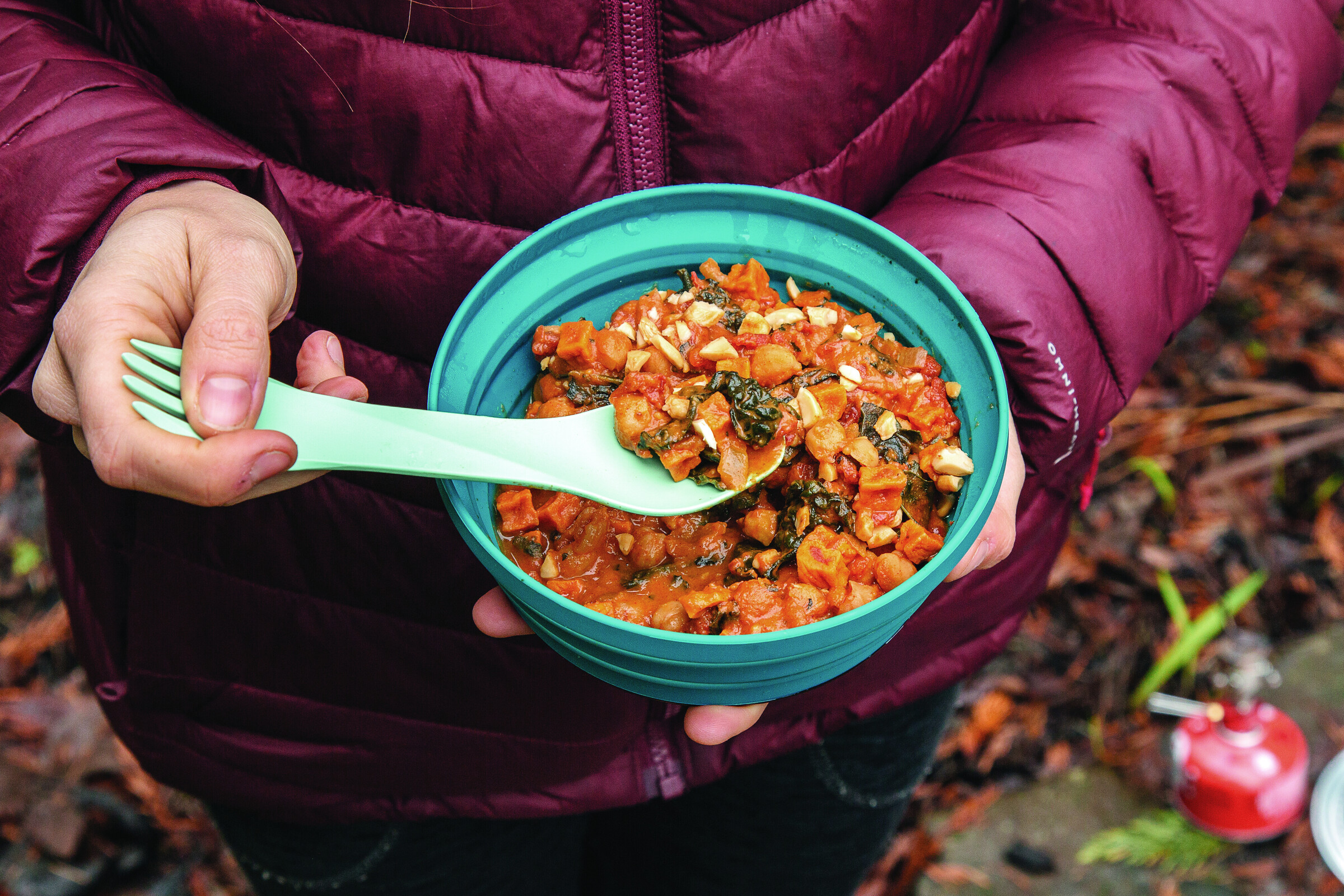
Sweet Potato Peanut Stew
With a dehydrator, you can easily adapt your favorite car camping meal into a great backpacking meal. We made this sweet potato peanut stew a few years ago and it was a real hit, but it requires ingredients that aren’t friendly to backpacking, like the namesake sweet potatoes, chickpeas, kale, and canned tomatoes. None of that stuff would work in the backcountry. But by making it in advance and dehydrating it, we can take the same meal out on the trail at a fraction of the weight.
Dehydrating dense, fibrous ingredients like sweet potatoes and chickpeas can take a bit of time, which is why we opt to prep this meal overnight. It’s nearly impossible to over-dehydrate this meal, so we just set it up before bed and let it run. Once done, the chickpeas and sweet potato chunks should be hard, not mushy, when pressed between two fingers.
- 1 cup onion, diced
- 2 cloves garlic, minced
- 1 medium sweet potato, diced to ¼-inch cubes
- 14-ounce can diced tomatoes
- ½ cup broth
- 2 teaspoons New Mexico chili powder
- ¼ teaspoon ground ginger
- 1 teaspoon salt
- 2 cups chopped kale
- 14-ounce can chickpeas
- ¼ cup crushed peanuts
- Packed separately
- 2–3 packets peanut butter
- Olive oil
- At home: Heat a high-sided skillet or small pot over medium. Add the onions and a bit of water. Sauté until the onion is translucent, adding more water as it evaporates. Add the garlic, sweet potato, tomatoes and their juice, kale, and the broth. Simmer until the sweet potato chunks are tender, about 10 minutes. Stir in the chickpeas.
- Spread the stew in an even layer on dehydrator trays lined with a fruit leather insert or parchment paper. Dehydrate at 135°F for 8 to 12 hours or until the chickpeas and sweet potato are completely dry. Package in an airtight container or zip-top baggie along with the crushed peanuts.
- At camp: Place the stew in your cookpot with enough water to cover. Simmer 15 to 20 minutes or until the chickpeas are tender, adding more water as needed. You’ll want a bit of liquid left at the end, but not enough to make it soupy. Mix the peanut butter and olive oil into the stew until thoroughly combined.
42 issues. 11 years. Independently owned. Printed on 70lb uncoated paper with a soft-touch cover, solar-powered, and shipped in a brown paper envelope. Free domestic shipping.