Three Square
Fall camp cooking: Dutch oven bourbon banana bread, teriyaki beef jerky, and beer bratwurst with sauerkraut
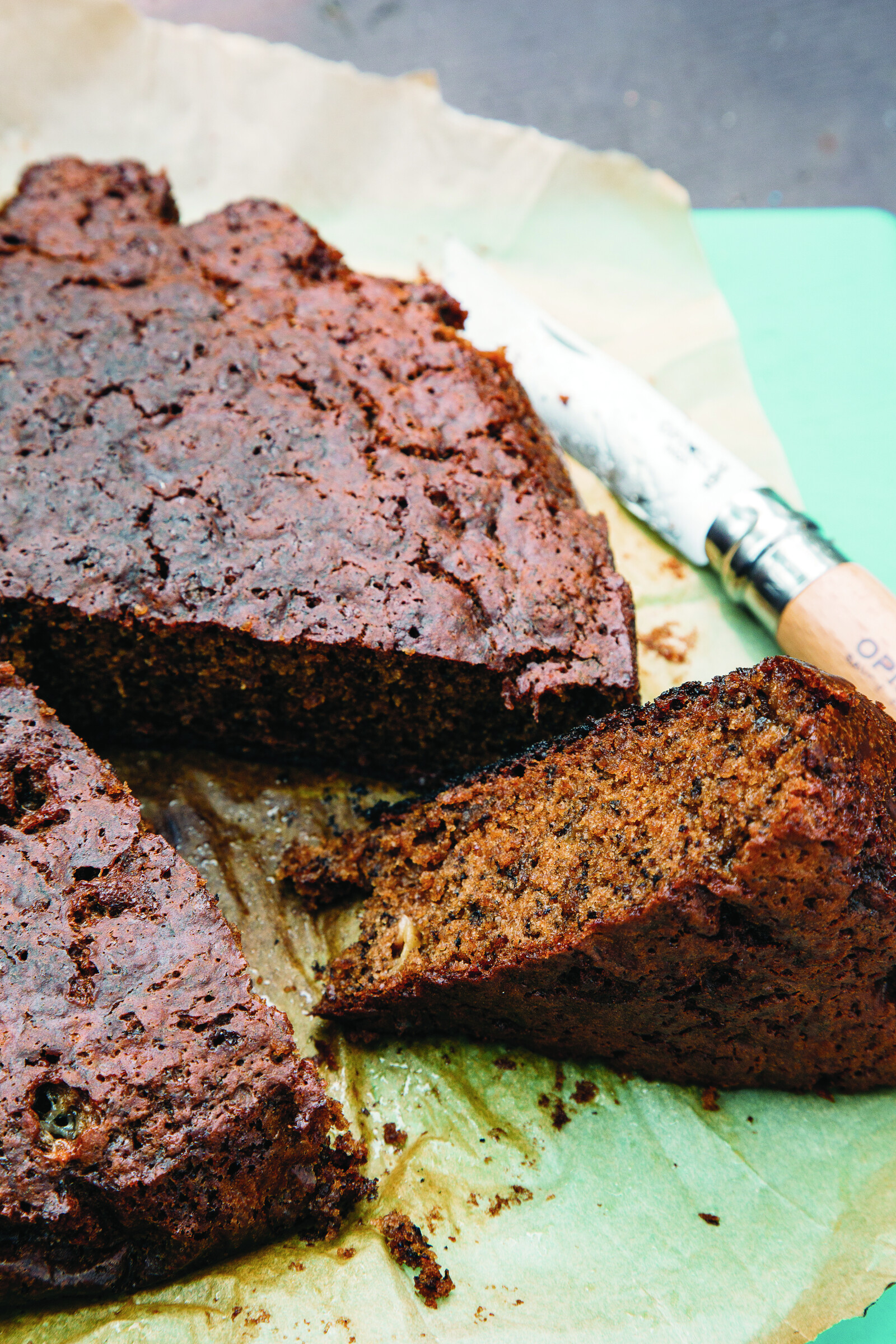
Dutch Oven Bourbon Banana Bread
With a fluffy center and slightly caramelized bottom, this Dutch oven banana bread tastes like having dessert for breakfast. What’s great about this recipe is a lot of the ingredients can be mixed ahead of time. At home, you can whisk together the flour, brown sugar, cinnamon, salt, and baking soda and put it in a single resealable container. Then when you’re on site, all you need to do is muddle together the wet ingredients in a bowl and combine it with your dry ingredient mix. Voilà, banana bread batter!
Dutch ovens tend to trap a lot of moisture when cooking, essentially baking and steaming at the same time. This wet heat is not ideal for traditional breads, but it’s amazing for banana bread. All the trapped steam helps keep the bread light and super moist.
When we’re cooking banana bread, we aim for a gentle heat somewhere in the neighborhood of 350 degrees. We place roughly 15 coals on top of our 10-inch Dutch oven and 5 coals on bottom. A little crispness on the top of the bread is fine, but you want to avoid accidentally burning the bottom. To keep the moisture inside, it’s best to keep the oven sealed for at least 30 minutes, then crack it open to check it. The smell that rushes out is pure heaven.
Once the bread is finished baking, remove it from the Dutch oven and let it cool for a few minutes. Our bread is usually gone before it’s cooled!
- 1½ cups flour
- 1 cup brown sugar
- 2 teaspoons cinnamon
- 1 teaspoon baking soda
- Pinch of salt
- 4 ripe bananas
- ½ cup softened butter
- 1 egg, beaten
- 1 tablespoon bourbon
- Special equipment: 10-inch Dutch oven with lid, parchment paper to line the oven
- At home (or in camp) whisk together the flour, brown sugar, cinnamon, baking soda, and salt. Set aside.
- Prepare a campfire or a bed of about 20 coals. Place the bananas in a medium/large bowl and smash with a fork until fairly smooth. Add the butter, egg, and bourbon and stir until combined. Add the dry mixture, stirring until it’s completely incorporated with the wet ingredients.
- Line your Dutch oven with a sheet of parchment paper. This will help prevent the bread from sticking to the pot. Pour the batter into the Dutch oven and cover with the lid. Make a ring of 5 coals and place the Dutch oven on top. Place the remaining 15 coals on the lid.
- Bake for about 30 minutes. Remove from the heat and carefully lift the bread out of the oven. Cool for a few minutes, then slice and enjoy!
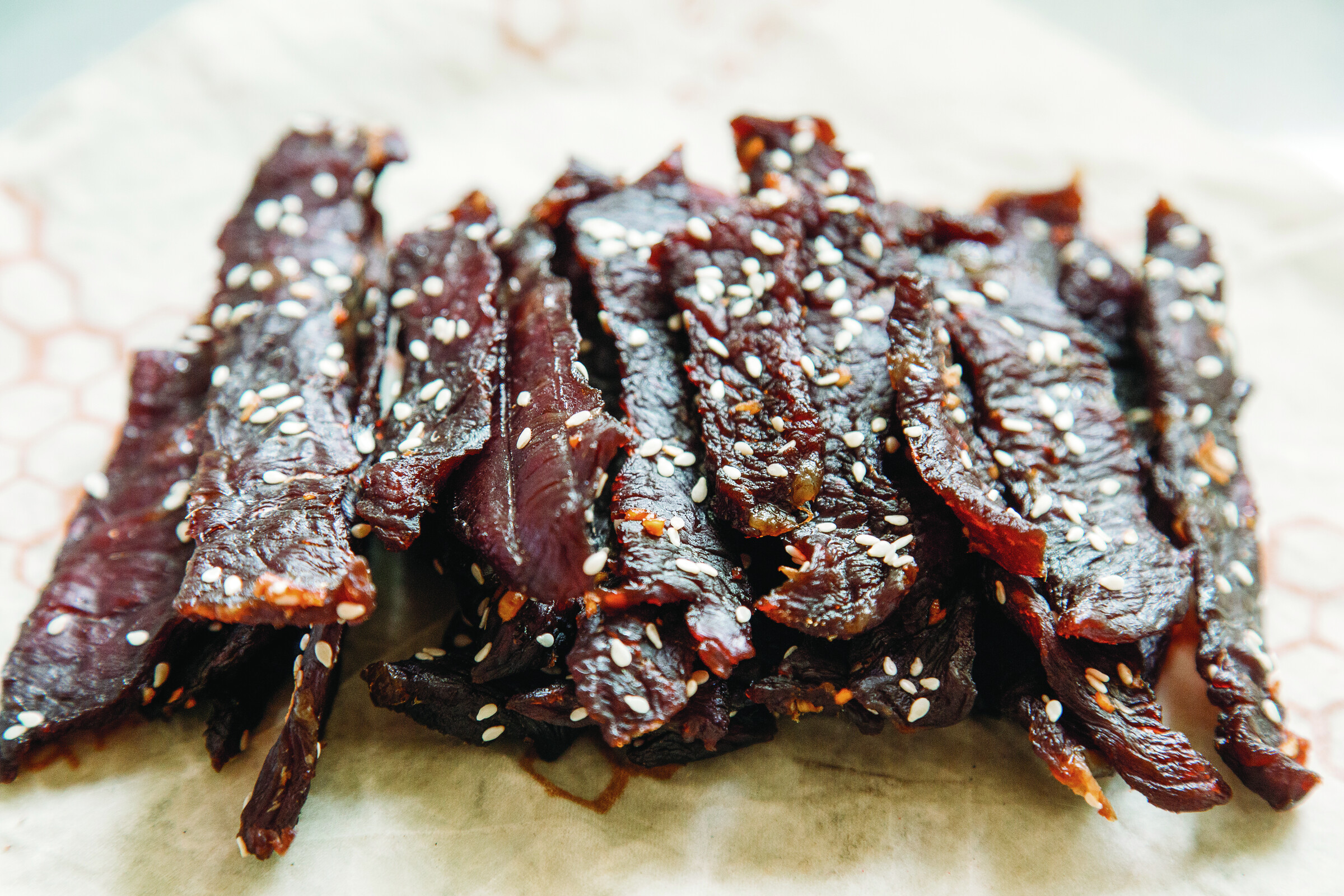
Teriyaki Beef Jerky
Once you discover how easy it is to make your own teriyaki beef jerky using a dehydrator, you’ll never go back to store-bought again: It’s sweet, tangy, and dangerously addictive.
With such limited daylight during the fall, it’s a shame to spend it cooking a sit-down lunch. That’s why we prefer to pack snacks that allow us to spend more time exploring, and beef jerky is one of our favorites because it’s loaded with protein and keeps us powered for hours. The only problem is it can be expensive. But now that we’ve purchased a dehydrator, all it takes is a little foresight and we can have as much beef jerky as we want.
When dehydrating meat it’s recommended to find the leanest possible cut. So we look for cuts like eye of round, top round, or bottom round. If it comes as a roast, we partially freeze the meat to make it easier to cut and slice it into eighth- or quarter-inch medallions. If it comes in steaks, we cut widthwise into strips.
This recipe replicates the classic teriyaki flavor of store-bought jerky but with fresh ingredients. Of course, you can just use your favorite pre-made teriyaki sauce if you like, but we find building it ourselves produces a milder, less aggressive teriyaki flavor, which we prefer.
At the end, we have a giant batch of delicious homemade beef jerky that should last us way longer than it actually does!
- 1 pound eye of round or top round
- ¼ cup soy sauce
- 2 tablespoons mirin
- 2 tablespoons brown sugar
- 1-inch piece fresh ginger, minced (or 1 tablespoon pre-grated)
- 2 cloves garlic, minced
- 1 teaspoon salt
- ¼ teaspoon Prague powder #1 or Instacure #1 (optional)
- 1 teaspoon sesame seeds
- Slice the meat into eighth- or quarter-inch pieces, removing as much visible fat as possible. Place in a large zip-top bag and set aside. Mix the soy sauce, mirin, brown sugar, minced ginger and garlic, salt, and Prague powder, if using, in a small bowl until the sugar dissolves. Pour into the bag with the meat, taking care to ensure that the meat is evenly coated. Place in the fridge to marinate for up to a day.
- After the meat has marinated, place the strips onto your dehydrator trays. Sprinkle with sesame seeds. Dehydrate at 160 degrees for 4 to 6 hours, until the meat has dried. The general rule of thumb is if you bend a piece and it cracks, it’s done; if you bend a piece and it breaks, it’s been cooked too long.
- Remove from the dehydrator and set aside to cool completely before sealing in a container. Jerky that has been marinated with Prague powder or Instacure will last a few weeks sealed at room temperature. Jerky marinated without any cure will last two weeks in your fridge.
Note: This recipe can also be made with either quarter-inch sliced tempeh or extra firm tofu and the Prague powder will not be needed.
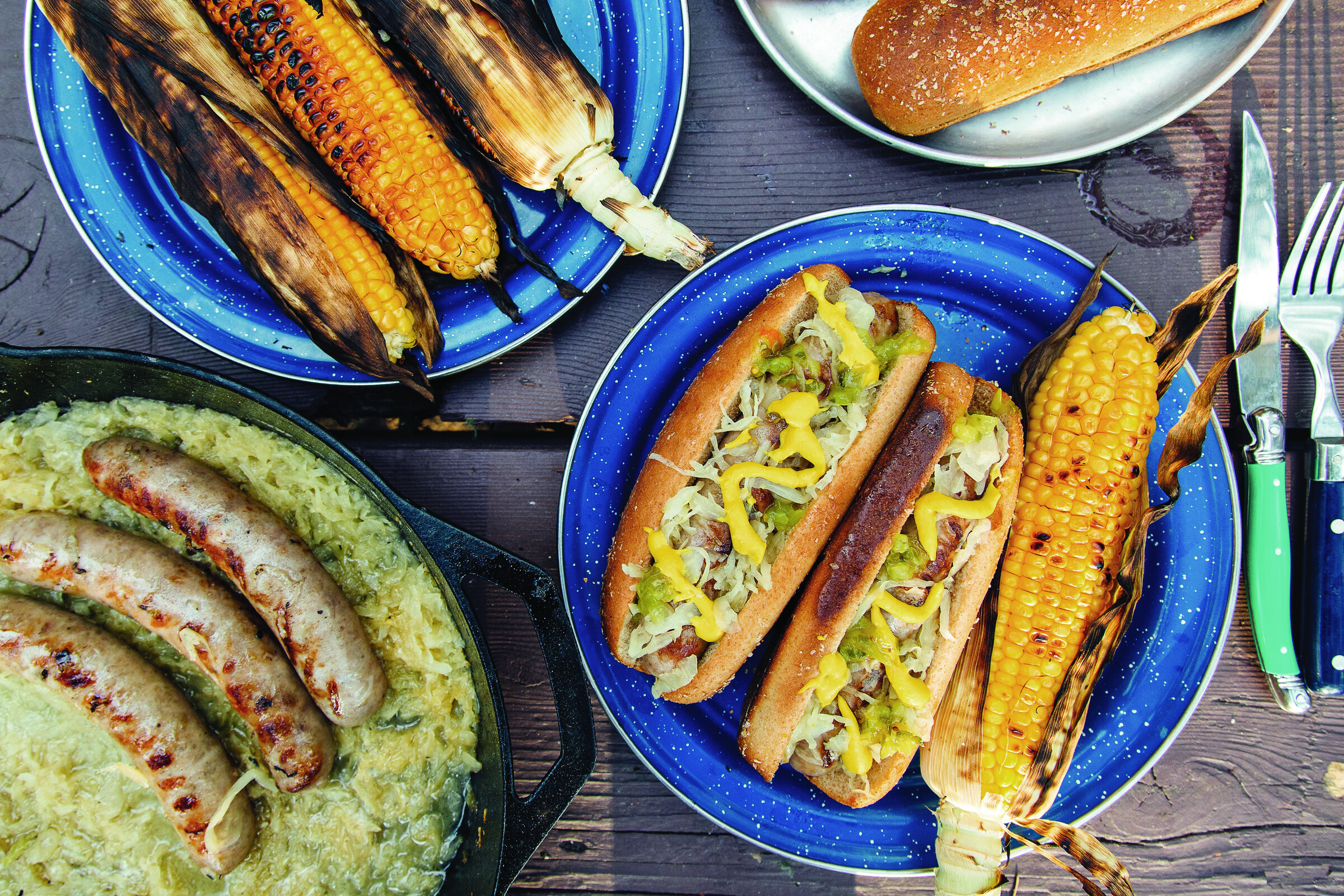
Beer Bratwurst with Sauerkraut
Nothing captures the spirit of fall like an Oktoberfest-inspired campfire dinner. A beer in one hand, a sauerkraut-laden bratwurst in the other. Life doesn’t get much better than that.
We’ve made campfire brats plenty of times and never thought they needed a “recipe.” How hard can it be to place bratwurst on a grill? But we’ve started using a new technique that we think really improves the whole system.
The main issue we’ve had with brats is overcooking on the outside and undercooking on the inside. This is usually caused by too high of heat and results in burst skin that releases all the delicious juices. The way to avoid this? Poach first, grill second.
In a cast iron skillet, we dump the entire container of sauerkraut, pour in half a beer, mix in some mustard, and then nestle in our bratwurst. We place the skillet over the hot part of the fire until it starts to bubble and then move it over to lower heat to simmer. This poaches the sausages in the flavorful liquid, ensuring they’re fully cooked. When we’re getting close to meal time, we toss the sausages on the hot side of the grill just long enough to char the outside. Then we can pop them back into the skillet to keep them warm until everyone is ready.
This process takes all the guesswork out of cooking sausage over an open fire, so we can spend less time poking and prodding and more time relaxing. Which, after all, is the whole point.
- 6 bratwurst
- 1 pound prepared sauerkraut
- ½ can of beer
- 1 tablespoon mustard
- 6 buns
- Additional toppings of choice: mustard, relish, etc.
- Place the sauerkraut, beer, and mustard in a skillet and stir to combine. Add the bratwurst into the mix and place over your fire or camp stove. Bring to a simmer over medium-high heat and cook about 20 minutes, until the brats register 140 degrees.
- Remove the brats from the sauerkraut, shaking off any extra liquid, and place on the grill for 2 to 3 minutes, turning every 30 seconds or so. The brats can be served immediately with toasted buns or returned to the sauerkraut to keep warm.
42 issues. 11 years. Independently owned. Printed on 70lb uncoated paper with a soft-touch cover, solar-powered, and shipped in a brown paper envelope. Free domestic shipping.