In 1999, Swiss researchers made a remarkable discovery—that trees are networked to one another through filaments of fungi, a kind of biological internet. Plants, fungi, and bacteria use this network to swap resources like sugars, nitrogen, and phosphorus, and they can even communicate across an entire forest, sending warnings of insect attackers. In 2019, scientists mapped the web for the first time, expanding our understanding of the entangled relationships between organisms, prompting questions like where does one life form end and another begin? and what else do we not know about the systems enabling life?
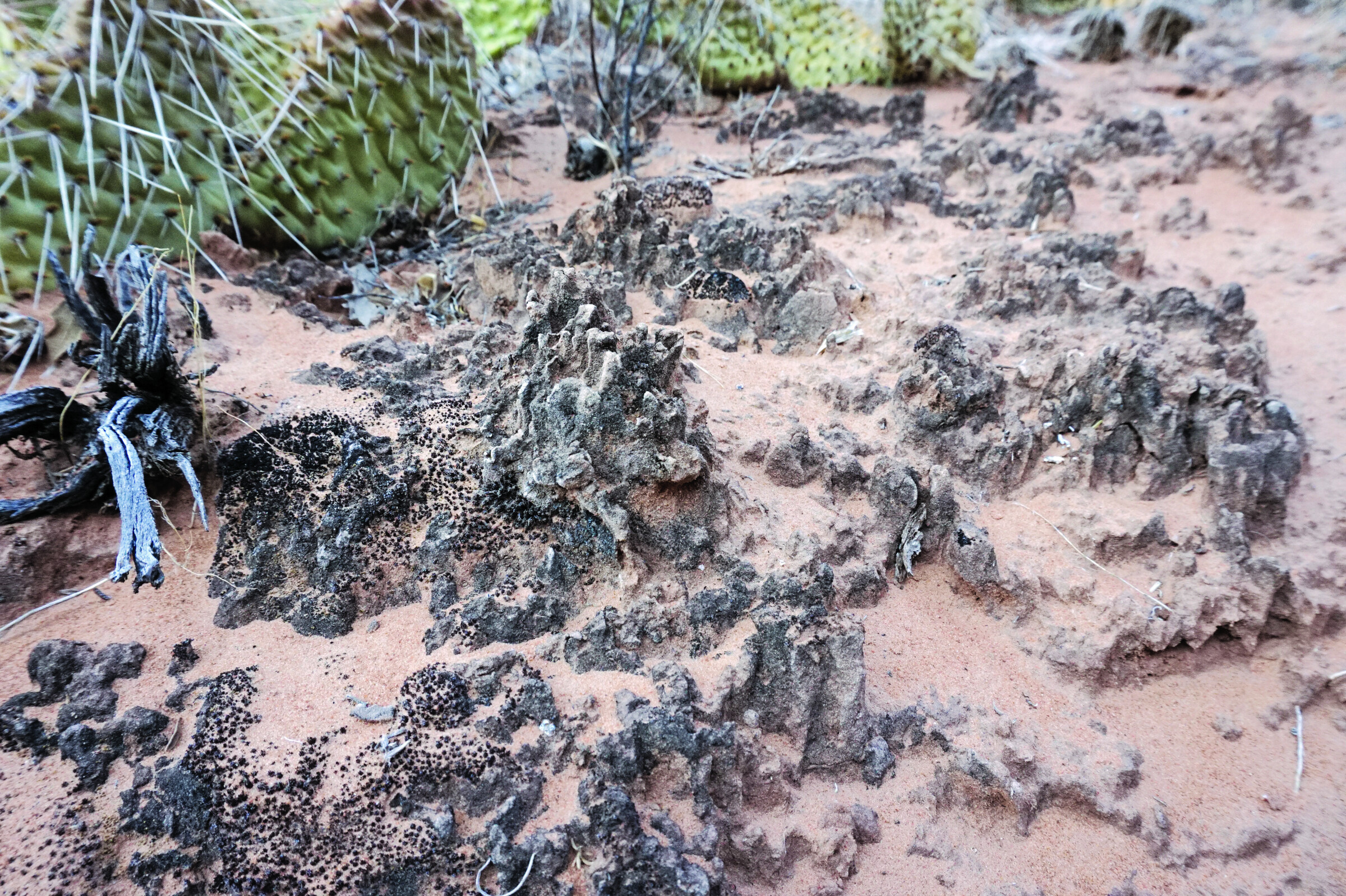
Forests are known for hiding mysteries, deserts perhaps less so, and yet there’s an equally fascinating structure underpinning most of the world’s dry places and particularly prevalent in the American West. This patchwork organism(s) goes by many names—cryptogamic soil, biological crust, desert skin—but most desert rats know it simply as “crypto.” Officially, according to Jayne Belnap, the scientist who wrote the book on the stuff, it’s cryptobiotic soil. Constitutionally, it’s little
600 words to go
You’re just getting to the good part.
This story — and 42 issues of them — opens with a subscription.
Either one picks up right where you left off.
Join 7,000+ readers · Independently owned · Since 2008
Already a subscriber? Sign in