AJ 42 Recommended Reading

Recommended Reading

Six books worth your time — Indigenous stewardship, the case for bogs, Yosemite reckoned with, a reindeer-herding elegy, a sixteenth-century castaway, and the world seen as a tree
Issue 42
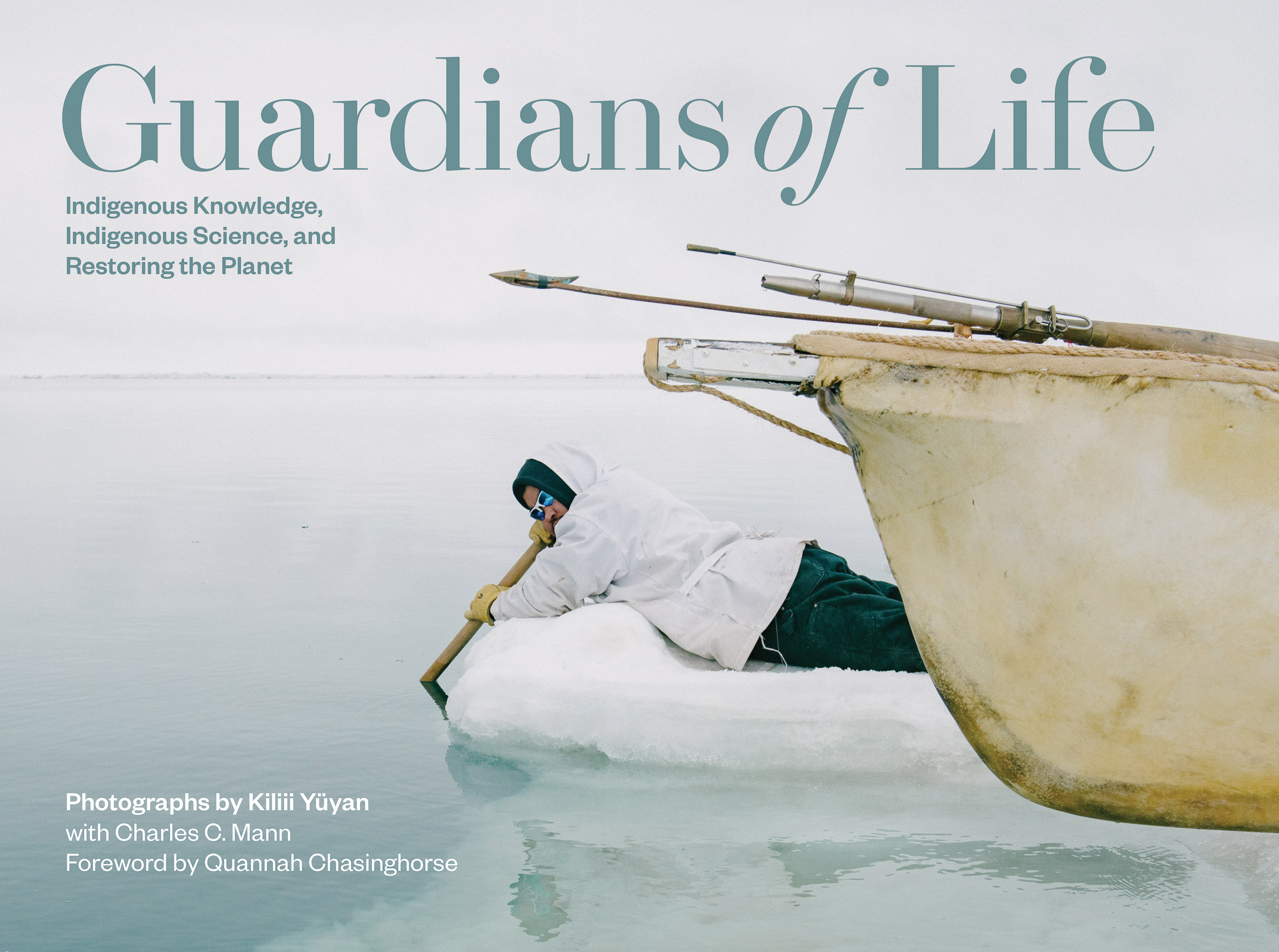
Guardians of Life by Kiliii Yüyan
Kiliii Yüyan · Braided River · 2026

In 1977, the International Whaling Commission banned the Iñupiat from hunting bowhead whales, a practice thousands of years old. In court, the Iñupiat won the right to manage them and tripled the whale population in thirty years. Indigenous territories comprise thirty-seven percent of all remaining natural lands, reports Guardians of Life, and contain about eighty percent of the species on earth. National Geographic photographer Kiliii Yüyan argues for entrusting Indigenous peoples with maintaining this environmental stewardship, and I’m convinced. His nearly two hundred images from nine Native communities show humans intimately connected to traditional lands and acutely dependent on the health of everything living there. Facts are powerful; Yüyan’s photos are more so.

Bogland by Merritt R. Turetsky
Merritt R. Turetsky · WW Norton · 2026

Merritt Turetsky’s Bogland takes the most sneered-at ground on earth— the stuff we drain, mock, and turn into every word for being stuck—and contends it’s one of the planet’s great underrated systems. The carbon science is clear-eyed: These wet places comprise three percent of land and hold thirty percent of the world’s soil carbon, and fires and thaw could flip it all. Where the book comes alive is in the human connection, like the resurfaced Iron Age bog bodies with their last meals intact, swamps that hid the hunted, fieldwork reported from the muck itself. It leans hard on “liminal,” and the closing pep talk is earnest to a fault, but it’s a great read anyway. Bog? Let’s hear it for wetlands.

Yosemite Falls by Daniel Duane
Daniel Duane · North Point Press · 2026

Yosemite Falls is my favorite Daniel Duane book, and that’s saying something from the man who wrote Caught Inside. It’s a memoir of a Sierra boyhood spent worshipping in the Muir way—backpacking, skiing, climbing granite with a father who cast a long shadow—braided with the harder history behind the postcard: the dispossession, the erasures, the great men who turn out to be human. What’s energizing is that Duane never stops loving the place even as he reckons with its darker moments. He climbs the same rock, hauls his daughters up it, keeps the faith even as he tries to correct it. His writing is fast, funny, salty, self-implicating, and generous, and he’s smart enough to land the ending without a tidy redemption.

The Last Quarter of the Moon by Chi Zijian
Chi Zijian · Milkweed Editions · 2026

A ninety-year-old Evenki woman, wife of this northern China clan’s last chieftain, tells the story of a century of her reindeer-herding people’s life to “the rain and the fire” over the course of a single day, as the last of her people board trucks for a government settlement and she chooses to stay behind. It’s one day holding a hundred years, with the last-quarter moon bearing witness overhead. Immediately immersive, the graceful translation by Bruce Humes trusts you with the specificity — urireng, shirangju, the soul called umai — without burying you in glossary; you figure it out. The deaths, and there are many, land because they’re told flatly, the way I imagine a very old person might. Last Quarter is elegy, and a beautiful one.

Isola by Allegra Goodman
Allegra Goodman · Dial Press · 2025

There’s little in the opening pages to suggest this 2025 novel will turn into a great adventure yarn replete with the hand-knife beheading of an attacking polar bear. It’s the early 1500s and orphaned French noblewoman Marguerite de la Rocque de Roberval is living at the whims of her cousin and protector, who steals her fortune and seems to be grooming her for marriage to himself. She is forced to sail to America aboard his colonizing ship, where she finds forbidden love with his assistant. Big mistake. The cousin abandons them on an island in the Gulf of Saint Lawrence, where they endure savage winters and face not one, but two polar bears to survive. It is indeed a yarn, and a powerful indictment of the constraints of class and gender. Not until the very end did I learn it was based on a real story.

In Trees by Robert Moor
Robert Moor · Simon & Schuster · 2026

In Trees, the author of On Trails turns his attention to biology, adopting the tree as a lens to view the world and embracing “treethinking”— slow, branching, deep-rooted, longviewed—as a path to wisdom. He pushes the idea everywhere, and the reporting earns the reach: scaling a sequoia with David Attenborough, studying Kimura’s famous bonsai garden in Japan, sleeping in a chimpanzee nest in Tanzania, then working through Alabama archives into his own family’s slaveholding past. Moor’s prose is clear, curious, unafraid of contradiction. Arborescence is the organizing metaphor, and by the fourth or fifth application— brains, evolution, race, grief—it starts to strain; not every subject wants to be a tree. But the range is his point, and this big, ambitious, generous book mostly earns its size.

Adventure Journal — Print Quarterly
Stories like this, in your hands four times a year.

42 issues. 11 years. Independently owned. Printed on 70lb uncoated paper with a soft-touch cover, solar-powered, and shipped in a brown paper envelope. Free domestic shipping.

Subscribe — $80/year Or try a single issue for $25

There is nothing else like it. — AJ subscriber