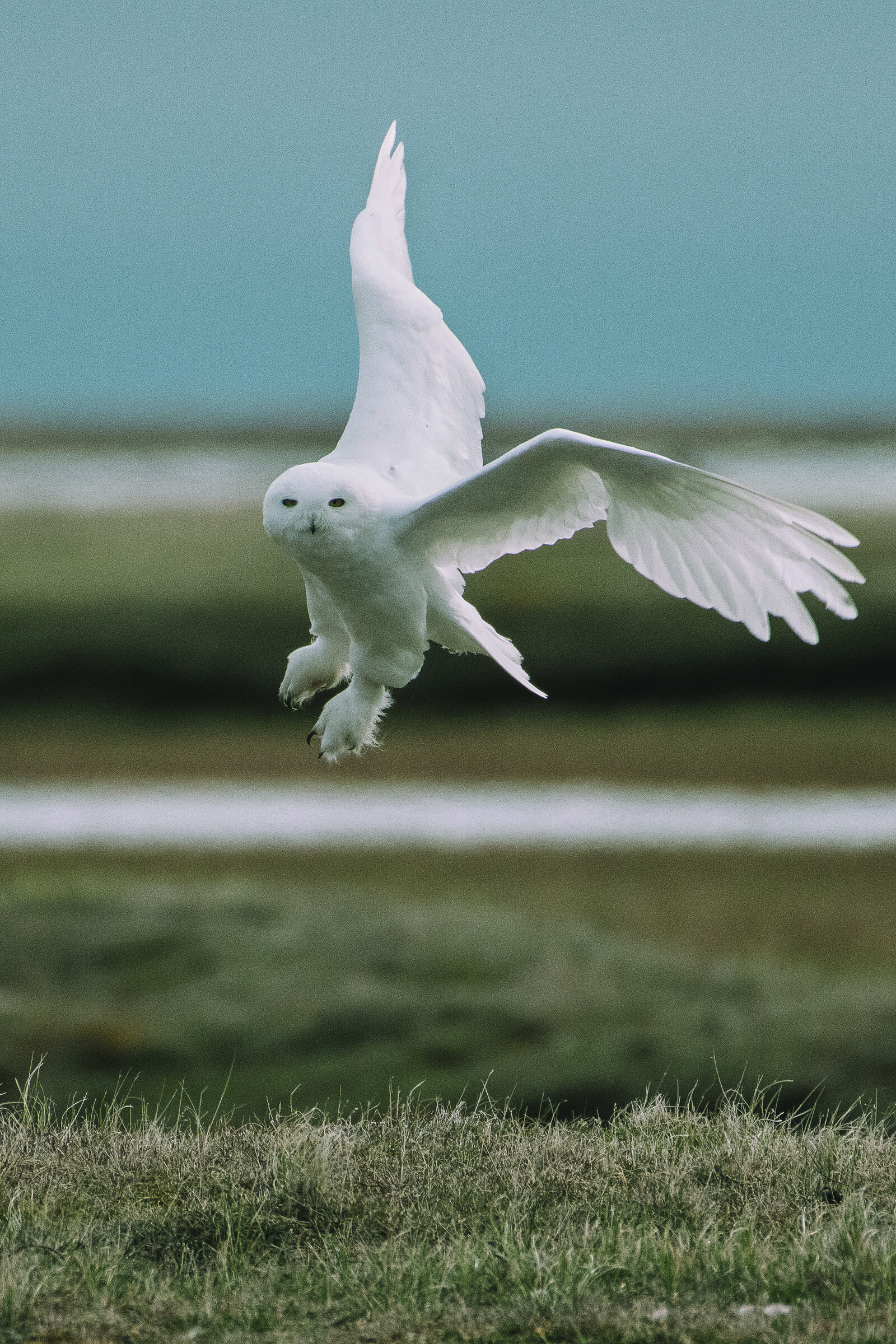
A male snowy owl changes direction mid-flight as it searches for lemmings at Qupaluk.
Portfolio: Nursery At Risk
A vast petroleum reserve in Alaska is home to one of the world's greatest wildlife breeding grounds, and enormous reservoirs of untapped oil
The bar-tailed godwit is an unassuming shorebird that weighs about ten ounces and has a wingspan of thirty inches. It looks like nothing special. But in fact, it conducts the longest nonstop migration of any bird: In the fall, after breeding, godwits leave the North Slope of Alaska and fly across the Pacific Ocean to Australia or New Zealand, averaging thirty-five miles per hour over eight days and nearly seven thousand miles, without a break for food or water. In spring, they return and then lay their eggs on Alaska’s tundral Coastal Plain, home to the densest concentration of birds in the north.
Specifically, they return to what’s known as the National Petroleum Reserve-Alaska, at twenty-three million acres the largest bloc of federal land in the United States. About the size of Indiana, the NPR-A lies west of the better-known Alaska National Wildlife Refuge, but to birds it’s a far more important location. One-third of the world’s hundred million shorebirds live seasonally in Alaska,
500 words to go
You’re just getting to the good part.
This story — and 42 issues of them — opens with a subscription.
Either one picks up right where you left off.
Join 7,000+ readers · Independently owned · Since 2008
Already a subscriber? Sign in
Adventure Journal — Print Quarterly
Stories like this, in your hands four times a year.
42 issues. 11 years. Independently owned. Printed on 70lb uncoated paper with a soft-touch cover, solar-powered, and shipped in a brown paper envelope. Free domestic shipping.