Mementos, Notes, and Fragments
It’s Not Awkward, It’s Just Heavy
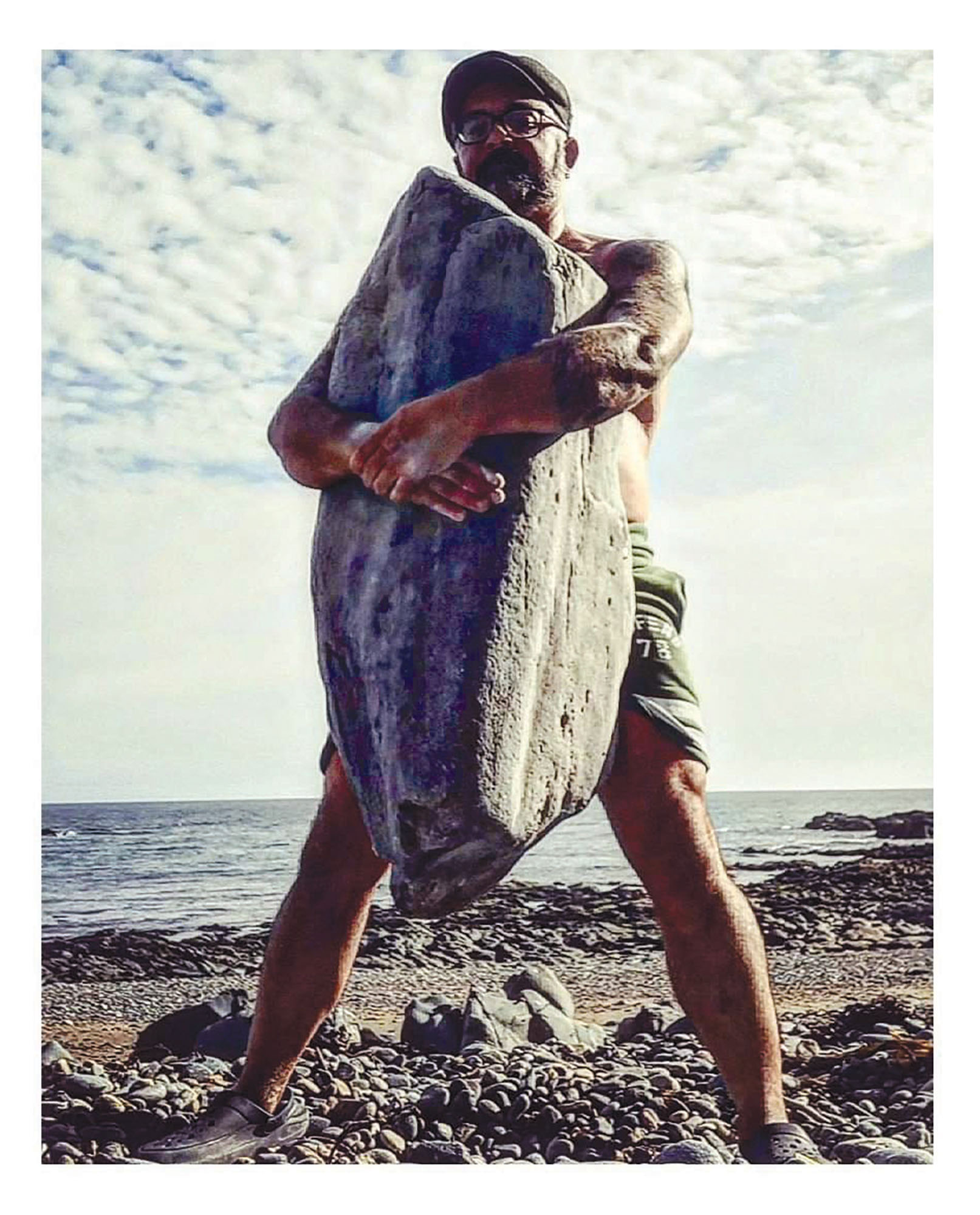
Scattered across Ireland are dozens of massive stones of such important historic and cultural significance you might say they belong in a museum. A man named David Keohan, from Waterford, Ireland, researches these stones, then seeks them out in graveyards, abandoned farmlands, and weed patches behind neighborhood pubs. But when he locates his quarry, the man they call Indiana Stones doesn’t pack it off to a museum. He squats down, wraps the rock in a bear hug, and tries to lift it.
Keohan, who holds a kettlebell lifting world record, began stone lifting when his gym closed during the pandemic. He eventually discovered stone lifting was deeply important to ancient Ireland as a test of strength and character. In the eighteenth century, English colonial rulers halted the practice in an attempt to squash Irish cultural traditions. Keohan wants to revive it.
Many of the stones have fascinating histories. Some served as beheading platforms, with deep ax scars marring the rock. There were lifting stones for women, with tales of strong gals heaving the boulders over six-foot fences. Today, Indiana Stones often has to clear decades of overgrowth to lift the things. The rocks—which can weigh three hundred pounds—are usually sitting right where the last person set it down, sometimes centuries ago.
Keohan guesses there are sixty-some ancient lifting stones in Ireland. He has found thirty and lifted all but two, most recently bested by a four hundred forty pound monster. Sometimes the last-known person to have lifted the stone joins Keohan for the attempt, and after his lift they celebrate as all macho stone lifters do: with tea and cookies.
The Strangest Forest in America
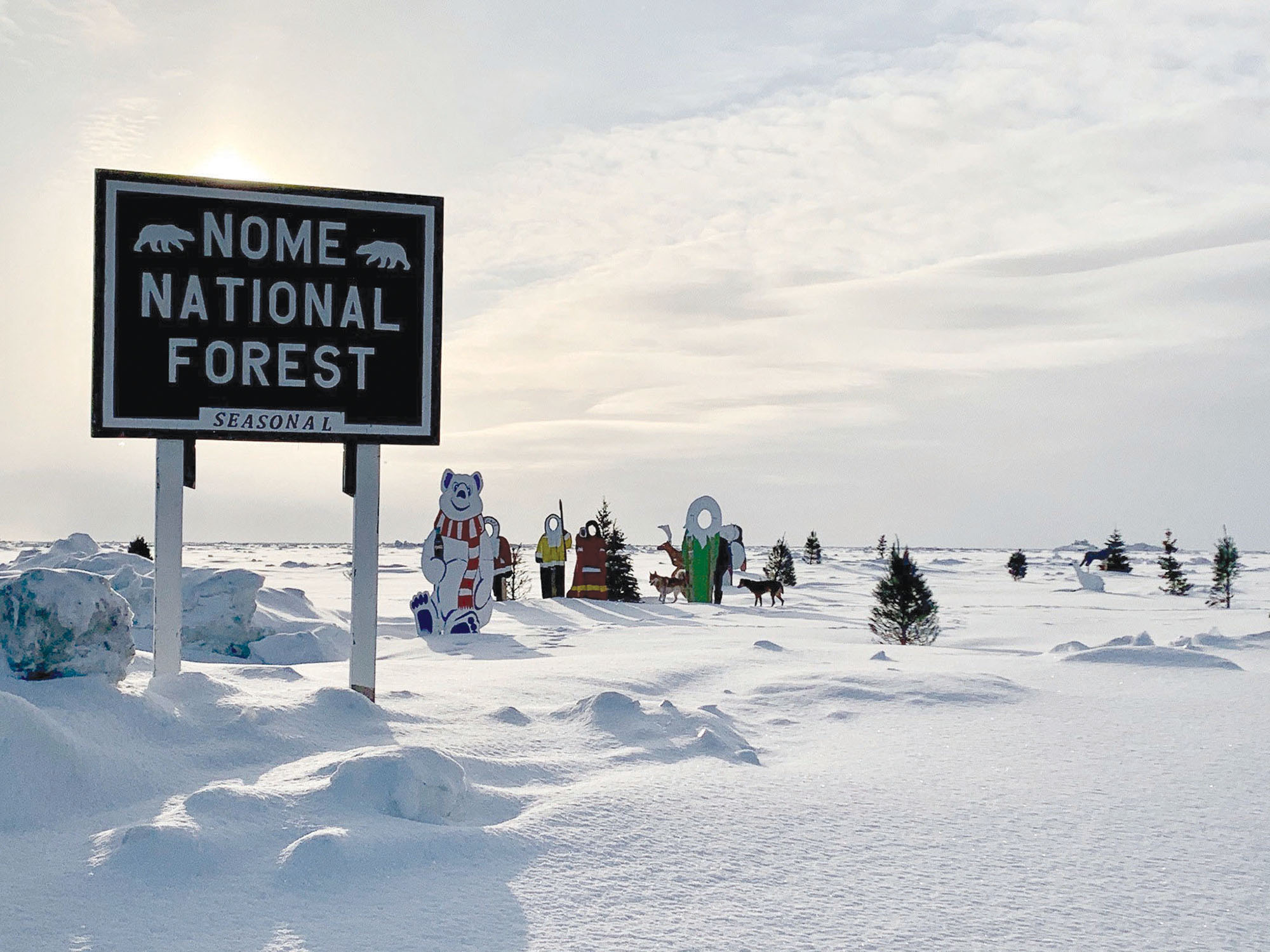
The country’s strangest national forest grows from the surface of the frozen Bering Sea, near Nome, Alaska. Each winter, the trees appear as if by magic. A forest of small evergreens, perhaps one hundred in number, their dusty greens fading to orange in the low Arctic light. The forest attracts animals, of course, especially reindeer and polar bears, and in recent years, a mermaid. Oh, sorry, did we say the strangest national forest? We meant the fakest.
Nome is entirely, and somewhat famously, treeless. Back in the 1990s, the owners of a beloved local watering hole called Fat Freddie’s decided to play a little trick on the tourists who flock to Nome each March for the Iditarod sled dog race. They collected old Christmas trees and erected them on a patch of frozen sea, getting a little chuckle at the out-of-towners’ confusion. For the forest’s second, uh, growth, someone painted and installed a “Nome National Forest” sign in the U.S. Forest Service’s standard brown and white. A USFS agent got wind of the sign and threatened legal action, but nothing came of it. The sign has reappeared every year since.
As the ice begins to recede in the spring, residents head out to the forest to retrieve the wooden animals and mermaids and hockey players that inhabit the forest, then store them away until next winter. The trees are left to drift with the broken-up sea ice, a ghost forest silently receding into the deep.
Foiled Again: The Man Who Would Walk Across the Ocean
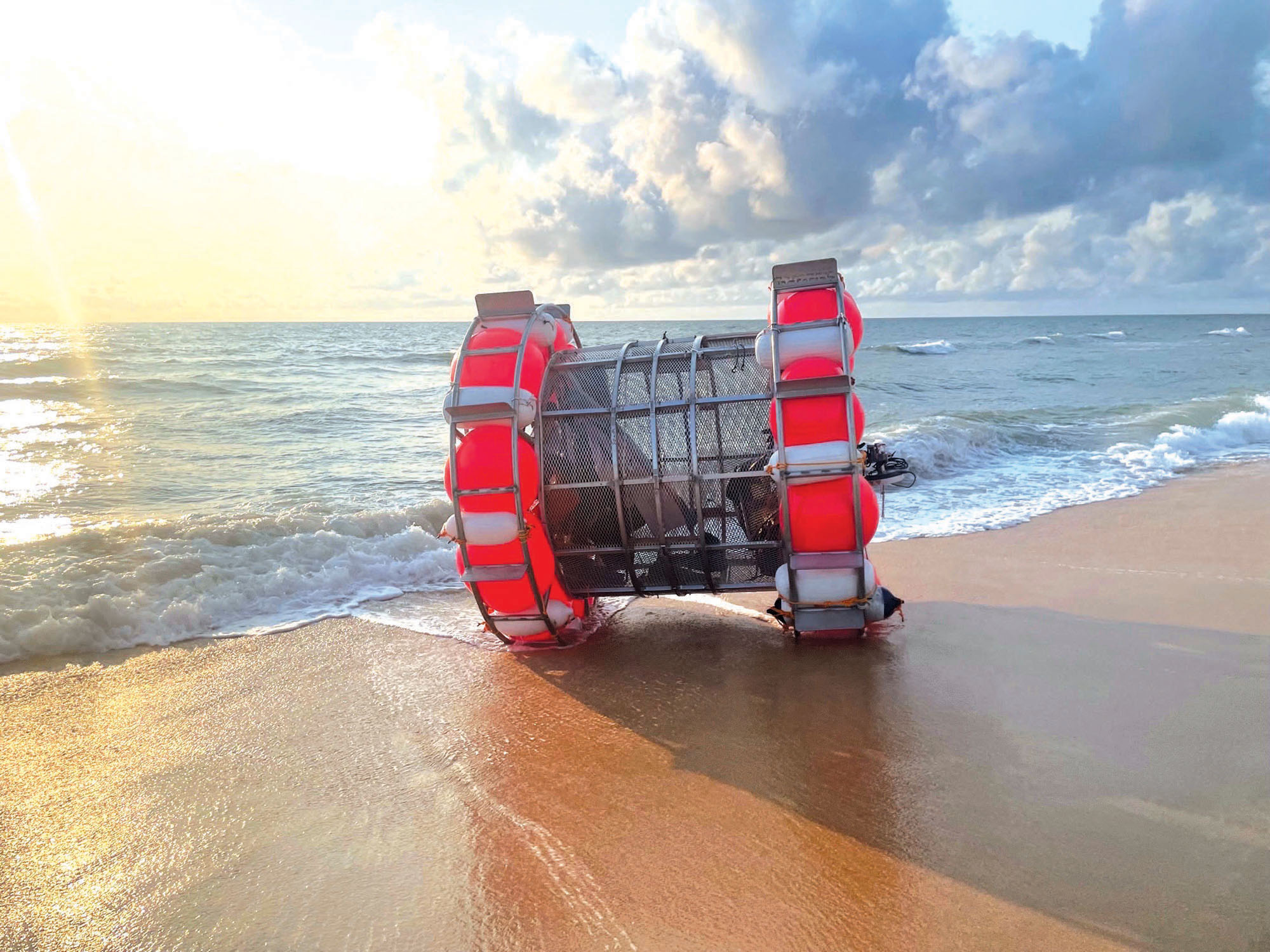
There are many ways adventurers might try to cross the Atlantic Ocean. Some have stroked across on custom rowboats or stand-up paddleboards. A man called Poppa Neutrino once purposely drifted from Massachusetts to Ireland on a raft made entirely of trash. The Atlantic seems to call for experimentation. But these crossings can’t touch the simple, audacious goal of a man named Reza Baluchi. He aims to run across the surface of the Atlantic. In a giant floating hamster wheel.
Baluchi, who lives in Florida, is a former member of the Iranian national cycling team and an accomplished distance runner. In 2012, Baluchi started production of his self-made contraption, an aluminum frame wrapped in thick transparent plastic, kept afloat with buoys, with a series of paddles on its surface that turn when he runs inside. A hamster wheel in a bubble. Baluchi calls it a “hydro pod.” The U.S. Coast Guard calls it “manifestly unsafe.”
In 2014, he began a series of voyages. First, he tried to “run” the Bermuda Triangle; the Coast Guard responded to a distress beacon Baluchi set off (accidentally, he claimed) seventy miles off Florida. He’d also apparently asked a passing boat for directions to Bermuda. Three more times, he set out in this cat and mouse game, only to be rescued or forced back to shore by authorities. In September 2023, he again paddled away from Florida only to be detained by the Coast Guard sixty miles offshore. When asked his destination, Baluchi replied “London,” then, frustrated at being stopped again, he tried to fend off the Coast Guard officers with knives. He was arrested and returned to port.
Baluchi’s motivation? Same as anyone else who’s sought to do something difficult for the first time. “If you drive a boat, nobody cares,” he once told VICE. “Bubble, nobody did before.”
The Art of Surviving a Fall From an Airplane
If you freefall forty-eight feet, you have a fifty percent chance of survival. At seventy feet, those survival chances plummet to ten percent. Above seventy feet and, well, how’s your luck? Let’s put it this way: Have any of your lottery tickets hit the jackpot? Surviving a fall of more than a hundred feet puts you into Powerball-winning territory. So imagine, then, the odds of surviving a fall of tens of thousands of feet.
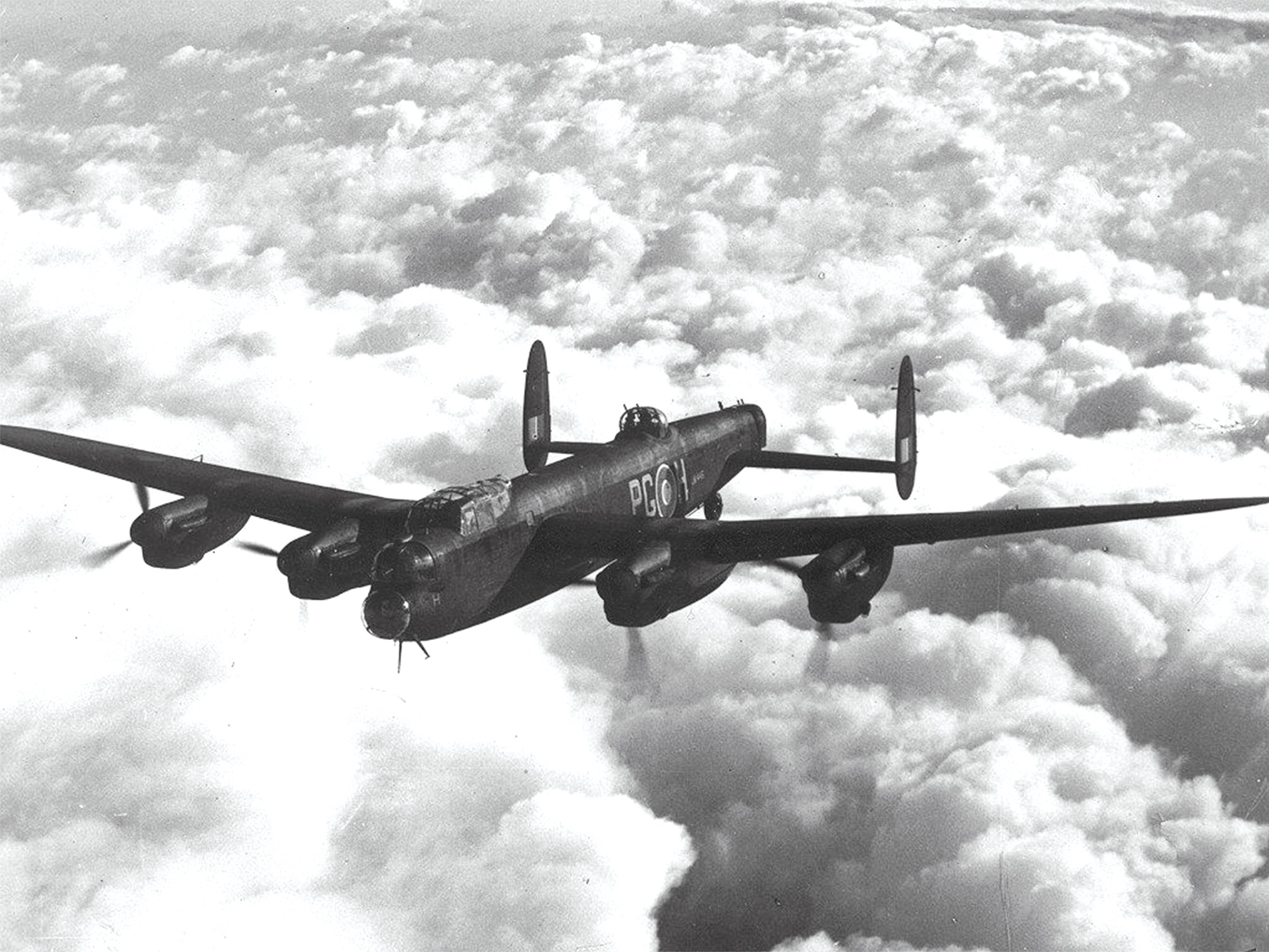
Alan Magee probably thought those odds were insurmountable in January 1943, when his B-17 bomber had its wing shot off over France. He tumbled from the plane, unconscious, at twenty thousand feet, regained consciousness, realized his parachute had been shredded, and continued falling, clear through the glass roof of a train station. Magee had broken bones and internal bleeding, but he survived and made a full recovery.
Magee wasn’t the only aviator to survive a massive fall; he wasn’t even the only one in World War II. In 1944 during a bombing raid on Berlin, Royal Air Force tail gunner Nicholas Alkemade’s plane was shot and caught fire—and so did his parachute. He made the horrifying choice to jump chute-less rather than burn to death. Incredibly, pine trees and deep snow cushioned his fall. He walked away with little more than a sprained knee.
Physicists say there are tricks to surviving falls of such heights (though it’s generally not studied, since pitching people out of airplanes for science is frowned upon). Being small is nice, as heavier objects hit the ground at faster speeds than lighter ones. Landing in trees is good, a snowy slope even better, and definitely don’t land on your head. Really though, wearing your lucky underwear is probably the most important thing you can do. Besides not fall out of the plane.
42 issues. 11 years. Independently owned. Printed on 70lb uncoated paper with a soft-touch cover, solar-powered, and shipped in a brown paper envelope. Free domestic shipping.