Mementos, Notes, and Fragments
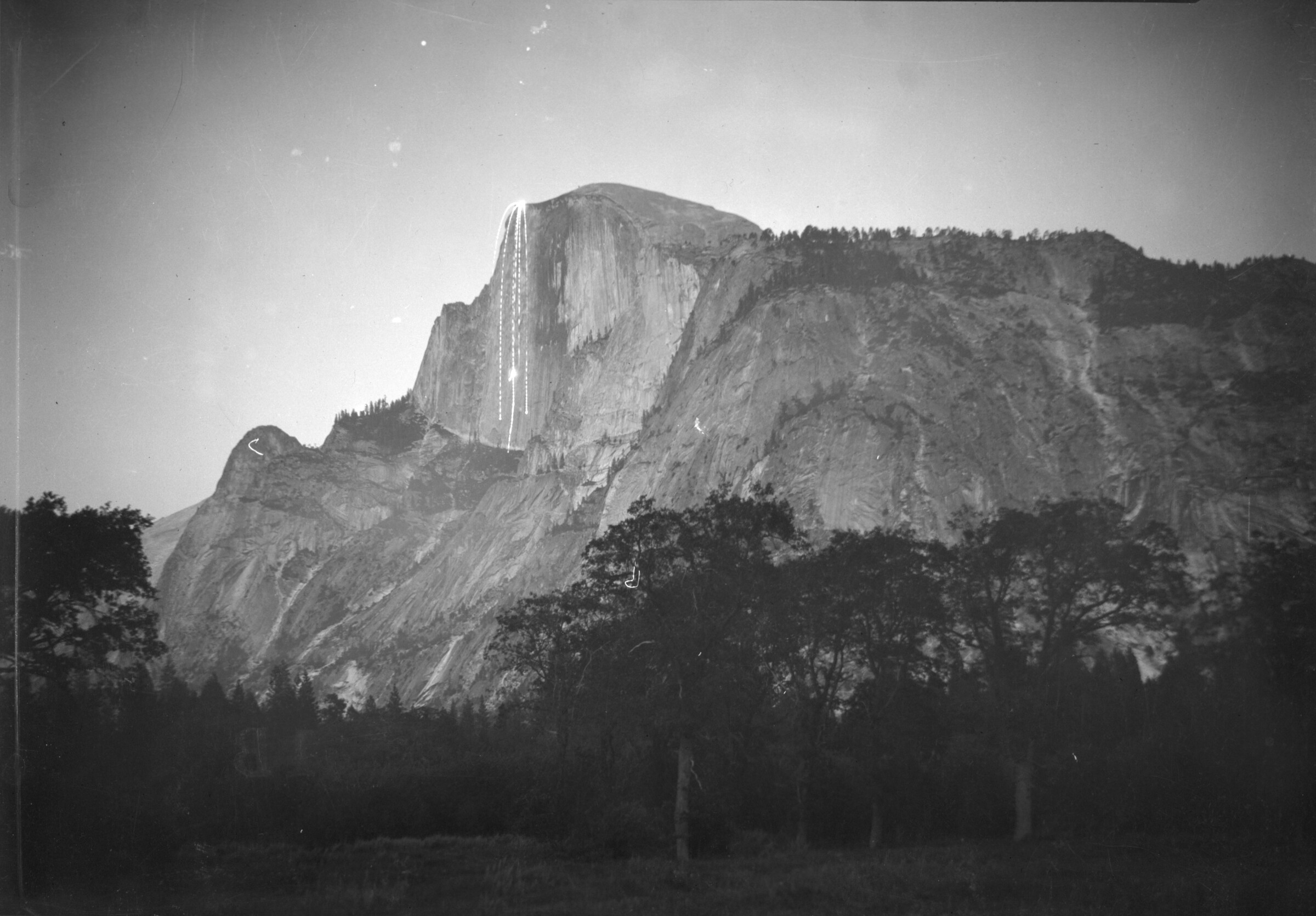
In Yosemite, It Rained Fire Nearly Every Night for Most of a Century
The people do want to see their firefall. When Yosemite National Park’s ephemeral Horsetail Falls “burns” red-orange with the sunset behind it, so many spectators flock to view the rare event that they have collapsed a huge portion of Merced River bank with their weight. Naturally occurring Horsetail, however, is a latecomer to cliffside spectacle: From the 1800s to 1968, park workers high above the Yosemite Valley floor nightly pushed an actual fire off a crag, often drawing thousands of onlookers.
The practice started in 1872, when James McCauley, who operated an inn at the Mountain House, pushed his cooking fire off Glacier Point—allegedly (and perhaps apocryphally) out of anger because too few guests showed up for dinner. McCauley continued the stunt for valley visitors sporadically and it was held more formally beginning in 1899 by David Curry, whose fledgling Camp Curry campground location was considered cold and out of the way but had a perfect view of Glacier Point above.
The park upheld the tradition through the 1900s, with pauses for the world wars, and by the 1950s crowds would gather at Camp Curry as early as six in the evening to snag the best views and watch a series of presentations and songs. At nine, the emcee would ask for silence and calls would fly between valley and point, culminating with “Let the fire fall!” Wrote one witness, “It looked nothing like the time-exposure photography that would appear on postcards, depicting that solid line of orange extending down the cliff. Instead, it would be little sparks—thousands and thousands of individually discernible sparks—floating down the cliff in complete silence…a spiritual experience.”
By early 1968, the winds had shifted on environmental thinking and park use, and National Park Service Director George Hartzog ordered an end to the firefall, citing crowd damage to meadows and the ten wheelbarrows of bark burned every night. The last firefall was held on January 25 of that year and was described in a press release as “…fat and long…and exceptionally brilliant.” It was, the park reported, “dandy.”
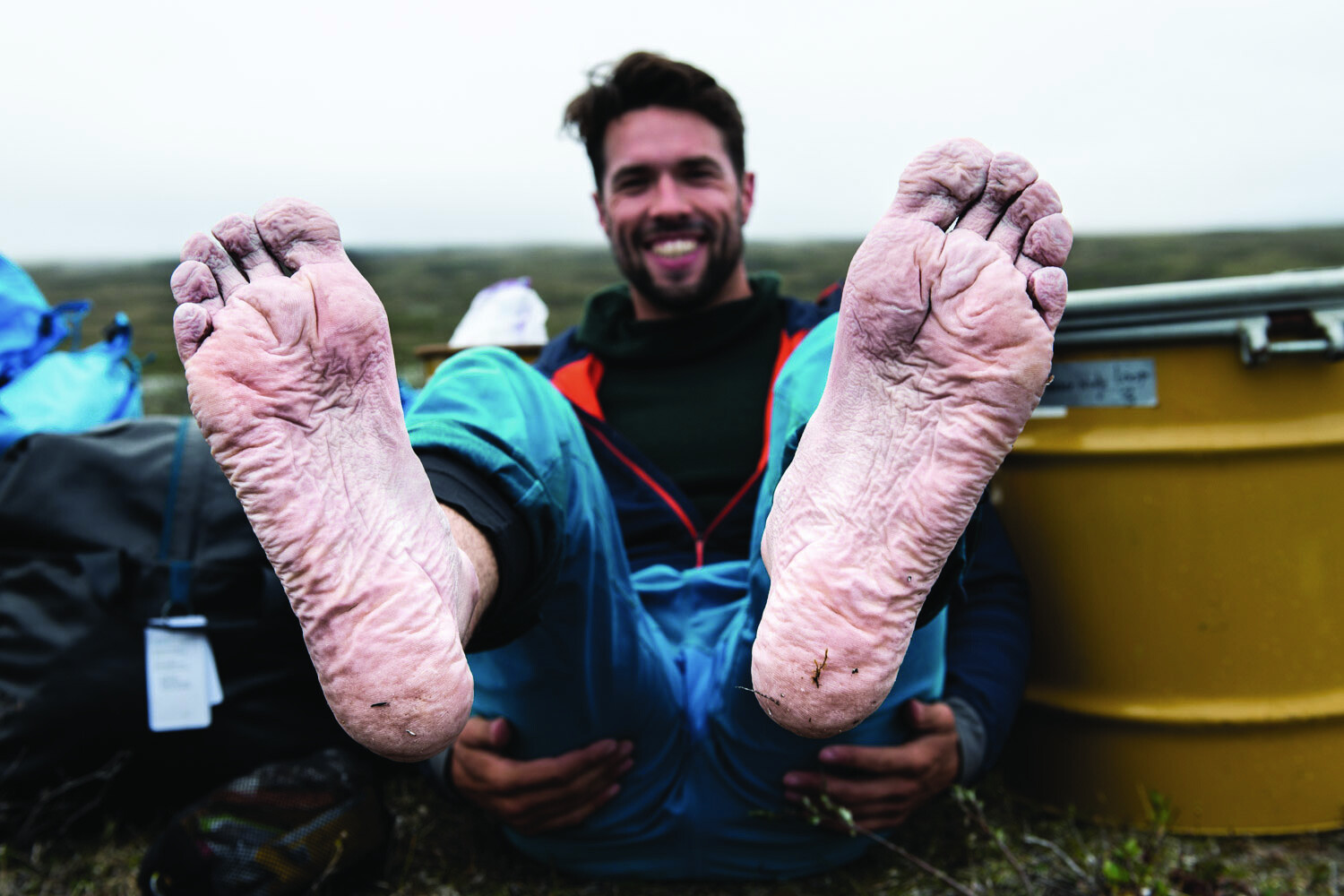
Slippery When Wet? Not When You Get a Grip Like This
’Tis the season of pruney fingers and toes: long days on the river, languid afternoons at the swimming hole, evening glass-off paddle-outs into tangerine sunsets that leave your digits puffy and wrinkled and resembling uncooked hot dogs. For most of human history it was assumed that these wrinkles form when fingers and toes absorb water. Even after research in the 1930s showed that pruniness won’t occur if finger nerves are severed, scientists clung to the hypothesis. Not until the early 2010s was there a radical rethinking of the weird body effect all of us have likely pondered.
In 2011, evolutionary neurobiologist Mark Changizi, from 2AI Labs in Boise, Idaho, was discussing the question with his student, Romann Weber, who suggested the shriveled piggies could be acting as tire treads. As the French say, voilà. It turns out that a small amount of water enters your pores, triggering vasoconstriction of blood vessels, which creates ridges and valleys in your skin that channel water away. This results in better grip of wet objects, theoretically offering an evolutionary advantage to hungry proto-humans hunting mussels on slippery shoreline rocks.
How much better? A 2013 study found that people moved wet marbles and fishing weights twelve percent faster with wrinkled fingers than with unwrinkled. Another study, released in late 2020, showed that unwrinkled fingers had to use a “significantly higher amount of grip” on wet objects than wrinkled. The 2011, 2013, 2020 researchers all concluded that more research is needed—and we agree. We’ll begin our study by reaching into an ice-filled cooler and pulling out wet cans of liquid happiness, one after another, until we have the answers.
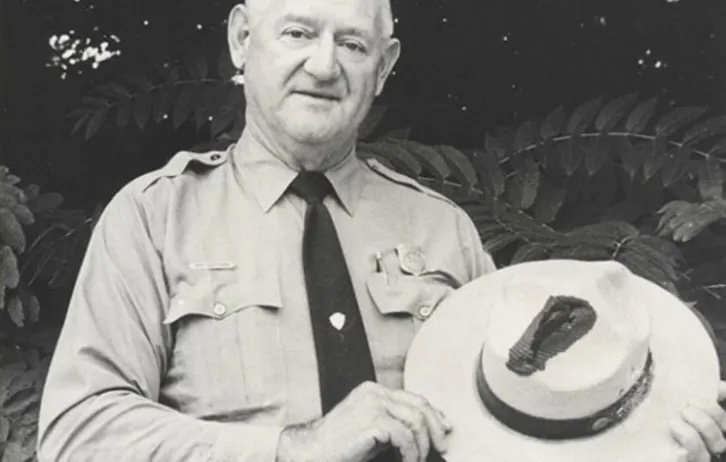
What Are the Odds? Actually, They’re 4.15 x 1032
The man who holds the record for being struck the most times by lightning—seven!—was not named Sparky McSparkington, alas, but rather the unremarkable “Roy Sullivan.” A national park ranger stationed in Virginia, Sullivan’s tombstone reads “We Loved You, But God Loved You More,” a notion of faith that should be weighed against the fact that he was first struck as a child while scything a wheat field with his father (though Sullivan didn’t count it in his total because lightning hit the scythe and left him uninjured).
Sullivan was born dirt-poor in the Blue Ridge Mountains in 1912, skipped out of high school before graduating, and signed with the Civilian Conservation Corps. In 1940, he joined the fire patrol at Shenandoah National Park and was assigned to an outlook tower. Two years later, an April storm rolled through and lightning struck the tower. “It was hit seven or eight times, and fire was jumping all over the place,” Sullivan told a reporter. He tried to run for cover, but “I got just a few feet away from the tower, and then, blam!”
The bolt left a burn down his right leg and blew off his big toenail, and for the next twenty-seven years Roy lived a relatively normal ranger’s life.
But then 1969 arrived and in July a charge hit a tree and deflected toward his truck, burning off his eyebrows and setting his hair on fire. One year later, he was struck in his front yard. Two years after that, he was working in a ranger station when, zzzitzap, his hair was on fire again. There followed strikes in 1973, 1976, and 1977, the last of which occurred when he was trout fishing. It hit the top of his head, set his hair on fire yet again, scorched his underwear, deafened one ear, and burned his chest and stomach. While fleeing to his car, he was confronted by a black bear, which stole his trout before he drove it away with a stick. Sullivan said that was the twenty-second time that happened (bear, stick, hitting), surely another record.
Was our spark ranger spinning electric yarns? Shenandoah’s superintendent verified the incidents, Sullivan did show off a burned patrol hat and a blackened wristwatch, and Guinness recognized his world record. Still, whether it was one, seven, or eight zaps, one can’t help but think of that epitaph and wonder, you call that love?
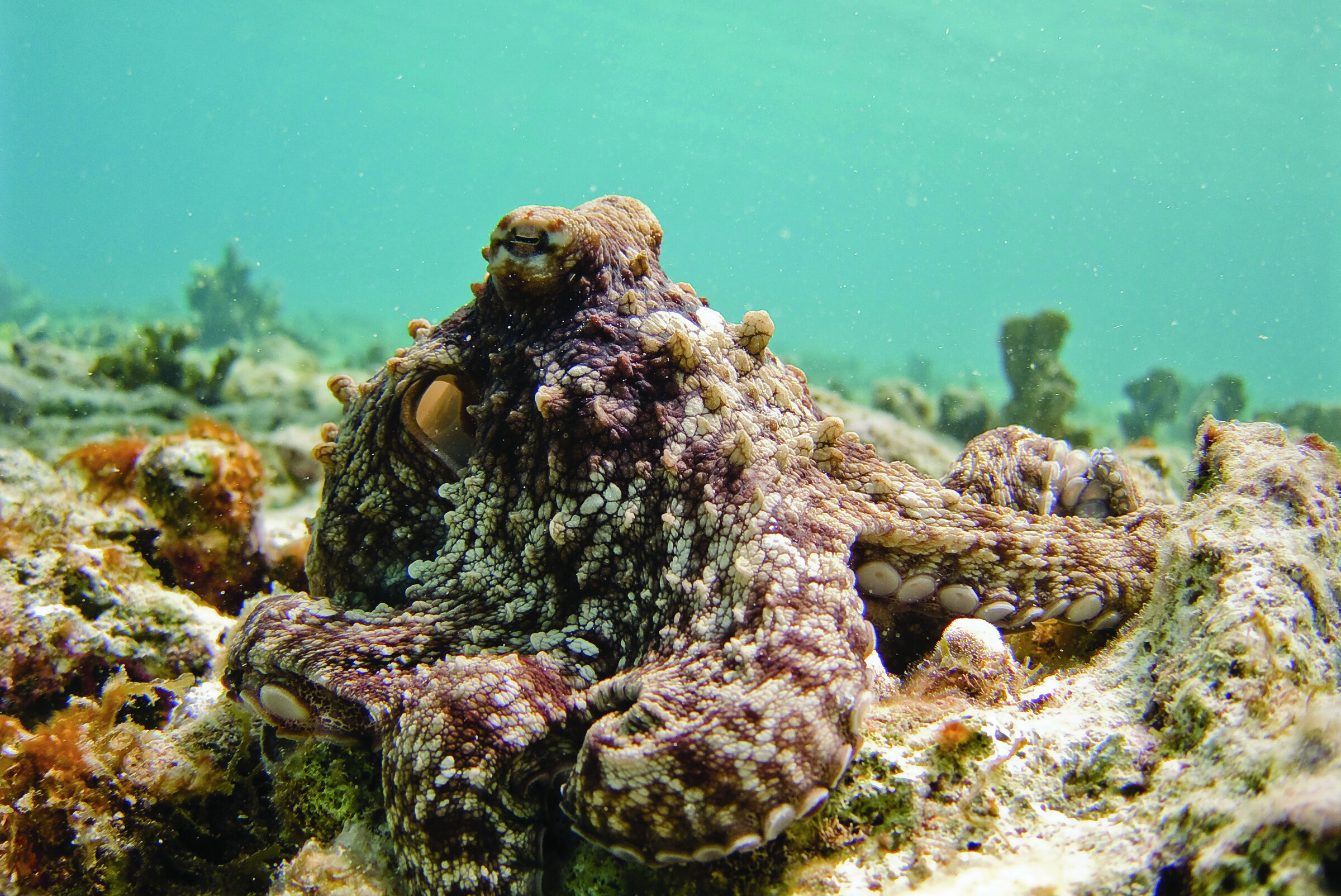
Octopusing As a Way of Life
The family Octopodoidea has been likened to an alien lifeform, so radically different as it is from we vertebrate humanoids. Octopuses have three hearts and jet propulsion, and they can regrow arms, shoot acid, inject venom, and drill through clam shells. Their arms are so dexterous they can untie surgical stitching, and they almost literally have minds of their own: Two-thirds of their five hundred million neurons are located in their arms, which can operate independently.
They also hunt more than ninety types of prey, each of which requires a different technique, and they live in a remarkably complex environment—reasons suggested for their highly developed cognition. Octopuses have personalities, can recognize human faces (and make clear the people they don’t like), use tools, and entertain themselves with play.
They’re also extremely curious. Pioneering cephalopod researcher Dr. Jennifer Mather, of the University of Lethbridge, Canada, likens them to five-year-old children: “How does this work? What happens if I do this? Oh, I can use that tomorrow….” Mather has dedicated herself to the ethics of octopus treatment and spoken widely about their behavior. Of all her observations, perhaps the most poignant is what she told the creators of the Academy Award-winning documentary My Octopus Teacher.
“Everything in an octopus’s life,” she said, “is about the conflict between curiosity and fear.”
That sounds an awful lot like the calculus we take when embarking on adventures—and a right good idea to ponder as we consider our relationships with the other-than-human, whether we’re using our brains, hearts, or arms.
42 issues. 11 years. Independently owned. Printed on 70lb uncoated paper with a soft-touch cover, solar-powered, and shipped in a brown paper envelope. Free domestic shipping.