Mementos, Notes, and Fragments
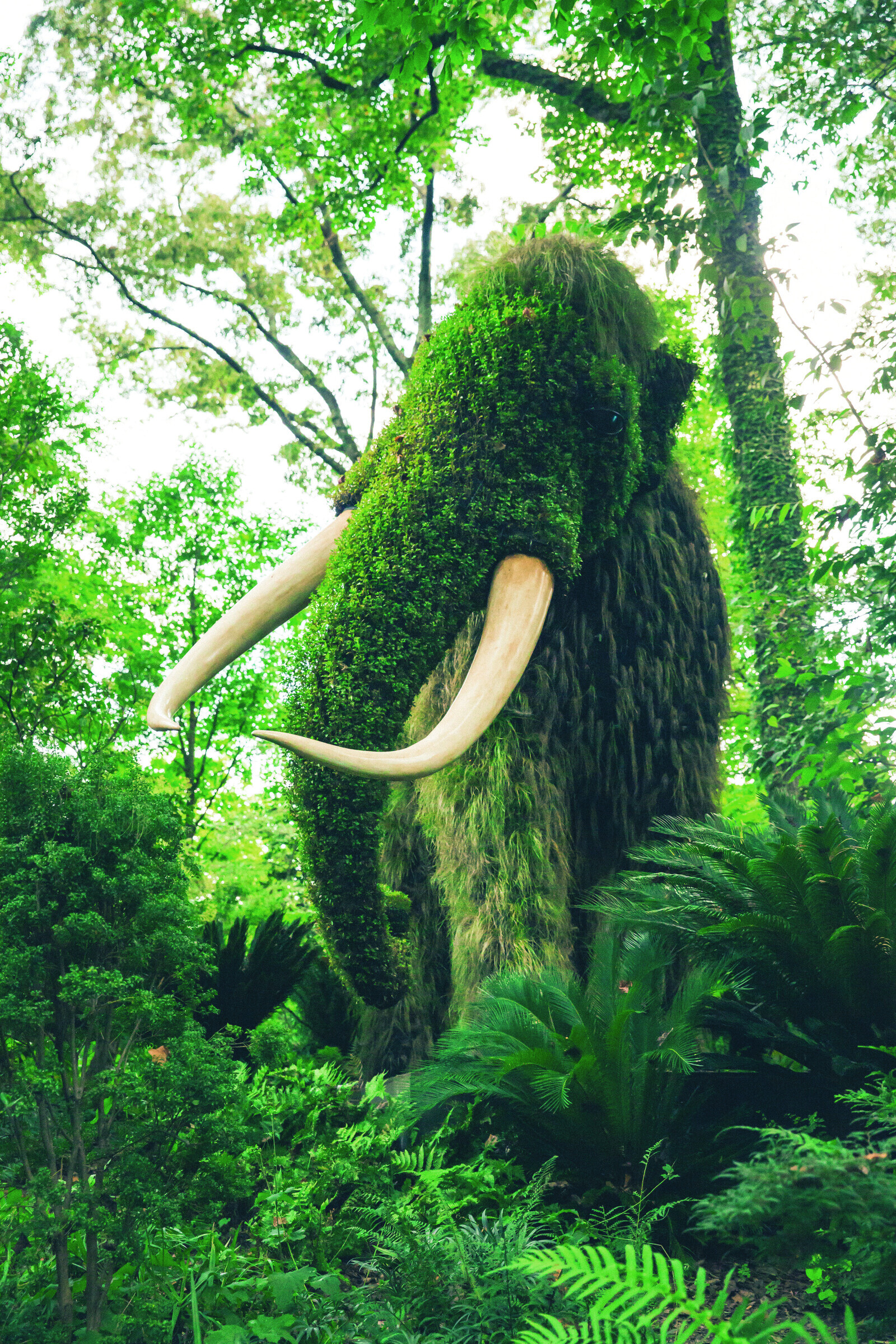
‘Hold My Beer,’ Said the Young Male Mammoth
In Hot Springs, South Dakota, thirteen of the fourteen mammoths caught in a sinkhole were male. The mammoth that tumbled into a kettle hole in Condover, England? Male. That fell through the ice on the Berezovka River in Russia? Male. Seeing a pattern here? So did Love Dalén of the Swedish Museum of Natural History, whose team looked at ninety-eight mammoth specimens found in sinkholes and other natural hazards and discovered that sixty-nine percent of them were males.
“In many species, males tend to do somewhat stupid things that end up getting them killed in silly ways, and it appears that may have been true for mammoths also,” said Dalén.
The researchers speculate that mammoth society was similar to that of today’s elephants, where mature females lead the herds. (“Old females are very knowledgeable,” Dalén said. “They know best.”) At about age fourteen, which is when the typical human male thinks he knows everything there is to know, elephant males head out on their own and live as lone wolves or form packs with other young males. Mammoths were likely the same. What could go wrong?
Oh, right. Everything.
The majority of mammoths died out around 10,500 years ago, but a small population survived on Wrangel Island in the Chukchi Sea until 3,700 years ago. They went extinct due to lack of genetic diversity, so the boys are off the hook for that one.
There Are Easter Eggs Hiding in Swiss Topo Maps
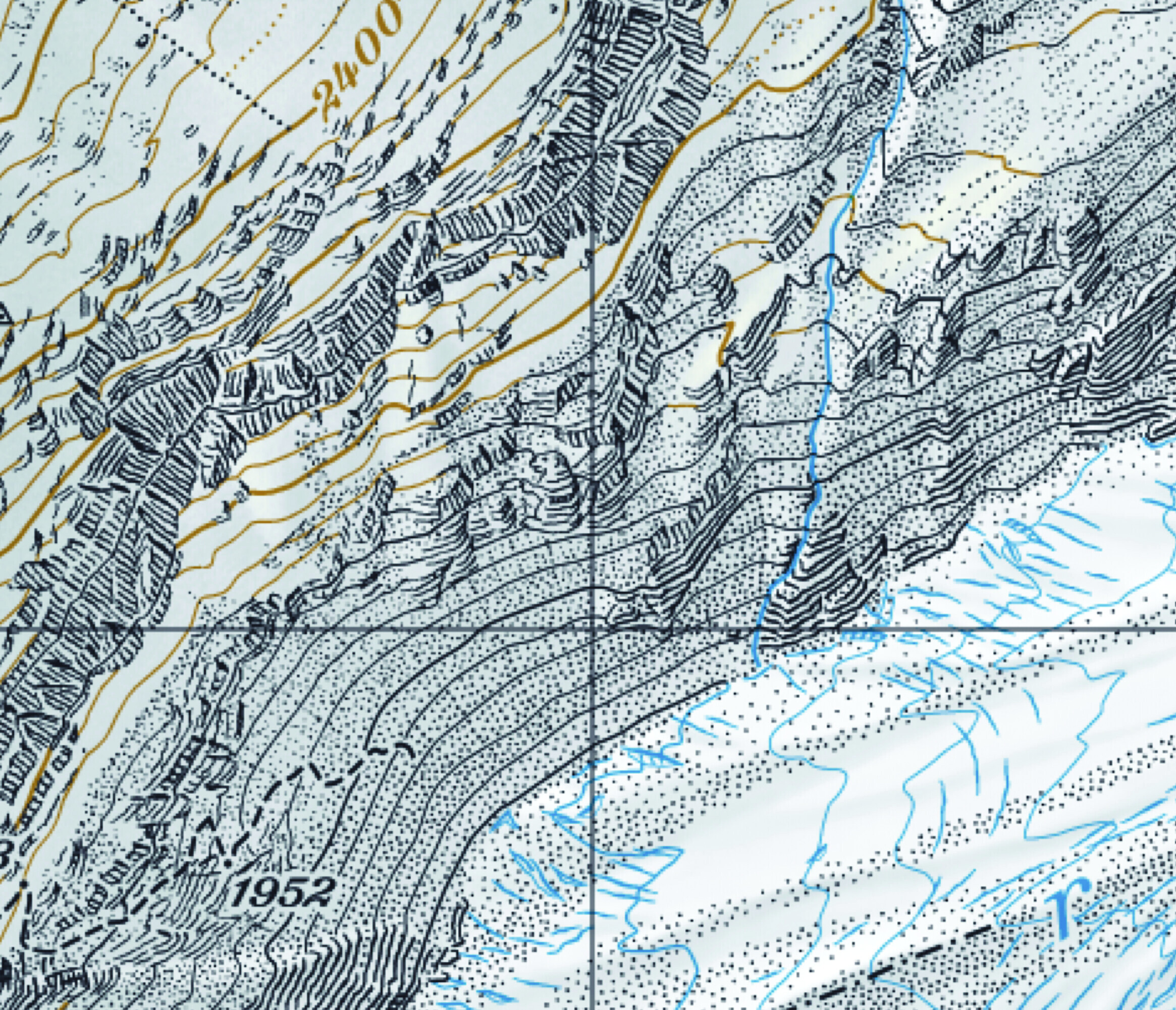
Swiss government cartographer Othmar Wyss was feeling cheeky. One day in the early 1980s, he was working on a topographical map of the Eiger and its Nordwand, or north face, home to a hanging icefield called the White Spider, the linchpin of the first successful ascent in 1938 and now part of climbing’s lore. As if doodling, Wyss drew a leg extending from the icefield, then another, then another. He turned the White Spider into an actual spider and left it there. None of his colleagues caught his sneaky prank, and the 1:50,000-scale 1981 topo map of the Eiger was printed with a very, very small arachnid between its contour lines.
The spider was discovered and removed seven years later, but it was not the last hidden illustration Swisstopo cartographers slipped into their work. Some are subtle artistic enhancements of actual physical formations, like a face that people see on a hillside not far from the Eiger, which cartographer Friedrich Siegfried gave eyebrows and a smile. Others are completely fabricated, such as a fish in a lake or a mountain climber on the border with Italy. The boldest of these was a marmot that Paul Erlich embedded in the 1:25,000 Aletsch Glacier map shortly before retiring in 2011. When discovered three years later, his former bosses at Swisstopo, perhaps impressed that he snuck the first successful Easter egg into a map scaled that small, asked if there were any more secret drawings. He told them he had many ideas, but the marmot was his “best,” and he left it at that.
The Perfume That Smells Like Rain
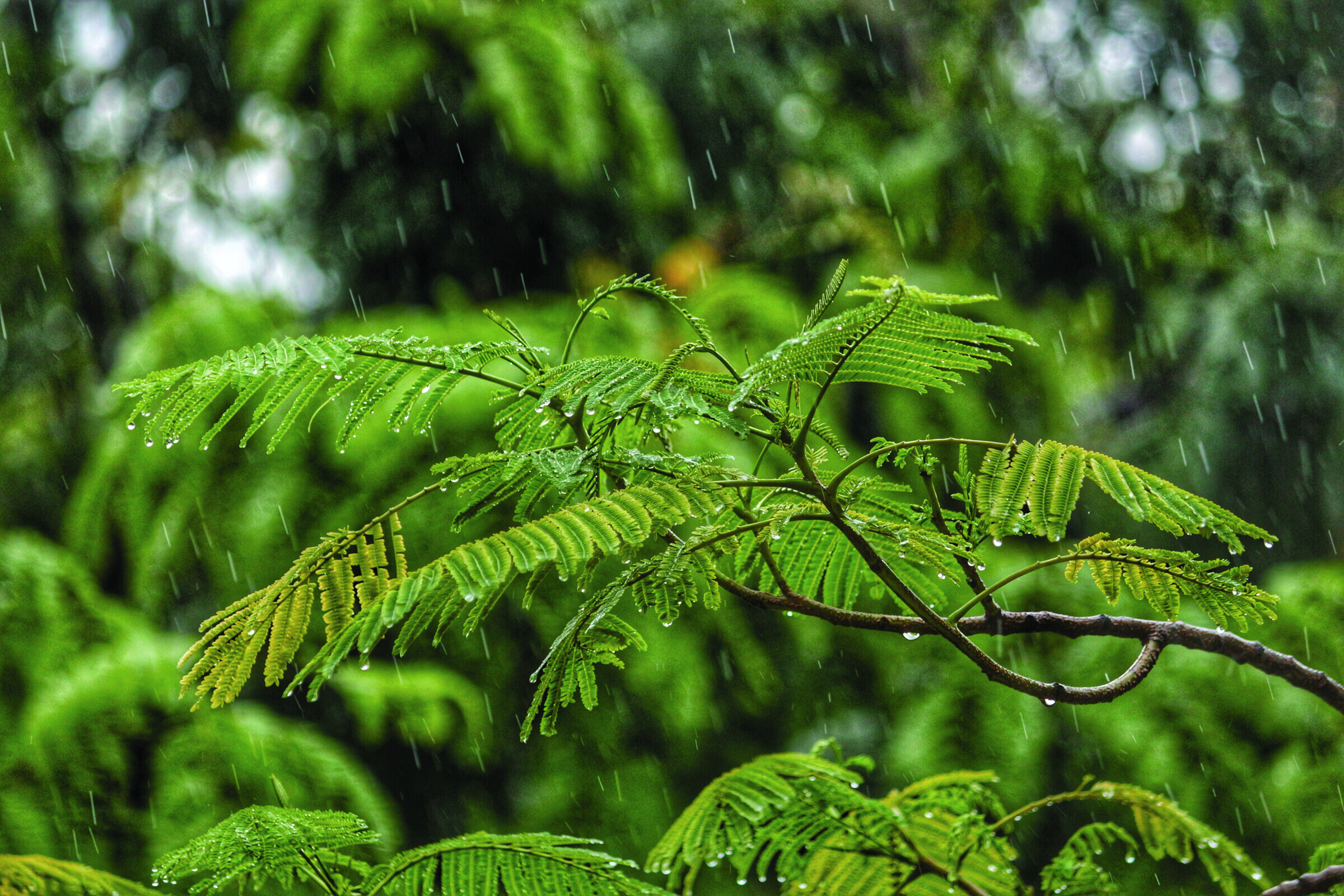
Petrichor, that’s the word you’re trying to remember. You know, that wonderful scent when rain hits bare soil that’s been dry for a while. Heady, evocative, and transitory, petrichor reflects the landscape it arises from—tangy sage in the desert, cooling mint in your garden—a kind of olfactory terroir. In the old Indian city of Kannauj, they call it mitti attar, earth’s perfume, and they’ve been bottling it as a wearable scent for centuries.
The process starts with the seasonal monsoon rains. Rain falls on the earth and sinks into the soil, which dries hard. In the summer, the packed earth is dug up with sticks, reconstituted with water, shaped into disks, and baked in a kiln. The disks are placed in giant copper cauldrons, covered with water, and sealed inside. Distillers heat the caldrons with cow-dung fires for six or seven hours, and vapor released from the bricks flows into a receiver filled with sandalwood oil. When every last bit has been vaporized, they drain the cauldron and pour the remaining oil, now smelling like petrichor, into leather containers called kuppi—but only kuppi. “The moment you put it in the leather bottle is important, like the moment you put it on your skin,” an Indian mitti attar expert named Shukla told Cynthia Barnett for her book Rain. “It allows the attar to release any remaining moisture and realize its true scent—in this case, the first rain on the ground.”
Petrichor can occur before rain falls, when humid air interacts with soil, and it’s been known to drive drought-stricken and parched animals to walk in circles, apparently in search of the water they smell.
Patches? We Need These Shrinking Patches!
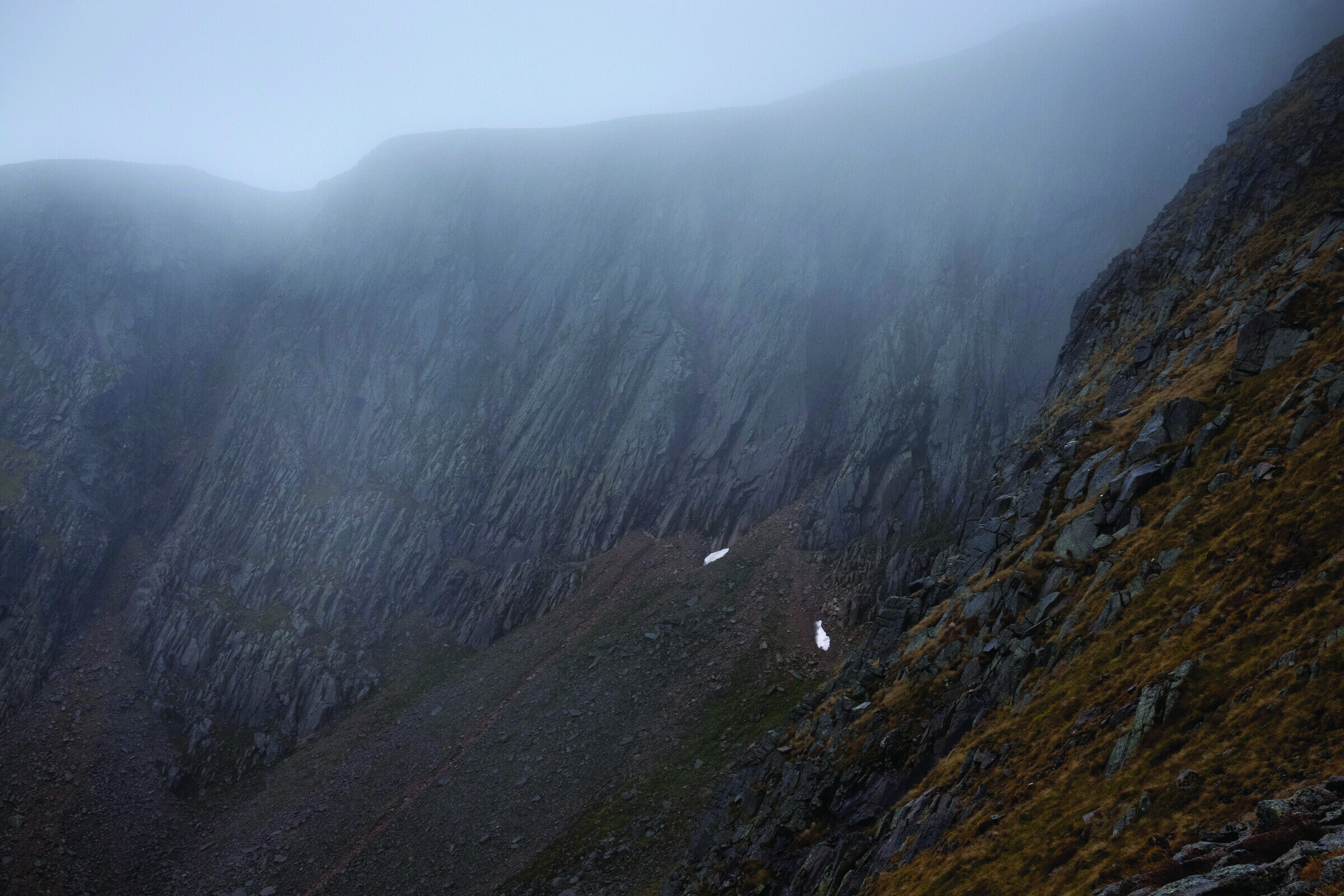
Scotland and England don’t have glaciers, but they do have people who are passionate about snow. Like, really passionate. Like, passionate enough to record every drift, deposit, and remainder of snow that survives the winter. In 2015 (a good snow year), there were six hundred and seventy-eight, each one of them documented and, in their own way, beloved. Most beloved of all is Sphinx, located in a northeast-facing gully on Am Bràigh Riabhach, Britain’s third-highest mountain, in Scotland’s Cairngorms. In a typical year, Sphinx is the sole bit of snow to make it across summer to the following winter. It has only melted completely in seven of the last three hundred years, and when it happened the first time, in 1933, the Scottish Mountaineering Club declared it should be national news.
The most ardent “snow patcher” is Iain Cameron. When not working as a health and safety officer, he’s tracking snow, assembling an annual report for the national weather service, and maintaining a social media presence for fellow patchers. In 2017 and 2018, Sphinx gave up the ghost, so when he went out in October 2019 for a well-check, Cameron expected the worst. “Pristine white with freshly fallen snow, there was no discernible old firn, and I feared it was gone,” he wrote. “I hurriedly cleared away the fluffy white new stuff, and with immense satisfaction saw the dirty remnants of 2018’s Sphinx slumbering beneath its new winter duvet. I shoveled as much of the cleared snow as I could back onto the Sphinx to leave it as I found it, and returned to my rucksack. Job done.”
42 issues. 11 years. Independently owned. Printed on 70lb uncoated paper with a soft-touch cover, solar-powered, and shipped in a brown paper envelope. Free domestic shipping.