Mementos, Notes, and Fragments
More Stuffing? Please!
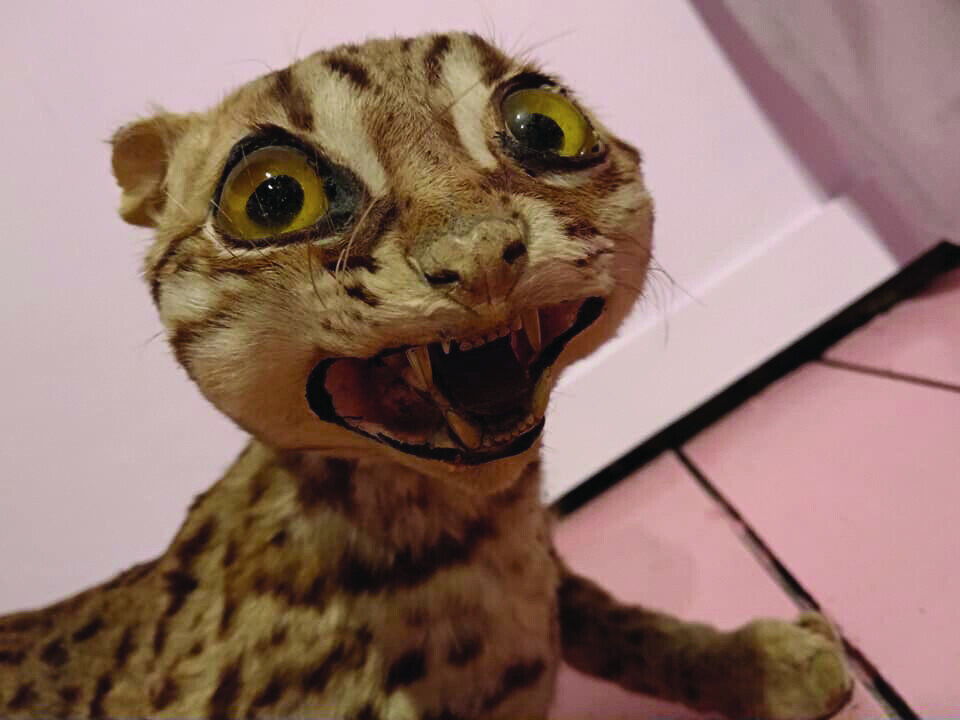
The annual National Taxidermy Championships have thirty-seven categories of awards, some with cash prizes of up to fifteen hundred dollars, and none of them contain the word “crap.” Which sounds like an oversight but is in fact an opportunity, as the arena of crappy taxidermy offers far more room for creative expression, artistic interpretation, and the bending of genres than being hidebound by tradition. However, be advised that trophies for crappy taxidermy consist mostly of internet notoriety, meme-ification, and very very small book contracts.
In 2009, New York apparel designer Kat Su created a Tumblr called Crappy Taxidermy. (Remember Tumblr? Us neither.) It was just as it sounds: a photo archive of misshapen heads, bulging eyes, deformed postures, and creatures most likely to appear in Stephen King’s daydreams, all collected from the darkest and dustiest corners of the internet. Soon followed a Twitter and Instagram under the Crap Taxidermy handle, this time created by a British enthusiast named Adam Cornish. Kat Su then published a book, Crap Taxidermy, and Cornish published his own tome, Much Ado About Stuffing. It was all good, though, mutual admiration and whatnot, and it seemed there was no medium crappy taxidermy couldn’t conquer.
Today, alas, Su has moved on, while Cornish plugs away, mostly on Twitter, posting pics of his pet cemetery escapees with captions only a dad-joke lover could love. Crappy taxidermy, as it turns out, best speaks for itself.
The Cold War Ends in a Bust
The Soviets were late to Antarctica. In 1911, when Norwegian Roald Amundsen was first to the South Pole, Russians were mired in revolutionary turmoil (between 1910 and 1913, there were more than thirteen thousand peasant uprisings). In 1956, Americans built the first Scott-Amundsen station at the pole. It wasn’t until 1958, three and a half decades after Vladimir Lenin tamed the tsarist beast, that the Soviet Union, in response to the Americans, grabbed the decidedly second-place accomplishment of being first to the southern pole of inaccessibility, the farthest point of land from any Antarctic coast.
Even that first came with something for the Russians to brood upon. The authorities in Moscow had planned for the team of scientist-adventurers to build a robust research station, another thumb in the eye of Uncle Sam after the successful launch of the Sputnik satellite in 1957. But twelve days of pummeling by the harshest weather on earth, where the year-round average temperature is minus seventy-eight degrees Fahrenheit, and the team bailed with just a single hut built, scurrying home to Siberia, where it was warmer.
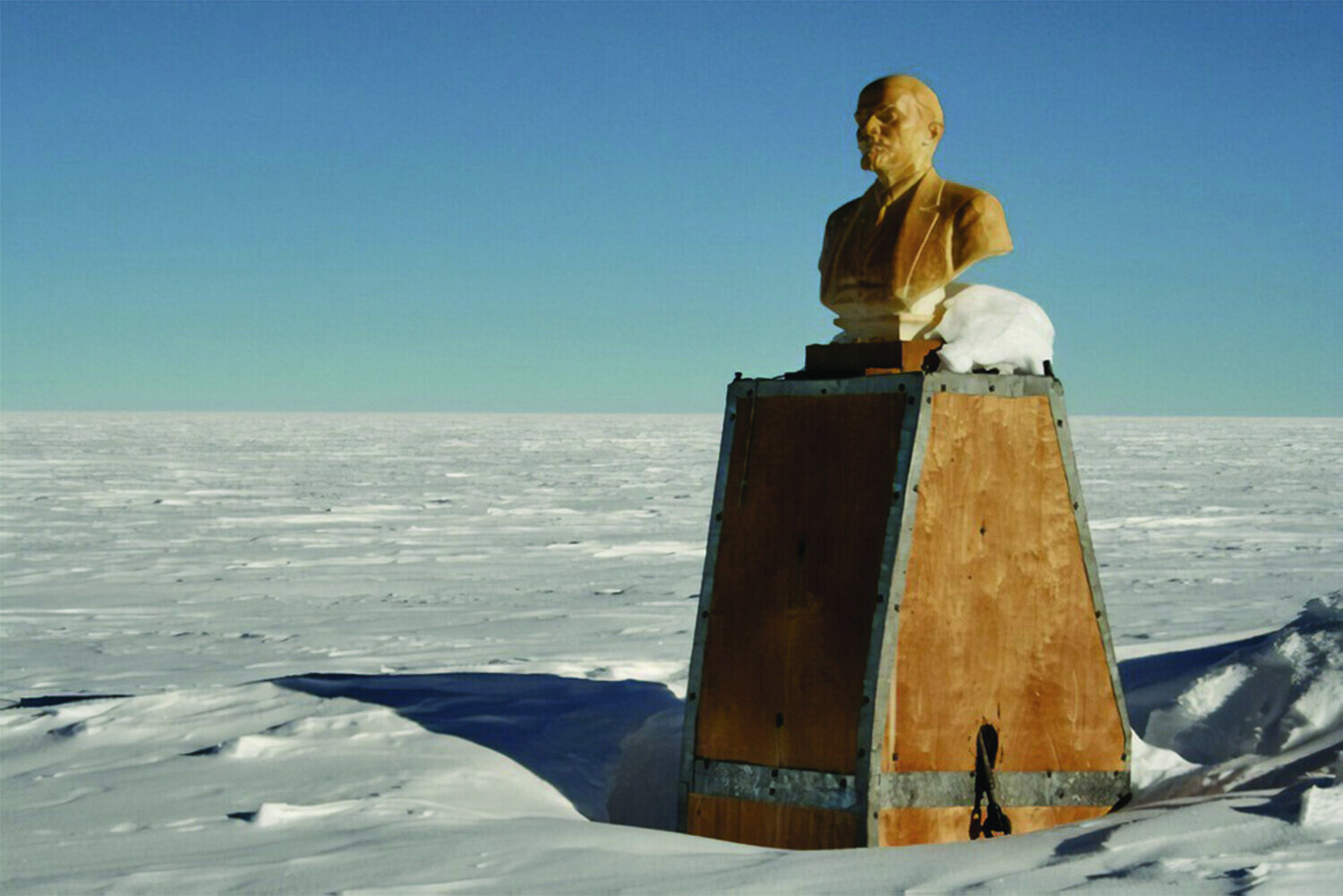
Good comrades that they were, the Soviets bolted a bust of Lenin atop the chimney of their hut before departing, orienting his steely, bald-headed gaze toward Moscow and Mother Russia. Mission not really accomplished, but at least socialism had a foothold in the only continent without private land ownership.
Fast forward nearly a decade. The Americans were caught up in the space race and in a couple years would lap the Soviets with a moon landing. Their 1964–65 Queen Maud Land traverse passed through the pole of inaccessibility, where they spent three weeks and—silly kids—repositioned the bust so it faced Washington, D.C. Not to be outdone by those imperialist, capitalist dogs, the Soviets returned in 1967 to reorient Lenin back toward Moscow. And that’s how you’ll find him today, though each year the snowpack climbs higher. Someday all that’s left uncovered will be Lenin’s pate shining like a tiny patch of ice and then, eventually, nothing.
I Was Snow White, But I Drifted
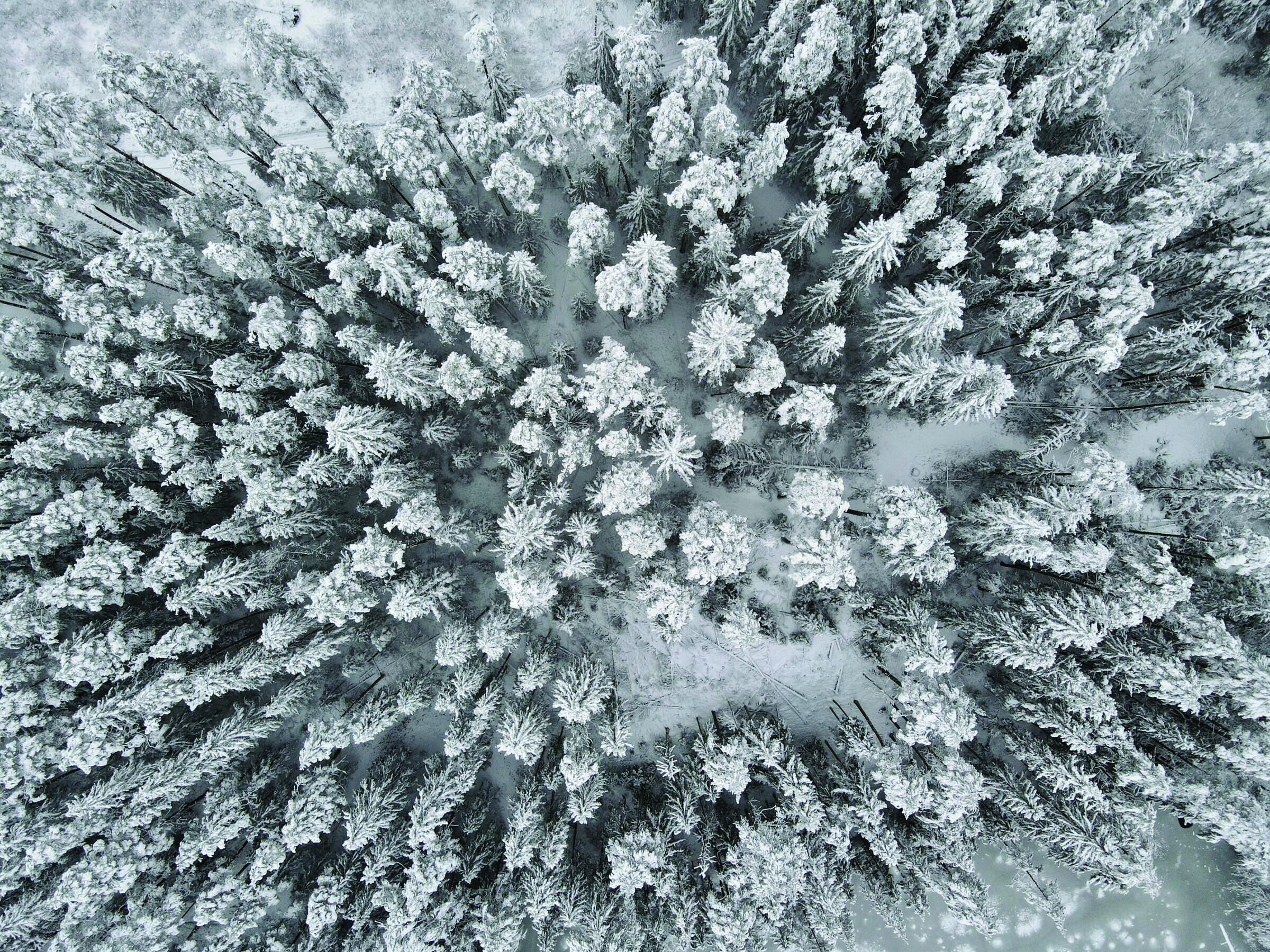
If snow falls in a forest, does it make a sound? When you have ears like Horton, why yes, you may indeed hear the soft caress of a snow crystal brushing a nylon shell or tiny icy arms embracing as they land on a pillow of pine needles. What you probably won’t catch is the complicated interaction between moisture, air, sun, wind, and tree, but there is in fact a lot going on between snowflake and forest, unheard and mostly unnoticed, with implications for ecosystems and the humans who depend on snowpacks for water.
The process of snow collecting on trees is called interception. Woods can intercept up to sixty percent of falling snow, much of which returns to the atmosphere via sublimation, leaving minimal amounts to land on the ground and soak in as meltwater. This impacts municipal water supplies and also can hurt the trees, as less snow means less insulation to protect the roots from freezing. Counterintuitively, in Mediterranean climates such as the coastal Pacific Northwest, snow melts faster under trees than in the open exposed to sunlight—the trees emit longwave radiation, enough in this relatively warm environment to increase melt.
In short, the pas de deux between forest and snow is complex and not easily parsed, even by those trying to preserve snowpacks, reduce wildfires, and save climate-threatened forests. It reminds one, perhaps, of the horse in Robert Frost’s famous poem, Stopping By Woods on a Snowy Evening, who doesn’t understand why they’ve come to a halt in the middle of nowhere. “He gives his harness bells a shake…To ask if there is some mistake.” No mistake, says the narrator. Stand still, listen to the sound “of easy wind and downy flake,” and let it be enough that “the woods are lovely, dark and deep.”
My, What Big Benefits You Bring to Society, Grandma
Let’s say you’re a civil engineer charged with making America’s roads safer. You know, because you are a ninja with statistics, that two million cars and trucks crash into animals every year and seventy-five percent of those collisions are with deer. You also know that it costs eight billion dollars a year in damages and medical treatment, plus up to two hundred people die in such accidents annually. Frustratingly, deer crossing warning signs are ineffective and wildlife overpasses are exorbitant—what’s a civil engineer to do?
Well, one day you glance in the mirror and see that you’re wearing your favorite t-shirt, the one with an airbrushed painting of a howling wolf and full moon, and it comes to you. Wolves! The answer is wolves!
Alpha predators have cascading effects on their ecosystems, as was shown with the restoration of wolves to Yellowstone National Park in 1995, but not until June 2021 did researchers quantify their impact on human-animal interactions. That’s when Jennifer Raynor, an assistant professor of economics from Wesleyan University, and her team reported that wolves in Wisconsin reduced deer-vehicle collisions by twenty-four percent. This saved nearly eleven million dollars in damages, an amount sixty-three times what the state paid in compensation for wolf-killed livestock. A bargain.
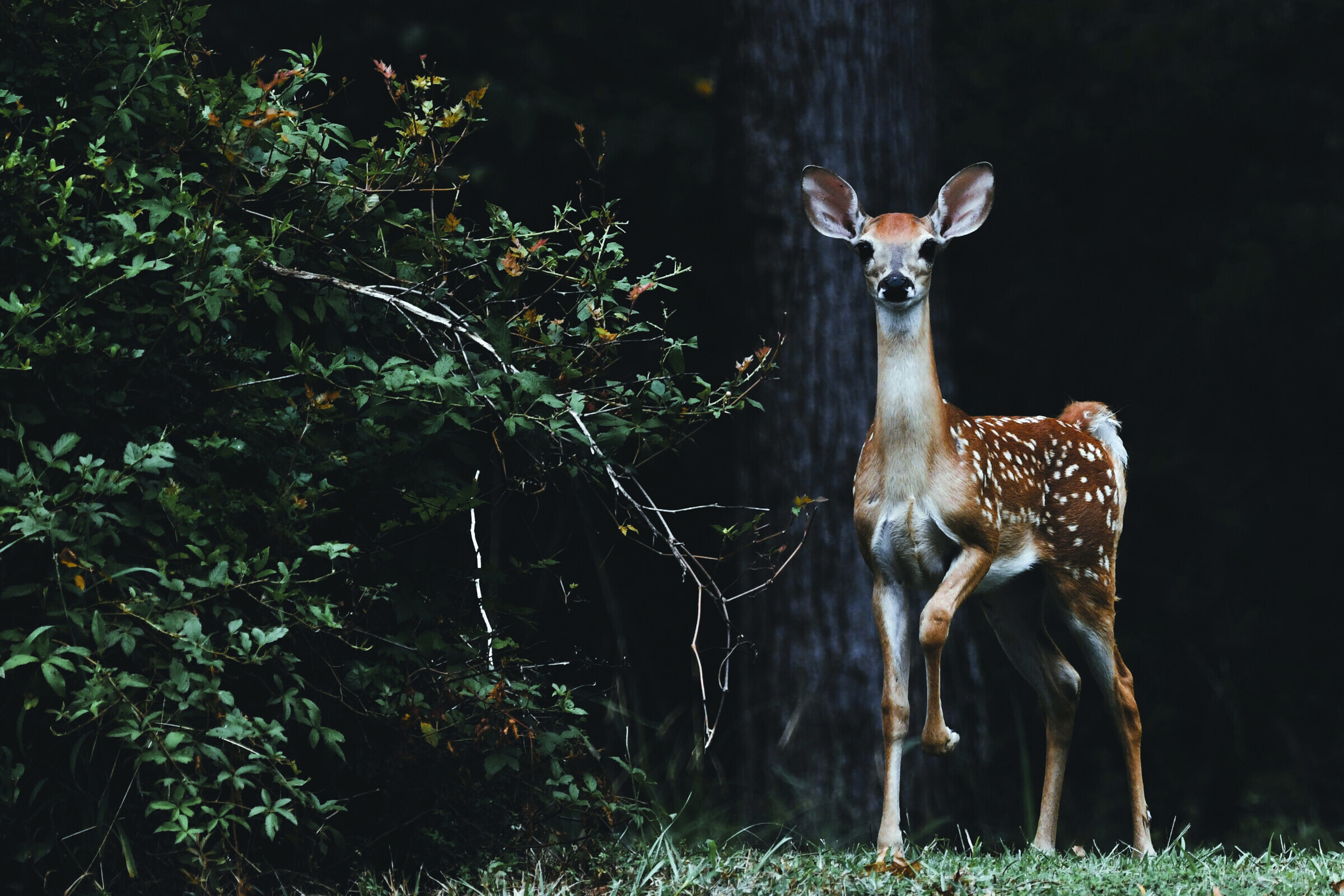
The reasons are twofold. As with human hunters, wolves reduce the overall population of deer, but their greater impact is creating a “landscape of fear.” By taking paths of least resistance—roads, pipelines, electric line rights of way—wolves scare Bambi and friends from more-populated areas.
Economically speaking, living with predators turns out to be a no-brainer, but culturally, nothing with wolves is easy. Within two months of being delisted from the Endangered Species Act, in January 2021, Wisconsin legalized the hunting of wolves and more than two hundred were killed in just three days. The scheduled fall season allowed for another three hundred to be “harvested,” likely shrinking the total population to three hundred fifty, a level that would take wolves years to recover from, if ever.
42 issues. 11 years. Independently owned. Printed on 70lb uncoated paper with a soft-touch cover, solar-powered, and shipped in a brown paper envelope. Free domestic shipping.