AJ 28 Mementos, Notes, and Fragments
Mementos, Notes, and Fragments

Issue 28
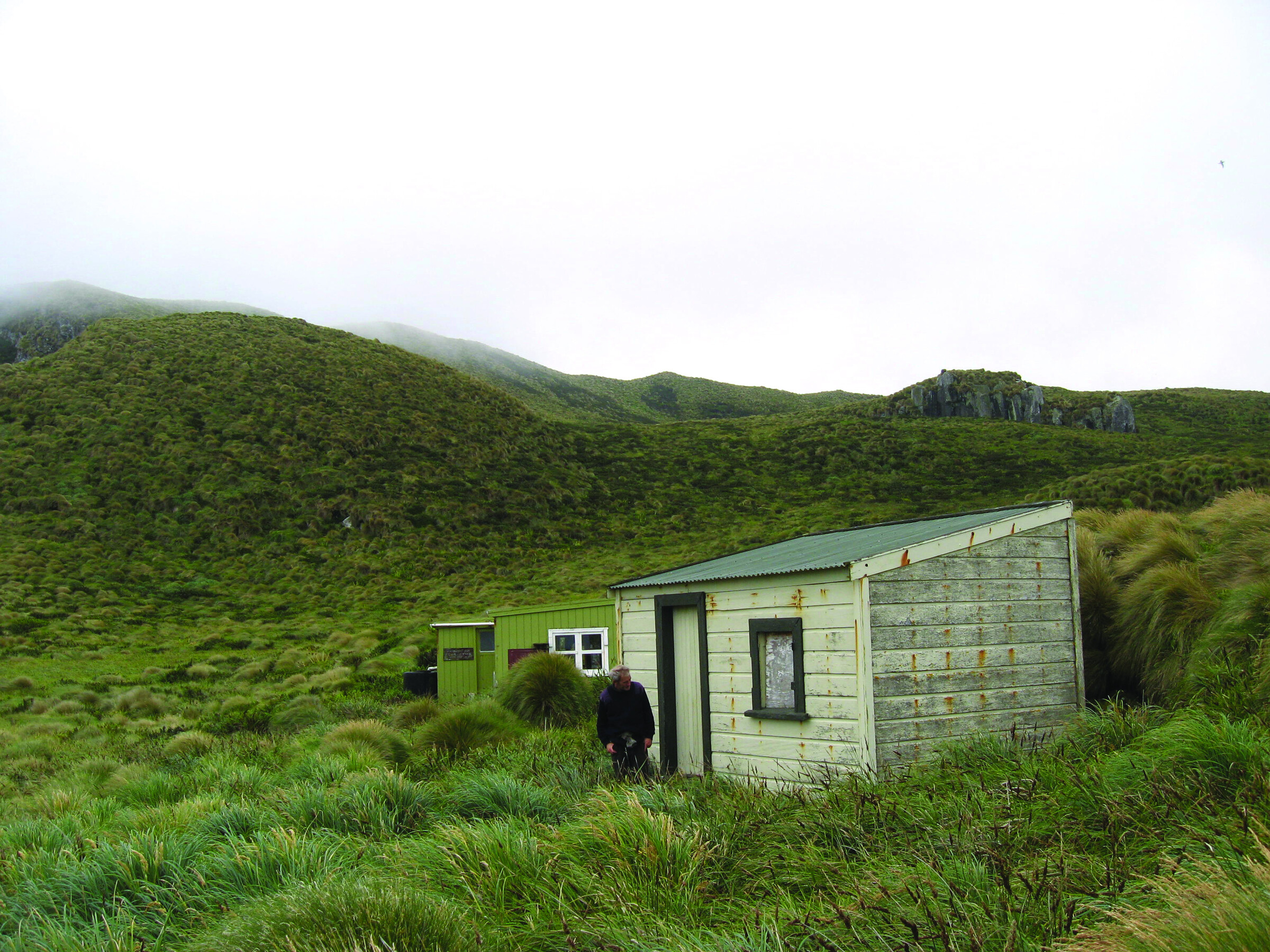
Castaway depot on Antipodes Island
01

Airbnbs, But For Seriously Marooned Sailors

In the mid-nineteenth century, before construction of the Panama and Suez canals, clipper ships sailing to Europe from Australia or New Zealand had to round South America’s Cape Horn, braving treacherous seas and ferocious westerly winds. Navigation was difficult in the frequently stormy skies and charts were unreliable, so ships regularly ran aground on unseen reefs and islands. After a string of shipwrecks from 1864 to 1866 marooned dozens of sailors on sub-Antarctic islands, a provincial government in New Zealand had a cozy idea: It built little depots on the largely inhospitable Auckland, Campbell, Antipodes, and Bounty islands and stocked them with provisions for the inevitable castaways clawing their way ashore.

Each depot was supplied with food (usually tinned meat and biscuits), clothes, medicine, tools, fishing gear, and guns to hunt the pigs, rabbits, and sheep let loose on the islands as self-sustaining sources of meat. Some of the shelters were provisioned with small boats so the sailors could make for other islands nearby. Lest passing ships running low on supplies be tempted to make a pit stop to raid the depots, some had signs nailed to the door warning against such thievery in harsh, existential terms: “The curse of the widow and fatherless light upon the man that breaks open this box, whilst he has a ship at his back.”

Every six months, a steamer from New Zealand visited each hut, picking up any castaways and restocking the larder. By 1927, the treacherous clipper ship route had been abandoned and so were most of the depots. Only a handful remain today, maintained by New Zealand’s Department of Conservation. One presumes, or at least hopes, the curse has been lifted.

Wikimedia
Cooper's Ferry projectile points and sketches of Hokkaido points
02

An Old Point, But a Good One

The prehistory of the Americas is being rewritten on the hot, dusty banks of the Salmon River in western Idaho, a handful of small, intricately shaped bits of stone at a time. In December 2022, archaeologists working at a site near Cooper’s Ferry uncovered a cache of sixteen-thousand-year-old stone projectile points. They’re now the oldest-known projectile points found in the Americas—by roughly two thousand years.

Here’s the mind-blowing part: The two-inch points found at Cooper’s Ferry are dead ringers for points dating to roughly the same period made by people living on Japan’s Hokkaido Island. They don’t much resemble the palm-sized points left by the Clovis people, who wandered into the Americas from the north through a corridor formed by receding glaciers fourteen thousand years ago—a group long assumed to have been the first humans to populate North America.

Sixteen thousand years ago, mile-thick ice sheets blanketed the entirety of Canada. The only way for humans to reach the Americas then was to paddle from Alaska in watercraft, hopscotching down the West Coast. When they hit the Columbia River basin, some must have made a hard left and pushed deeper into the interior, eventually entering the lower Salmon River, marveling at the megafauna and tuna-sized salmon swimming beneath them. There they sat along the river, banging out stone points the way their ancestors had, on lands thousands of miles away.

Loren Davis
Federal Standard Color Palette swatches
03

Every Color Under the Federally Approved Rainbow

By now, the colors are as familiar as your own reflection. You’re driving on a camping trip on U.S. public lands, say, and as the miles whiz past, you see them without giving much thought. They’re just…there. There’s the soft, almost bluish-green of highway signs (FS14115). When nature of a different kind calls, you turn off at the bright, royal blue of a rest stop marker (FS15090). Finally, you see the dusty brown sign announcing you’re nearing a federal recreation area (FS10055) and you know you’ve arrived.

Those colors are part of the Federal Standard Color Palette. During the Second World War, factories were cranking out mismatched olive drab tanks, aircraft, and uniforms, so frustrated federal officials set up a system of standardized colors, each assigned a serial number. The five digits after FS (“federal standard”) indicate sheen, color classification, and color consistency. The original palette, in 1956, had just three hundred fifty-eight colors, but government being government, lots more have been added since.

Official color chips are stored in a warehouse in Franconia, Virginia, where you can plunk down six hundred twenty-five dollars and get yourself a stack of three-by-five-inch cards with every color the feds can color something—six hundred fifty in all. If you love national parks and want to paint your favorite room the cocoa brown of NPS signage, that’s FS10233. And since we know you’re wondering, the minty green of USFS trucks? The holy grail of federal colors? FS34350. You’re welcome.

Wikimedia
Tom Mix injury illustration showing marked wounds
04

That’s Gonna Leave a Mark

Tom Mix did his own stunts. Hoo boy, did Tom Mix do his own stunts. The early twentieth-century film star appeared in nearly three hundred movies, most of them silent Hollywood cowboy films. The guy was making bank: In the early 1930s, Mix appeared in the Sells-Floto Circus for a weekly salary of $316,000 (2023 equivalent).

He was also getting hurt a lot, though with Mix it was hard to tell fact from fiction. This illustration, from an old magazine, mixes real injuries with mythological wounds (a sniper shot in the jaw that didn’t leave a scar?). Still, the toll is what pushed him from the movies. In the ’30s, Mix was huge on the radio, but other actors had to portray him, as multiple breaks to his nose and a gunshot wound to the throat left his voice unfit for the medium.

A 1923 newspaper interview reveals a typical week. “On Monday,” Mix said, “I drove a stagecoach and four horses over a hundred-foot cliff. All rolled to the bottom but no one was hurt. Tuesday, I jumped [horse] Tony over a twenty-foot chasm that spanned a ninety-foot drop. To get the best possible angle, the stunt was repeated five times but still there were no injuries. Wednesday, I rolled down another cliff with Tony and neither of us were scratched. Thursday, being a legal holiday, I stayed at home with my family. Friday morning, I went to see a doctor to be sure that I was in perfect condition.”

In 1940, Mix died at age sixty in a single-car crash south of Phoenix, Arizona. The crash itself didn’t kill him. A large aluminum suitcase filled with money, jewels, and traveler’s checks flew forward, struck his head, and broke his neck. Oof.

Mix was briefly a marshall, but he was never a Texas ranger, nor did he see action in the Spanish-American War. That didn’t stop the movie industry publicity machine and a willing press from embellishing his injuries, which, according to one publication, included: B, nose injured when artillery blew up in China; C, shot through jaw by sniper in Spanish-American War; F, shot by bandit; H, shoulder fractured when horse was shot from under him by outlaws; L, shot through abdomen by killer he arrested; V, foot and ankle broken in wagon accident.

Creative Commons
Adventure Journal — Print Quarterly
Stories like this, in your hands four times a year.

42 issues. 11 years. Independently owned. Printed on 70lb uncoated paper with a soft-touch cover, solar-powered, and shipped in a brown paper envelope. Free domestic shipping.

Subscribe — $80/year Or try a single issue for $25

There is nothing else like it. — AJ subscriber