Mementos, Notes, and Fragments

It’s Cloud-Spotting Season
Actually, it’s always cloud-spotting season. But sometimes we need reminding to look up, and for that there’s Gavin Pretor-Pinney and the Cloud Appreciation Society. In 2003, Pretor-Pinney bailed on his London design business and moved to Rome for seven months, where he immersed himself in art, especially religious art, and became enamored with its voluptuous depictions of clouds. His fascination with ethereal skyscapes continued when he returned to the U.K., and in 2004 a friend asked him to speak about clouds at a literary festival. The title of his talk was “The Inaugural Lecture of the Cloud Appreciation Society,” which didn’t exist, but the audience’s response was so enthusiastic he felt compelled to create an actual cloud group.
Today, the Cloud Appreciation Society has more than fifty thousand members in one hundred twenty countries. It’s a thriving community, with a website, cloud-spotting app, and three books on clouds by Pretor-Pinney. Its amateur crowdsourcing even spurred the World Meteorological Organization to add a new type of cloud, named asperitas, to its International Cloud Atlas for the first time in nearly seventy years.
But the society and Pretor-Pinney’s efforts aren’t about naming conventions or structure or even societies. They’re about urging people to look up and see poetry in the sky, to find whimsy or inspiration or pleasure in the ever-changing canvas of air and vapor, and to remind that the atmosphere comes all the way to the ground. “We are part of the air,” Pretor-Pinney said at a 2016 cloud conference. “We don’t live beneath the sky. We live within the sky.”
The NPS Is a Branding Monster Thanks to the Unigrid
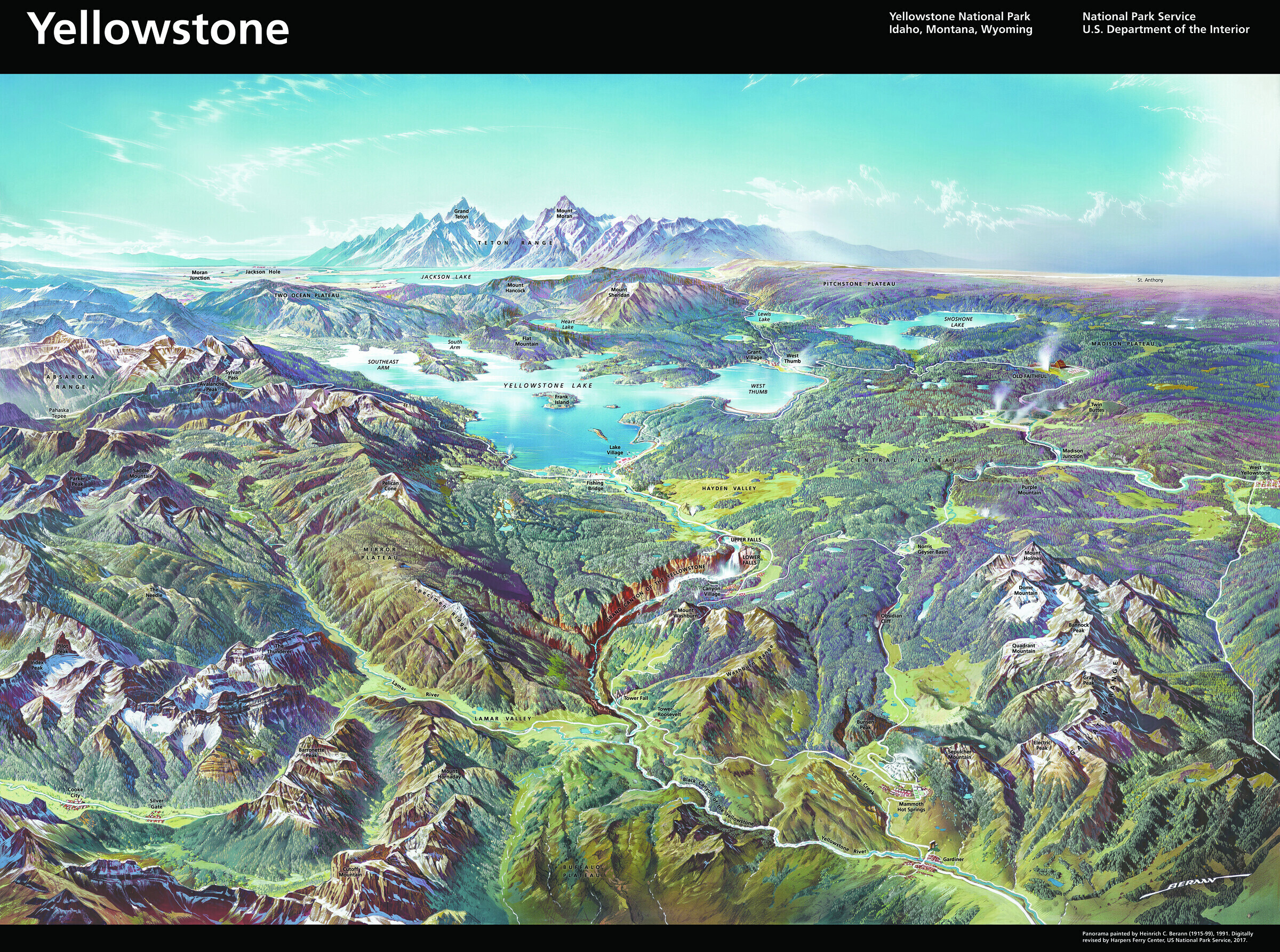
“Welcome to our national park—would you like a brochure?” Of course you would. Toss it on the dash, tuck it between the seats, stuff it in the glove box with all the others, pull it out later to learn if bears can smell an M&M under the floor mats or how many miles it is from Cataloochee to Ocanaluftee. That free U.S. national park brochure is ubiquitous: ubiquitous and instantly identifiable, thanks to its iconic black bar and white text, its six-fold design, its four- by eight-inch dimensions.
That’s not by accident. Until the mid-1970s, the design of American national park maps and information brochures was all over the place. In 1977, Vincent Gleason, the National Park Service’s chief of publications, hired legendary graphic designer Massimo Vignelli to create a standard for the brochures and information presentation. Gleason was less inspired by Vignelli’s talents (he created logos for Ford, Cinzano, Lancia, and Bloomingdale’s, and twice designed the New York City subway map) than by the desire to bring costs down.
Vignelli created a standard he called the Unigrid, a design system that gave parks ten sizes and formats to use, allowing some flexibility within the larger Unigrid visual palette, typography, and structure. Designers didn’t have to reinvent the brochure every time it needed updating, and standardization dramatically reduced spending. (Brochures now cost about seven cents each.)
Nearly a half-century later, the Unigrid’s power hasn’t diminished. “Every designer dreams that they will design something that has these kinds of legs, and very few do,” said Jessica Helfand, who teaches design at Yale University. As for Vignelli, in 2013, the year before he died, he said, “I think it’s one of the most important projects in our career.”
Survive at Sea? He Bet His Life On It
Give French medical doctor Alain Bombard credit. He was a man with conviction. Distressed that two hundred thousand people died each year in shipwrecks—fifty thousand after surviving the initial wreck—he determined to find ways to help lost souls hang on until rescue arrived. The sea would provide, he argued. Plankton had vitamin C, which would ward off scurvy. Fish would supply calories and, when squeezed, water. Drinking a little ocean water was fine, too. The rest was a matter of emotional strength: “How many castaways through the ages,” he wrote, “have become stiff and sudden corpses, killed, not by the sea, not by hunger or thirst, but by their own terror?”
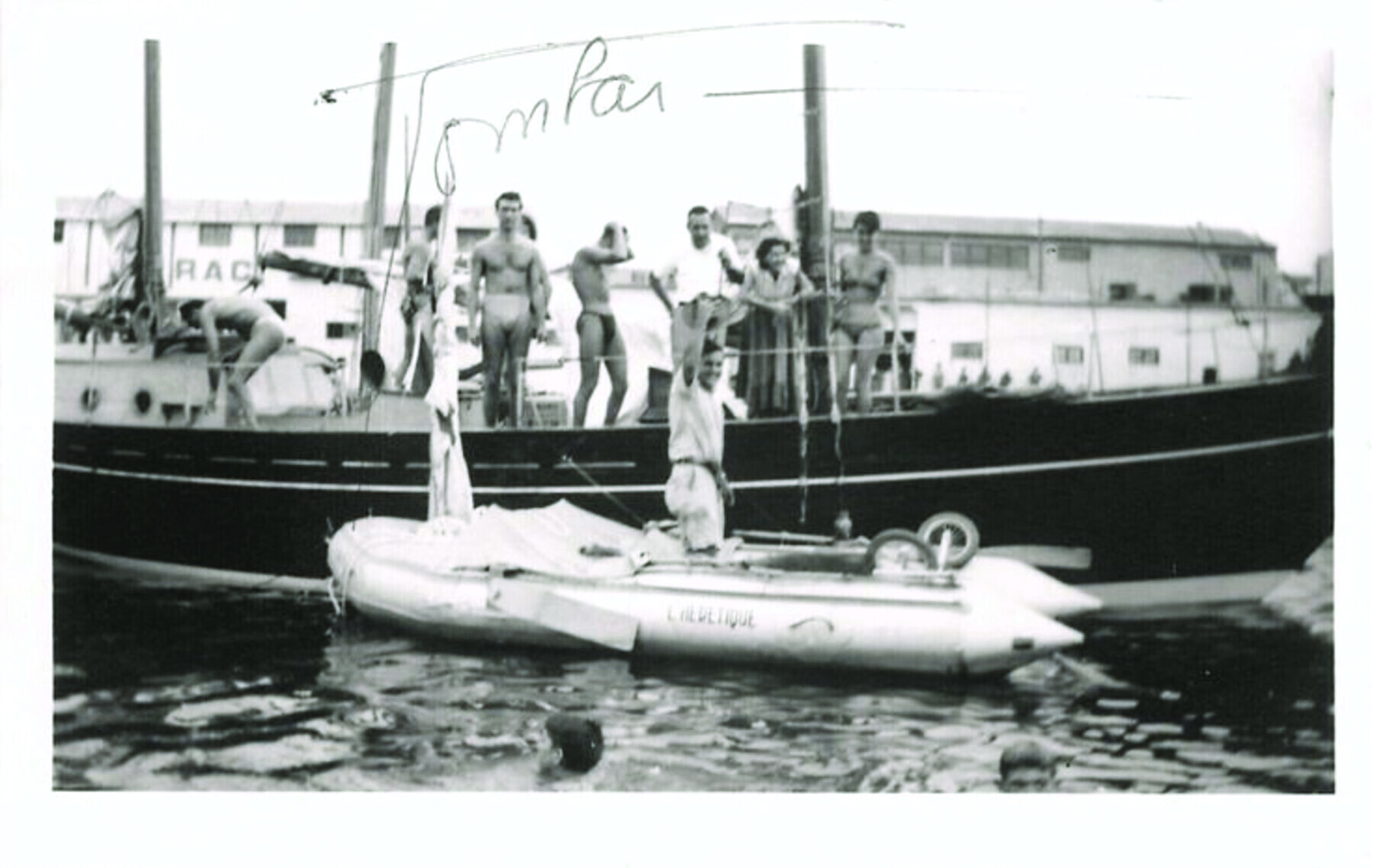
In 1952, with himself as a test case, Bombard launched from Spain’s Canary Islands in a fifteen-foot inflatable dinghy called the Heretic. On board were a fishing kit, tarp, sextant, watch, and fine-mesh net for catching plankton. His destination: the West Indies.
It did not go well. After just a week, it became clear he couldn’t calculate longitude and thus his location. Storms tossed the small craft, tearing its sail. He grew obsessed with the integrity of its rubber walls and inspected them constantly. His worst nightmare was a swordfish, and he spent twelve straight hours fending one off. Less than two months at sea, he hailed a passing steamer. “This is it,” he said as he boarded. “Fifty-three days, I give up.”
But human contact stiffened his spine. He ate some cooked food, learned how to use his sextant, climbed back into the Heretic, and set sail west. In just twelve more days, he landed on a beach in Barbados. Still, he was a shell of the man who started. He’d lost fifty-five pounds. He was anemic. And he described descending into paranoia and something like madness, even accusing the clouds of refusing to cover the sun and give him relief.
Bombard was widely hailed, but his interregnum on the steamer proved the difficulty of staying strong mentally, and he garnered plenty of critics, some of whom argued he’d accomplished little. On the way back to France, he was recognized in the Montreal airport by a group of French-Canadians. An actress, noticing their hubbub, asked who he was. She was told, Dr. Bombard, the chap who has just crossed the Atlantic. “So what?” she replied. “I’ve been across the Atlantic, too.”
Thousand-Year-Old Legless Figurine Goes on Walkabout
For more than twenty years, from 1950 to the early 1970s, the priceless Fremont Indian artifacts known as Pilling figurines traveled western America, where they were displayed in museums, banks, courthouses, and even Park View Motel, in Price, Utah, all without incident. But sometime in 1973 or 1974, one of the figures disappeared from the Prehistoric Museum of the College of Eastern Utah.
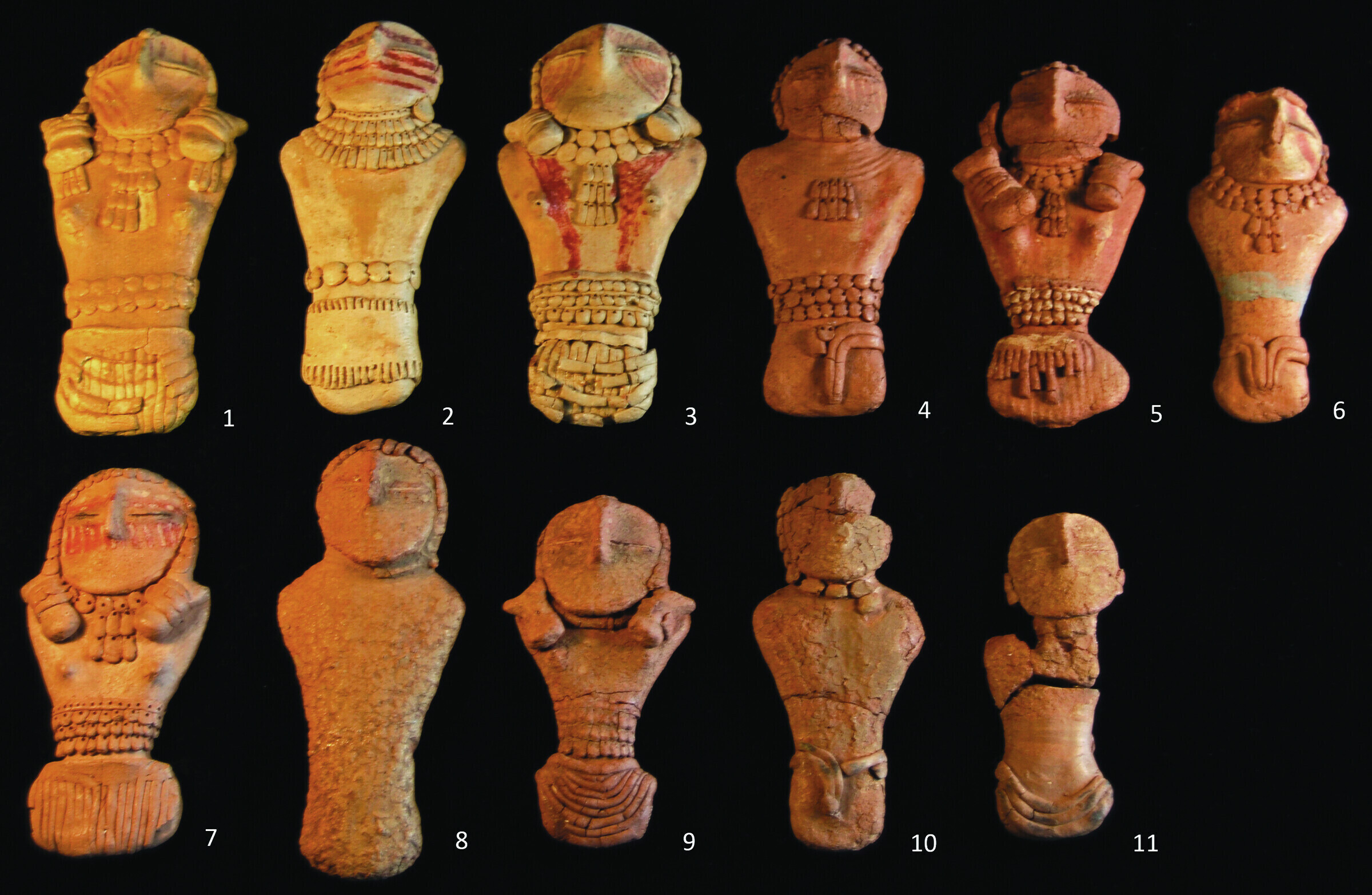
This was a tragedy. In 1950, Utah rancher Clarence Pilling was searching for a lost cow in Range Creek when he discovered a stash of eleven clay figurines on a sandstone ledge, tucked under a protective overhang. The unfired figures were four to six inches and looked like a cross between gingerbread men and the Pillsbury doughboy; they turned out to be one of the most important discoveries of Fremont Indian culture ever.
The Fremont, northern contemporaries of Ancestral Puebloans, lived near the Fremont River from the years 0 to 1400. Far less is known about them than their southern neighbors, and the Pilling collection was an extremely rare assemblage, found in situ, untouched since it was placed so many years ago. The loss of figurine number two was devastating.
Nearly forty years later, in 2011, Bonnie Pitblado, then director of the Utah State University Museum of Anthropology, received an unannounced, unremarkable, and anonymous box with a figure inside. There was a note. “Sometime between 1978 and 1982 I came into possession of this piece by way of a vagabond acquaintance…it may be the missing piece of the Pilling Figurine set. I am very excited at the prospect of it being returned to its proper place.” Incredible—but was it the real deal or a fake?
Pitblado assembled a team to find out. They scanned the figure with an electron microscope, looking for a preservative coating that had been applied in the ’50s. They used a technique called x-ray fluorescence to compare levels of rare earth elements. And they analyzed impressions on the back, formed when the soft clay figure was laid upon basketry to dry. Their conclusion? Figurine number two had come home. The small Fremont family was whole once again.
42 issues. 11 years. Independently owned. Printed on 70lb uncoated paper with a soft-touch cover, solar-powered, and shipped in a brown paper envelope. Free domestic shipping.