Photo by Elliot Ross
Language Lessons on the Rio Grande
A tale of friendship and culture set afloat on the narrow, watery border between two countries
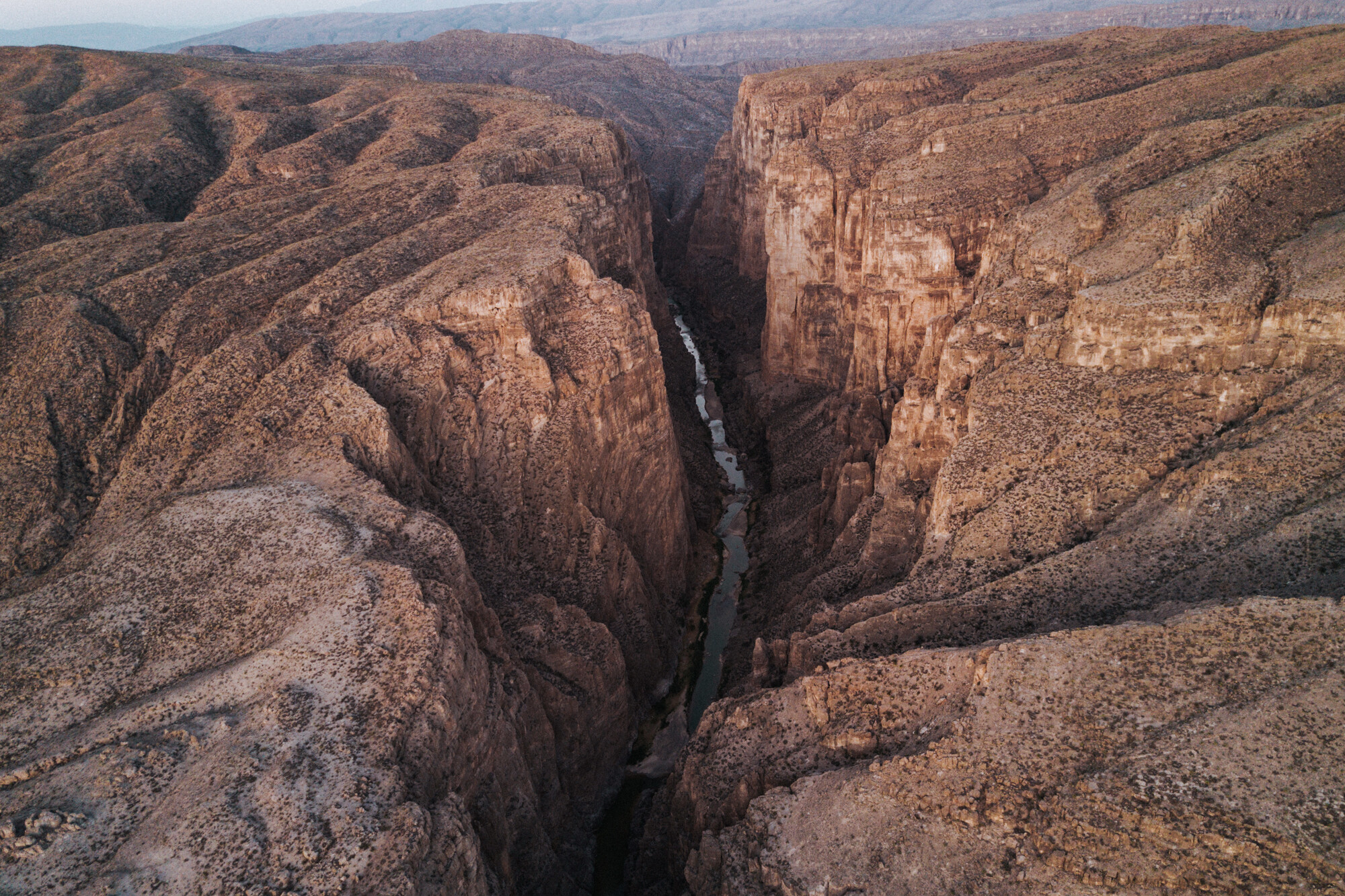
To comprehend the geography of Rio-as-border, it may be best to start in El Paso, Texas. El Paso and its infamous Mexican sister to the south, Ciudad Juárez, bleed together, a channelized urban river and fortified border tracing contours through crowded architecture. From El Paso, the Rio Grande forms the meandering natural border between nations until it reaches the Gulf of Mexico. According to the 1848 Treaty of Hidalgo, the boundary is the thalweg—the deepest part of the deepest channel—of the Rio Grande. Most Mexicans refer to this overly appropriated desert artery as the Río Bravo, bravo meaning fierce or angry or agitated. The Rio Grande has other, older names, too, from the languages that labeled this landscape long before Spanish and English outcompeted native dialects for the places here.
Then, from El Paso, it’s five hours southeast to the Big Bend of Texas. Along the way you’ll drive through several Homeland Security checkpoints, under one military-style surveillance blimp, past a dozen
3,900 words to go
You’re just getting to the good part.
This story — and 42 issues of them — opens with a subscription.
Either one picks up right where you left off.
Join 7,000+ readers · Independently owned · Since 2008
Already a subscriber? Sign in
Adventure Journal — Print Quarterly
Stories like this, in your hands four times a year.
42 issues. 11 years. Independently owned. Printed on 70lb uncoated paper with a soft-touch cover, solar-powered, and shipped in a brown paper envelope. Free domestic shipping.