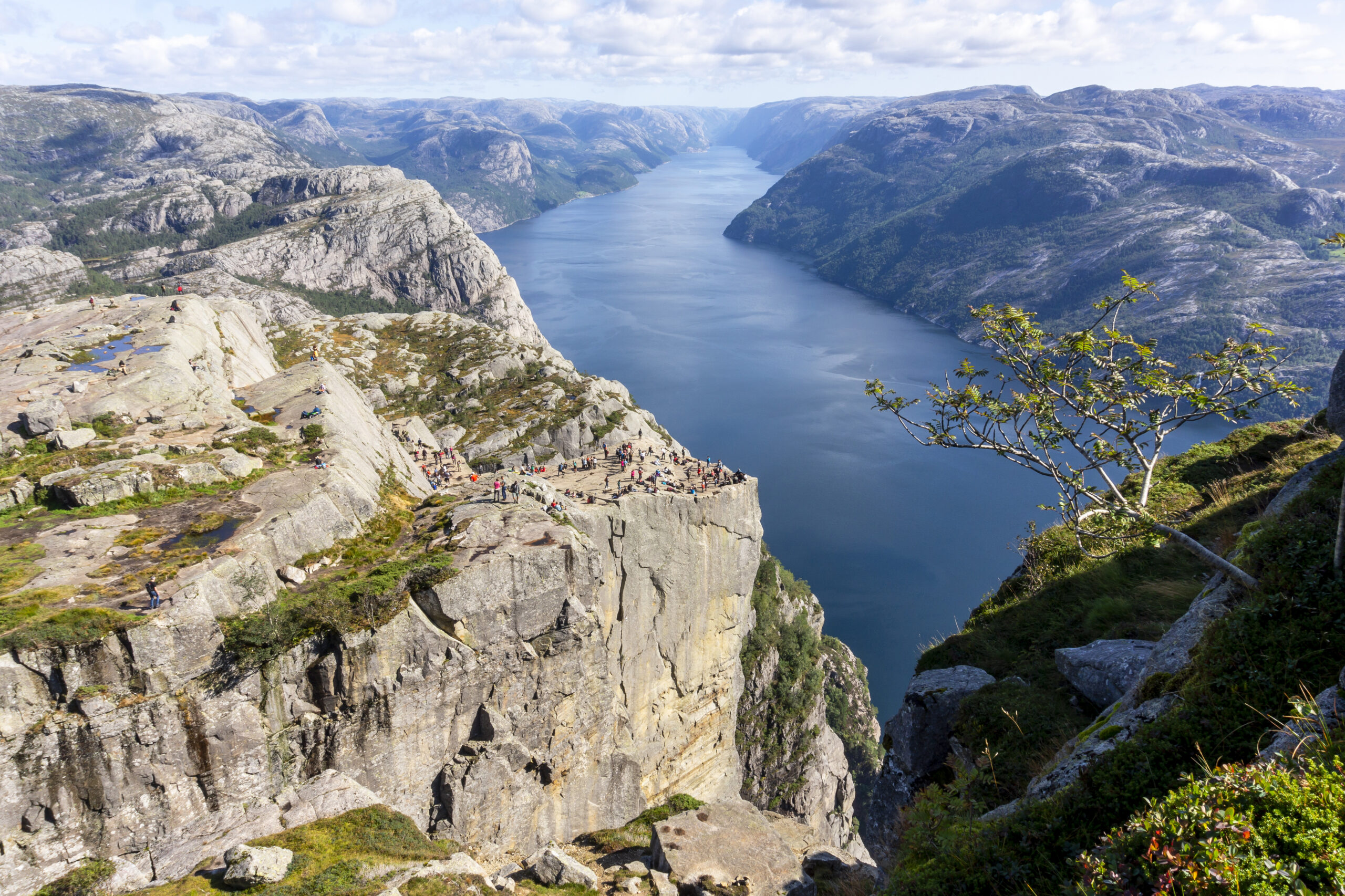
Preikestolen is a giant, dramatic wedge of granite looming above the waters of Lysefjord in Southwest Norway, about twenty miles from the North Sea. It’s been a tourist attraction for more than a century and today is home to Norway’s most-popular trail.Four hundred thousand people a year make the five-mile roundtrip hike. And yet, done right, you can still have it all to yourself.
• Preikestolen means Pulpit Rock or, more literally, Preaching Chair. It was originally called Hyvlatånnå, plane’s tooth, because it was thought to resemble the blade of a wood plane.
• It was first seen from the deck of steamship in Lysefjord, by Thomas Peter Randulff in 1896. Randulff and a friend were also the first to climb it. Lysefjord means “light fjord,” a nod to the ever-changing light and weather conditions.
• The vertical drop is six hundred four meters, or just under two thousand feet.
• The top measures twenty-five meters by twenty-five meters, or about eighty feet by
200 words to go
You’re just getting to the good part.
This story — and 42 issues of them — opens with a subscription.
Either one picks up right where you left off.
Join 7,000+ readers · Independently owned · Since 2008
Already a subscriber? Sign in