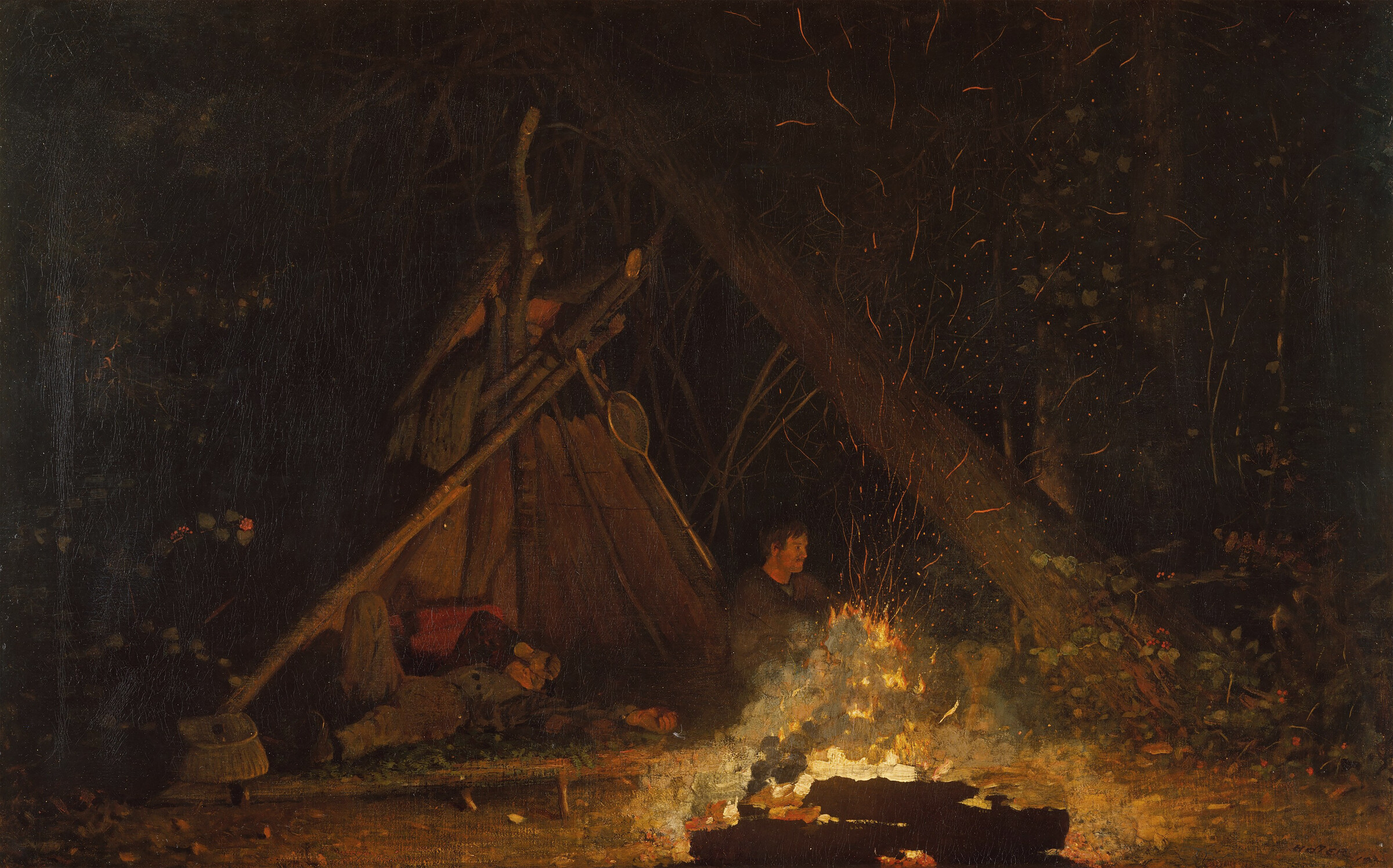
Winslow Homer, Campfire (1880). Metropolitan Museum of Art, New York, New York
A Short Cultural Biography of the Campfire
An academic looks at the sparks that make the heart glow.
“The camp-fire is the living, life-giving, palpitating heart of the camp; without it all is dead and lifeless.”
— Daniel Carter Beard
More than the tent, the sleeping bag, or any other single piece of gear, the campfire functions as the place around which all other activities revolve. The outdoor educator and author David Wescott calls it “prince of entertainers, the king of hosts,” and no image or memory of camping is quite complete or suggestive without it. Anyone who has ever camped overnight and built a campfire from scratch knows that even the most severely charred hot dog or a can of plain reheated beans tastes far better than the most carefully prepared home-cooked meal. Some longtime campers might say that the dark and smoky patina that envelops camp food is the secret ingredient that no supermarket is able to supply.
The celebrated American landscape painter Albert Bierstadt sought to evoke the primordial nature of fire when he and his companions reached Yosemite Valley in
3,700 words to go
You’re just getting to the good part.
This story — and 42 issues of them — opens with a subscription.
Either one picks up right where you left off.
Join 7,000+ readers · Independently owned · Since 2008
Already a subscriber? Sign in
Adventure Journal — Print Quarterly
Stories like this, in your hands four times a year.
42 issues. 11 years. Independently owned. Printed on 70lb uncoated paper with a soft-touch cover, solar-powered, and shipped in a brown paper envelope. Free domestic shipping.