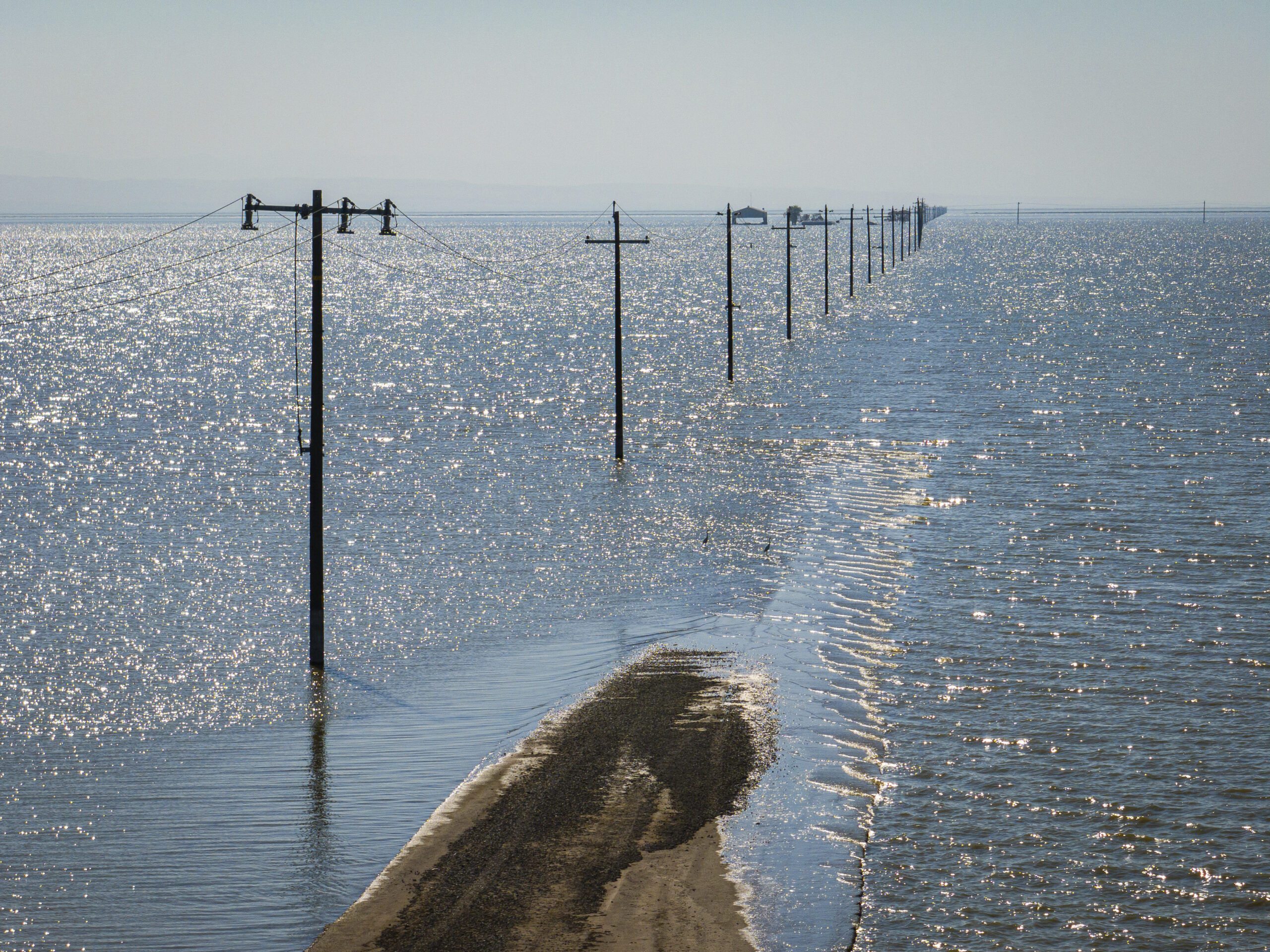
California is a land of extremes—wildfire and drought, snow and flood—and the twenty-first century has whiplashed between these poles, especially in the deserts and Sierra Nevada Mountains. After extremely wet winters in 2022 and 2023, long-dead lakes came back to life with fury and force: Owens in the Eastern Sierra, Tulare in the Central Valley, and Manly in Death Valley National Park.
These low-lying sinks provided a visually arresting lesson in California’s historic hydrology. As I set about documenting this rare event, I saw the collision of human development, water history, and exploitation of the land. Draining Tulare Lake boosted the Central Valley’s farming industry, and tapping Owens Lake made the development of Los Angeles possible. But channeling water doesn’t make the change permanent. Levees and flood control infrastructure are not invincible, and a large volume of snowmelt or rainfall can carve new features into the landscape while draining to the lowest point—a feature shared by Tulare, Owens, and Manly.
After a decade photographing wildfire, focusing on water gave me a refreshing
300 words to go
You’re just getting to the good part.
This story — and 42 issues of them — opens with a subscription.
Either one picks up right where you left off.
Join 7,000+ readers · Independently owned · Since 2008
Already a subscriber? Sign in