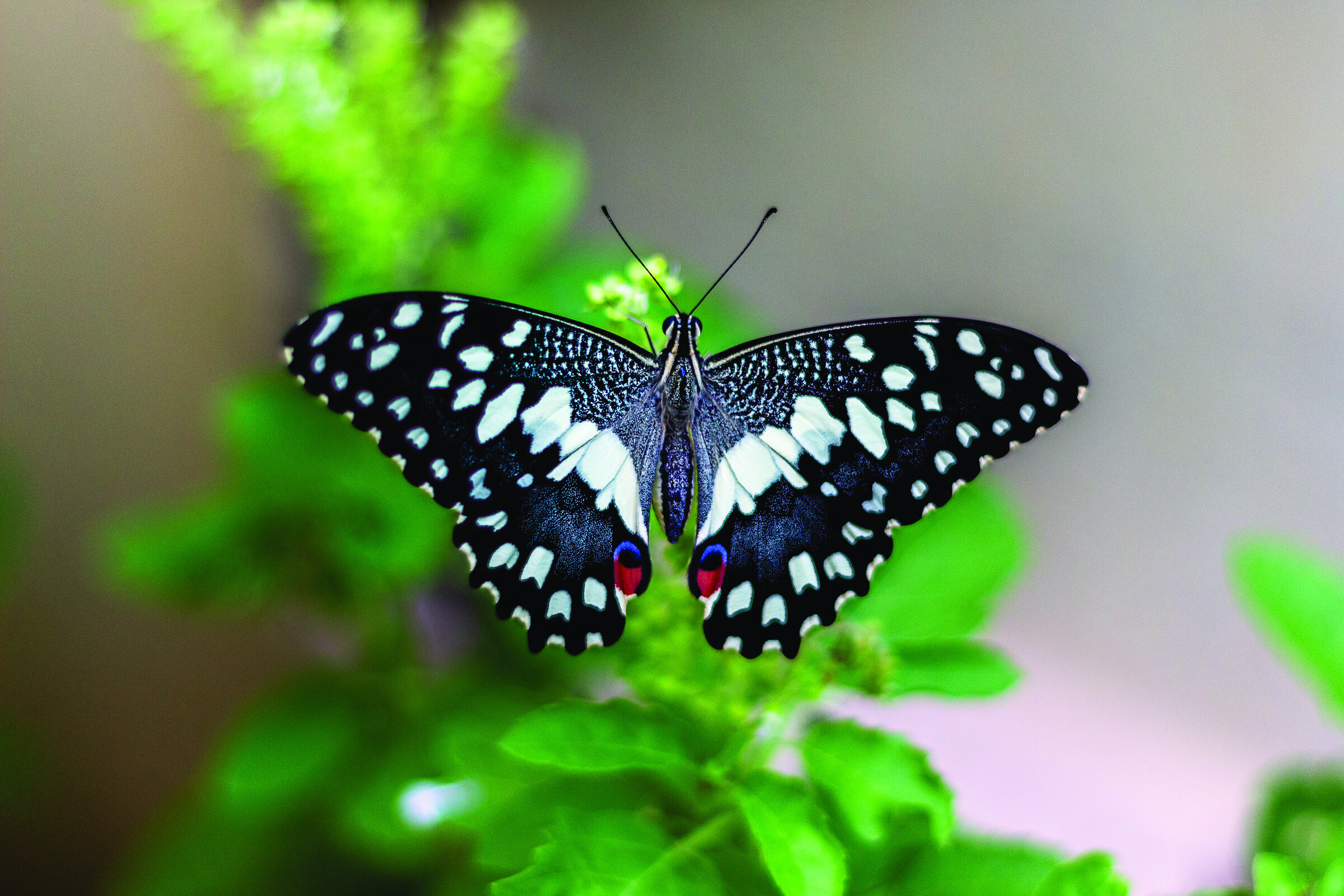
They're adorable and fluttery, yes, but don't mess with their gals
STORY BY STEPHEN CASIMIRO
Butterflies have four wings, six legs, and bodies made of a head, thorax, and abdomen. They “breathe” passively through nine openings, or spiracles, some of which pull in oxygen, some of which expel carbon dioxide.
Photo: Lenstravelier
Butterflies evolved from moths about ninety-eight million years ago. They tend to be more slender and colorful, but the primary difference is that butterflies are diurnal and moths nocturnal.
Butterflies fly erratically to prevent being eaten by predators; monarchs can turn ninety degrees in less than a body length.
Some butterflies eat poisons and in turn become poisonous themselves in hopes of deterring predators. Typically, the most colorful butterflies are the most toxic—flamboyance as early warning system—and they don’t need to juke and weave as erratically as their non-toxic kin.
Males are seriously protective of their mates. To keep other suitors away, some species slather females in a chemical compound described by researchers as “rancid” and “stench-like.” Others plug the copulatory canals of impregnated females
300 words to go
You’re just getting to the good part.
This story — and 42 issues of them — opens with a subscription.
Stories like this, in your hands four times a year.
42 issues. 11 years. Independently owned. Printed on 70lb uncoated paper with a soft-touch cover, solar-powered, and shipped in a brown paper envelope. Free domestic shipping.