Three Square
Winter Alpine Comfort: hearty classics from three corners of the Alps
Rösti
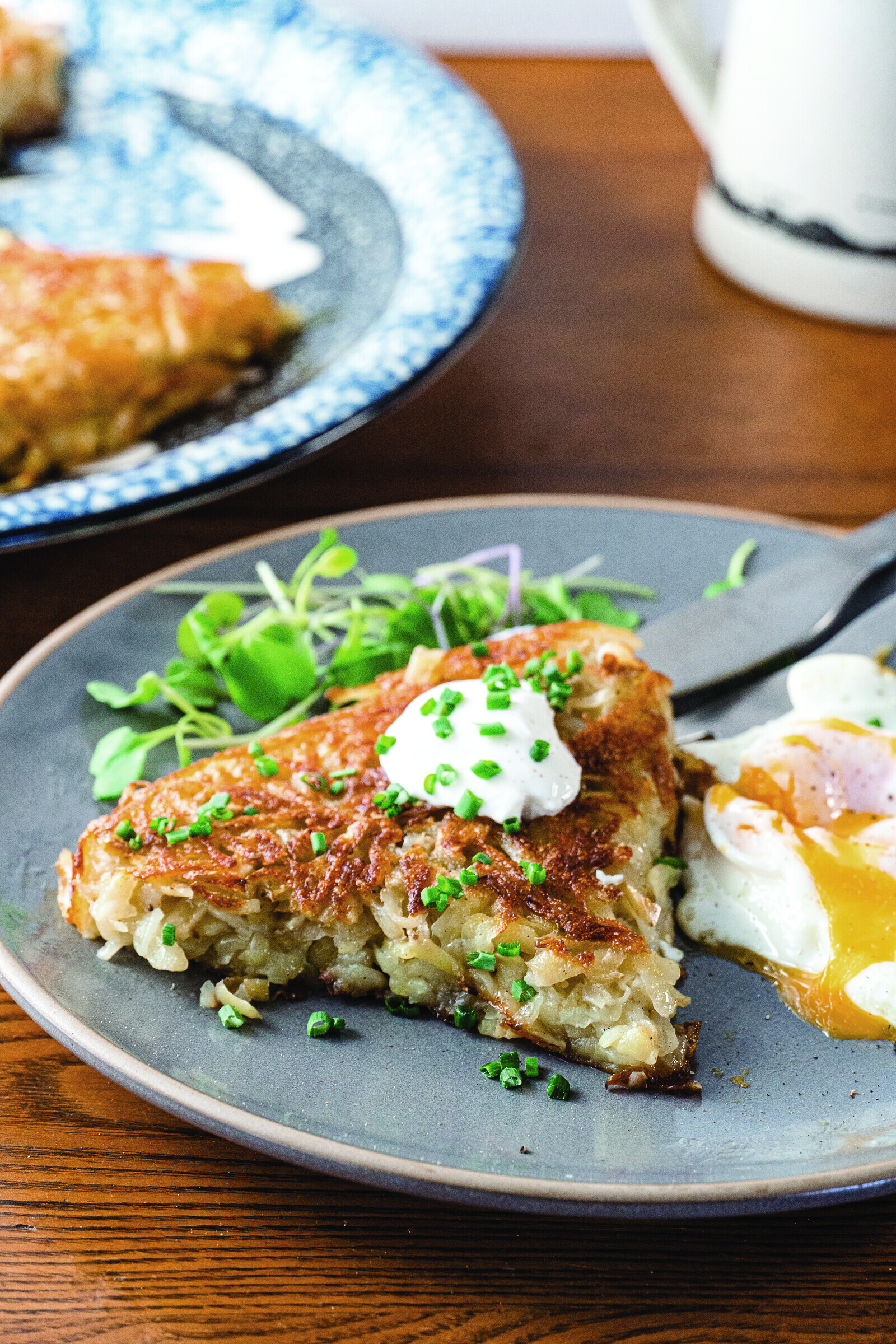
A cross between a pancake and a hash brown, rösti is a traditional Swiss breakfast that originated in the cantons near Bern. It began as a simple meal for farmers but over the years has been elevated into a national dish and now is served throughout Switzerland morning, noon, and night. What makes rösti such a great winter breakfast is its simplicity and versatility. Essentially, it’s a full-skillet hash brown, made from shredded potatoes and fried on both sides (traditionally in goose or duck fat; our version uses vegetable oil). Lightly seasoned with salt, pepper, and a little nutmeg, rösti is typically served with a fried egg, a dollop of sour cream, or slices of cheese. The only tricky part of the cooking process is the flip. Once the potatoes are browned on one side, the rösti is removed from the skillet and returned to cook on the opposite side. This is done by placing a plate or cutting board over the skillet and flipping both upside down. The move has a dramatic flair, but in reality there isn’t much to it: just a calm and confident twist of the wrist. Either a cast-iron or nonstick skillet will work for making rösti. Iron is more traditional, but the flip is easier with nonstick. The slick surface improves your chances for a clean transfer and the lighter skillets are far easier to wield.
- 1 ½ pounds Yukon Gold potatoes
- 5 tablespoons vegetable oil, divided
- ½ teaspoon sea salt
- ¼ teaspoon ground nutmeg
- Chives, freshly chopped
- Sour cream
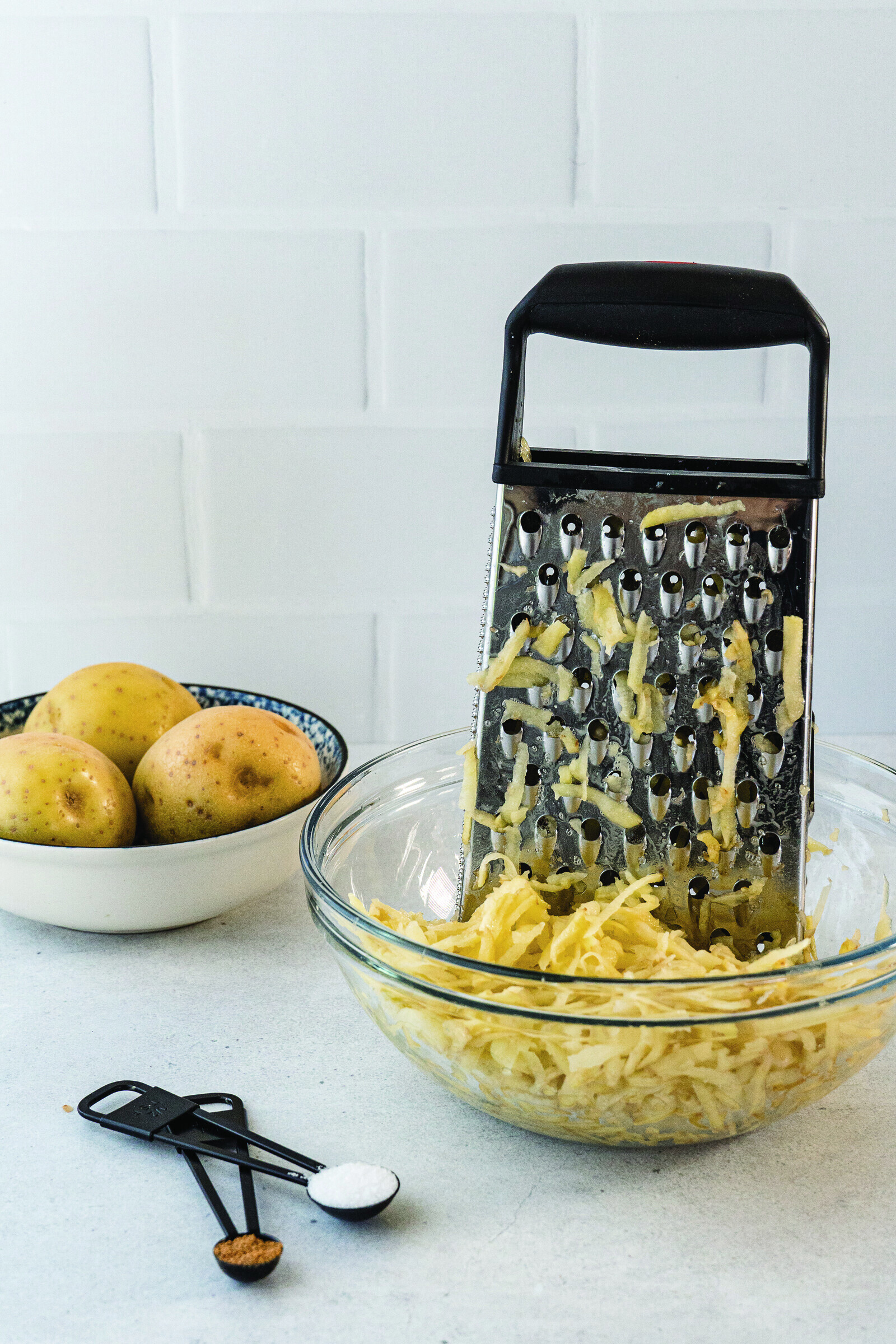
- Shred potatoes on a box grater using long, continuous strokes. (Longer strands of potato will hold the rösti together.) Remove most of the water from the shredded potatoes by squeezing them in fistfuls over the sink or pressing them in a colander. Transfer the shredded potato to a large bowl, add the salt, nutmeg, and 1 tablespoon oil and mix until combined well.
- Warm 2 tablespoons of oil over medium-low heat in a skillet. When the oil is hot, add the potato mixture, spreading and gently tamping into an even layer.
- Allow the rösti to cook undisturbed for 8 minutes. At this point you can delicately lift an edge to ensure browning has begun. Continue cooking for another 4 minutes or until the underside is golden brown.
- Now it’s time for the flip. Make sure the rösti isn’t stuck to the pan by giving the skillet a firm jiggle. If the rösti slides, you’re clear. If it sticks, run a spatula underneath to release it. Place a large plate or cutting board over the skillet and lift it from the stove. With one hand holding the skillet and the other on the back of the plate, rotate the skillet and plate together in one fluid motion.
- The rösti will drop onto the plate, cooked side up. Return the skillet to the stovetop, turn the heat back to medium-low, and add the remaining cooking oil. Now gently slide the rösti back into the skillet, uncooked side down. Allow to cook for 8 minutes, then remove.
- Cut into wedges and serve immediately with sour cream and chives. For a more substantial meal, rösti pairs wonderfully with a fried egg or two.
Pasta e Ceci
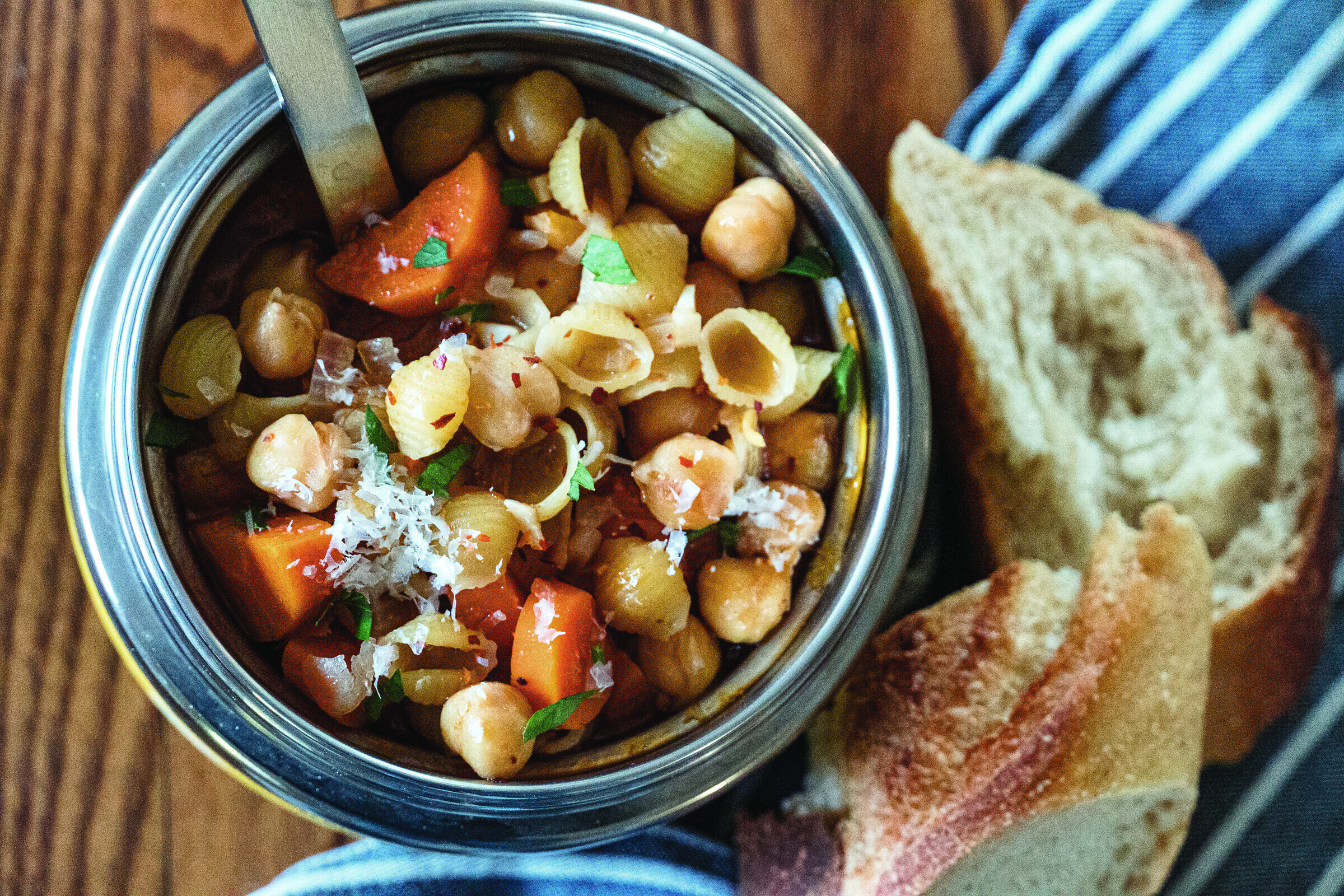
Blurring the line between fully loaded stew and brothy soup, pasta e ceci features a soul-warming tomato and veggie broth, chopped carrots, pasta, and chickpeas. Topped with shredded parmesan cheese and finely chopped parsley and served with crusty bread, we couldn’t ask for anything better. This stew is simple enough to make in the morning before a ski day or it can be cooked in a large batch ahead of time and warmed as needed. Either way, our suggestion is to bring it with you in an insulated container and serve steaming hot. There’s nothing like a hot meal to fortify a winter adventure, whether at a scenic vista point, along a snow-covered trail, or in the comfort of a gondola.
- 2 tablespoons olive oil
- 1 large shallot, diced
- 1 carrot, chopped
- 3 cloves garlic, minced
- ½ teaspoon red pepper flakes
- ½ teaspoon salt
- 1 tablespoon tomato paste
- 1 bay leaf
- 15-ounce can chickpeas (with liquid)
- 2 cups vegetable broth
- 1 cup small shell or ditalini pasta
- 2 tablespoons freshly grated parmesan cheese*
- 1 tablespoon chopped flat leaf parsley
- *omit or use a plant-based cheese for vegan version
- Heat the oil in a saucepan over medium heat. Once hot, add the shallot and carrots and sauté about 5 minutes, until the shallot softens. Add the garlic, red pepper flakes, and salt and sauté another minute before adding the tomato paste. Stir and cook for two more minutes, then add the broth, chickpeas with their liquid, and the bay leaf.
- Bring the broth mixture to a boil, then add the pasta. Cook for the length of time suggested on the package or until the pasta is al dente. Check seasoning and add salt as needed.
- Remove the soup from the heat and divide between two bowls or thermoses. Top with fresh parsley and parmesan cheese and a drizzle of olive oil.
40-Minute Cassoulet
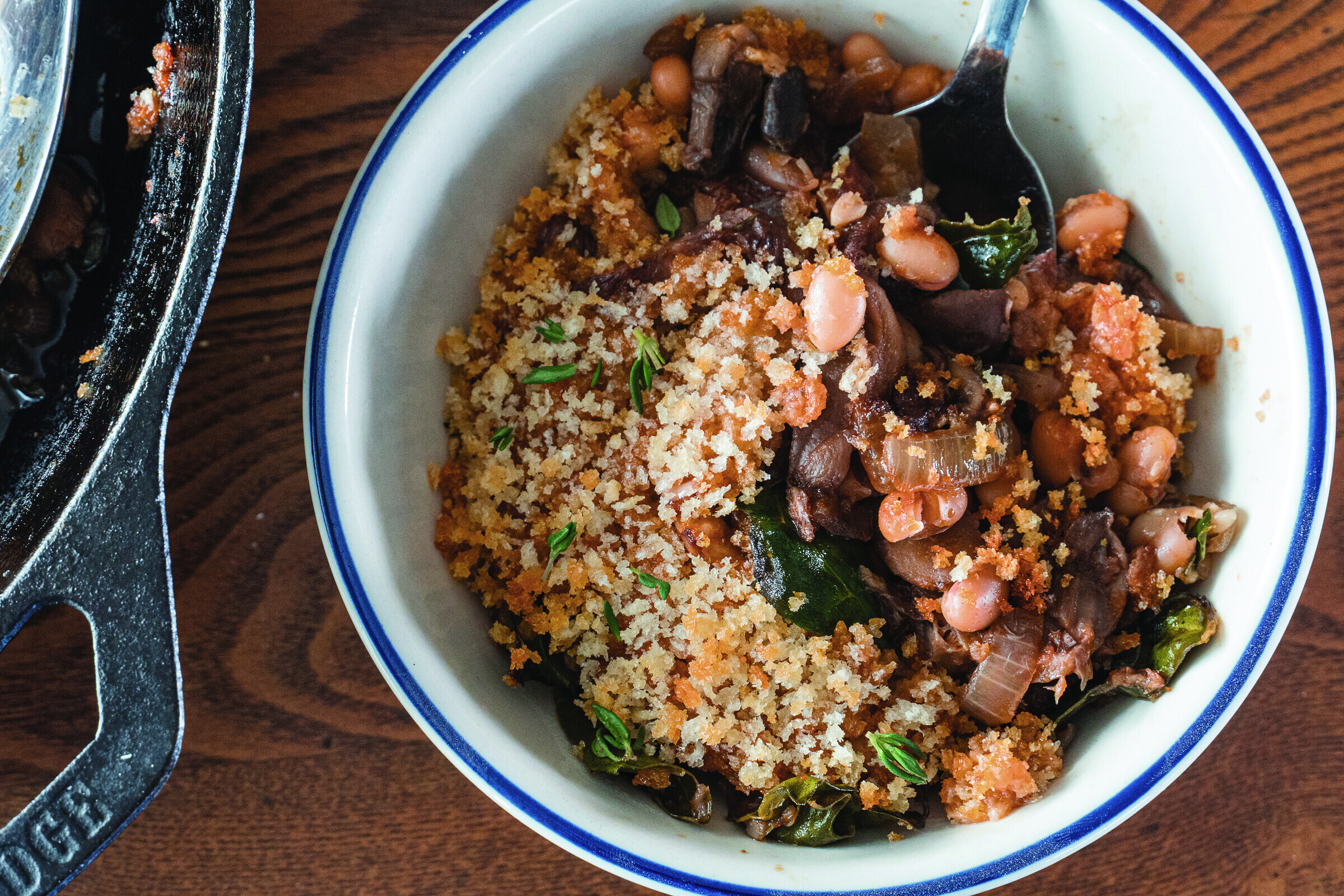
Traditional French cassoulet is famous for two things: being rich and full of meat and taking days to make. At its heart, it’s a nourishing and warming meal with peasant origins—in this version, we simplify the classic to be weeknight and vegan friendly. To replicate the depth of flavor found in traditional cassoulet without using an array of meats and animal fats, we had to be creative to build layers of flavor quickly. First, we used the power combo of mushrooms and onions sautéed in butter. Not only does this produce a heavenly aroma in your kitchen, it lays down a foundation of flavor that carries through the rest of the meal. After some brown bits are able to form, we deglaze the skillet with red wine to lift up those umami flavors and integrate them into the sauce. We then add kale, beans, and broth. For the spices, we focused on French thyme for its air of mint and lemon and smoked paprika for its bold, smoky notes. After just 20 minutes, the layers of flavor are in place and all that’s left is to transfer the skillet to the oven and let them come together. The result is an unbelievably rich and hearty vegan cassoulet that provides a satisfying end to a winter’s day.
- 4 tablespoons plant-based butter, divided
- 1 small onion, diced
- 12 ounces mushrooms, quartered
- 4 cloves garlic, minced
- 1 teaspoon sea salt
- 1 tablespoon tomato paste
- ½ cup red wine
- 15-ounce can navy beans, drained
- ½ cup chopped kale
- 1 teaspoon dried thyme (or 1 tablespoon fresh)
- ¼ teaspoon smoked paprika
- 1 ½ cup vegetable broth
- 1 ½ cup panko bread crumbs
- 2 tablespoons olive oil
- Preheat the oven to 450° Fahrenheit and place the top rack into the top third of the oven.
- Melt 2 tablespoons butter in a 10-inch oven-safe skillet over medium-high heat. Once the butter has melted, add the onion and mushrooms. Sauté for 5 minutes, add the garlic and salt, and sauté an additional 2 minutes until the garlic is fragrant.
- Add the tomato paste and remaining 2 tablespoons butter and stir to coat. Sauté 2 minutes as the vegetables brown.
- Add the red wine to deglaze the pan, scraping up any browned bits using a spatula or wooden spoon. Stir in the beans, kale, 1 teaspoon thyme, ¼ teaspoon smoked paprika, and 1 ½ cups of broth.
- In a small bowl, mix the panko bread crumbs with the oil, then spread them evenly over the top of the skillet. Place the skillet on the top rack and bake for 20 minutes, until the panko is golden brown. Remove from the oven and serve.
42 issues. 11 years. Independently owned. Printed on 70lb uncoated paper with a soft-touch cover, solar-powered, and shipped in a brown paper envelope. Free domestic shipping.