Arts + Sciences
People Changing How We See the World
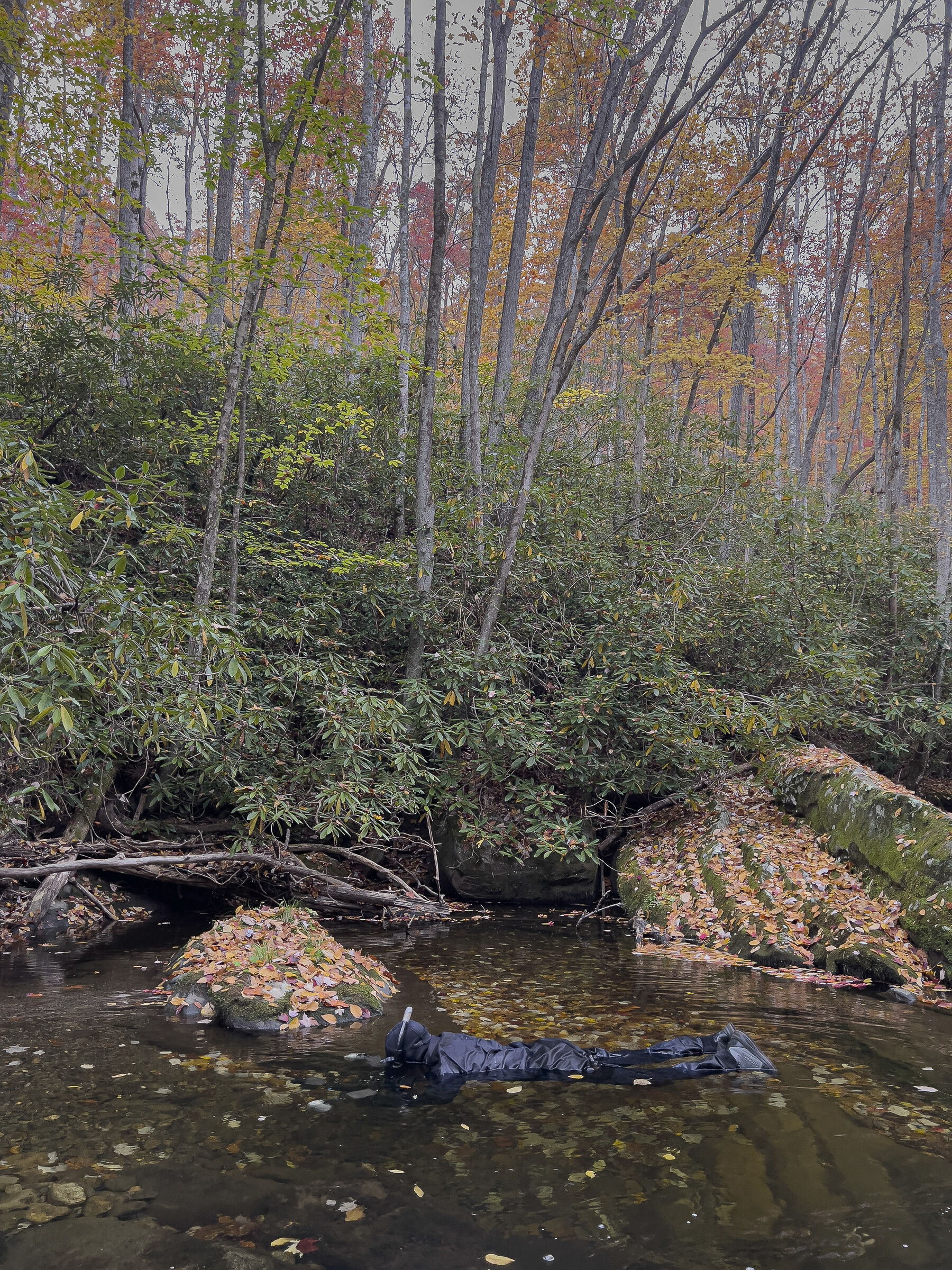
Have you ever been nose to nose with a trout? Not in the grocery store, sussing out a fish’s candidacy for the frying pan, but with your face submerged in a clear backwoods stream? Probably not. Floating above a coral reef in the tropics spotting brightly colored fish is pretty normal vacation behavior, but not many people strap on a snorkel and peer into the creeks, streams, and rivers that crisscross the United States.
Andrew Zimmerman lives for it.
He’s an aquatic biologist and underwater photographer with Conservation Fisheries, a Tennessee-based nonprofit that supports imperiled freshwater fish populations in the Southeast. And if you’ve never seen a candy darter, a Tennessee dace, or a Barrens topminnow—just three of the species the organization works with—you’d be forgiven for thinking you were looking at a trio of brightly colored Caribbean cuties. Zimmerman’s job? Wow people with beauty found in places you wouldn’t expect.
As a kid, fishing trips to the clear water and interesting nearshore bathymetry of Lake Huron were all it took to hook Zimmerman on the mysteries of inland waterways. He bought his first camera and water housing shortly after graduating from college, then started dipping it into the nearest bodies of water he could find. Even if they were in places like Ohio and Tennessee.
One day, in Great Smoky Mountains National Park, Zimmerman had a realization while fly fishing for Southern Appalachian brook trout. He didn’t want to catch the fish, he wanted to show everyone else how wonderful they were. So he made a promise to himself. Next time he went there to fish, he’d leave his rod behind and capture the trout with his camera instead.
Though Appalachian trout can be beautiful, Zimmerman loves photographing unheralded species, such as the river chub. Normally a forgettable bronze color, the big minnow becomes a riot of red and orange when spawning, an explosion of fishy color you’d normally have to dive the tropics to see. Sometimes he lays on his belly and sticks his camera into a creek, but his favorite is strapping on a snorkel and floating face-down. “It’s important to appreciate the places you live near,” Zimmerman says. “I just want to show people the beauty in their backyards.”
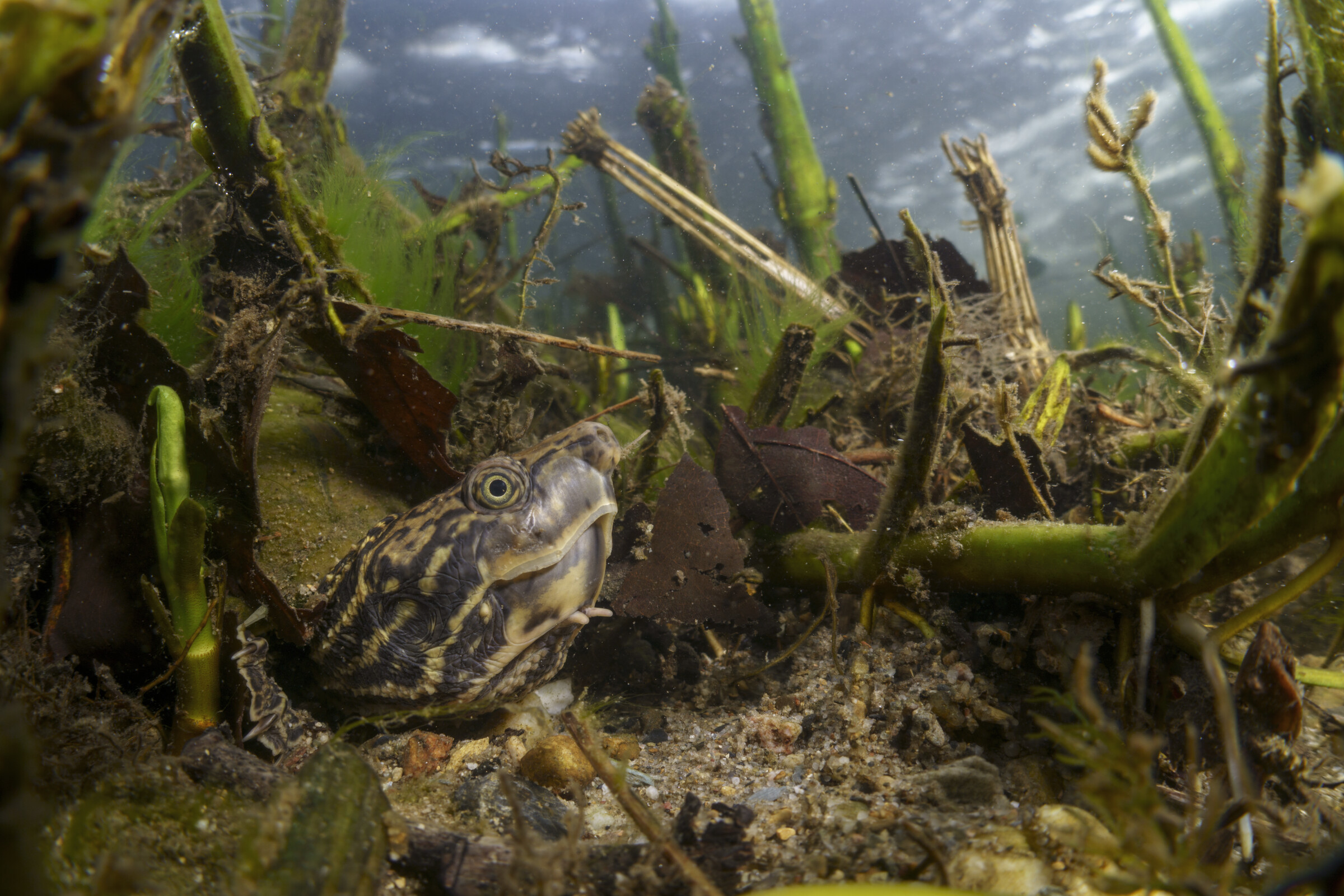
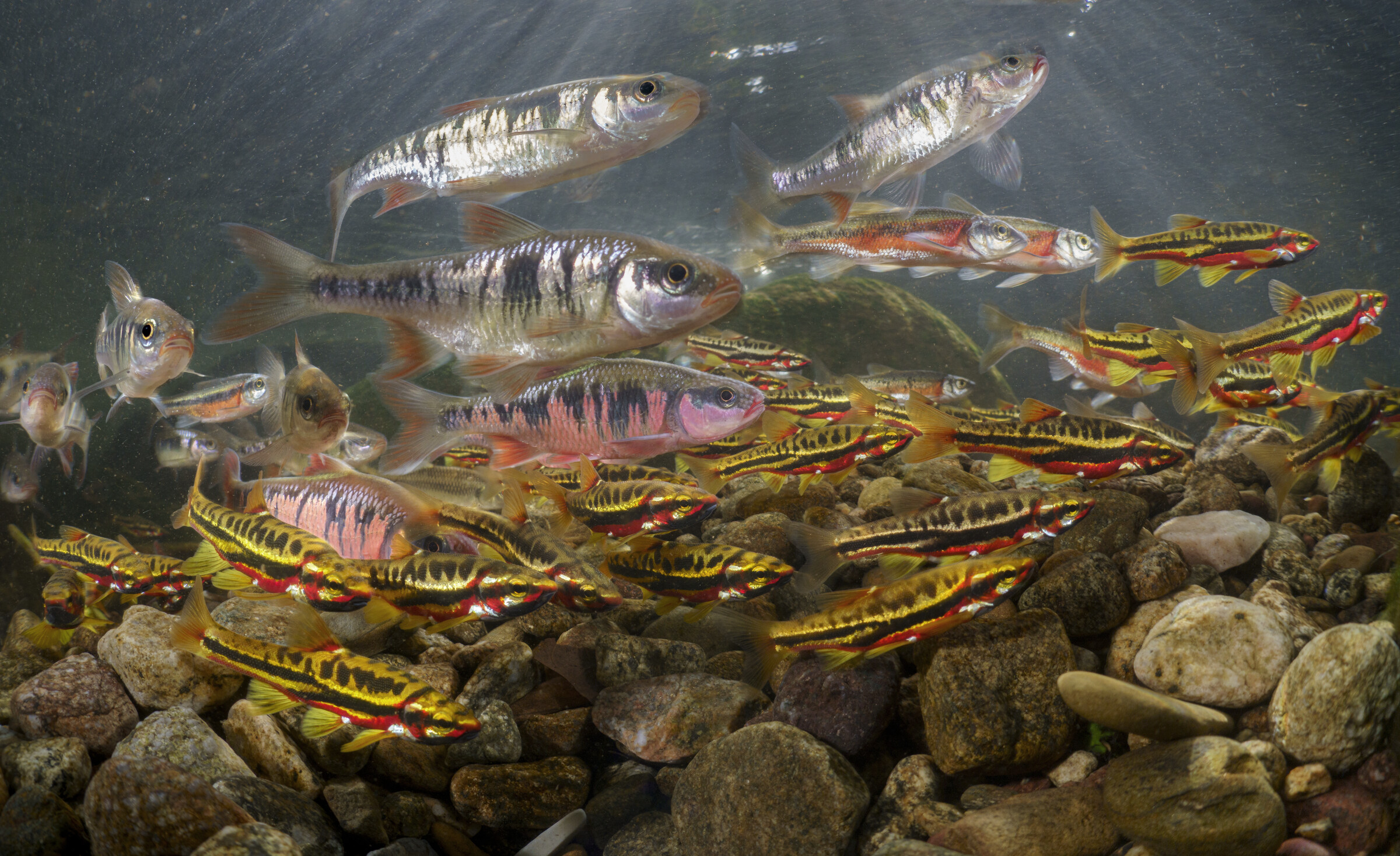
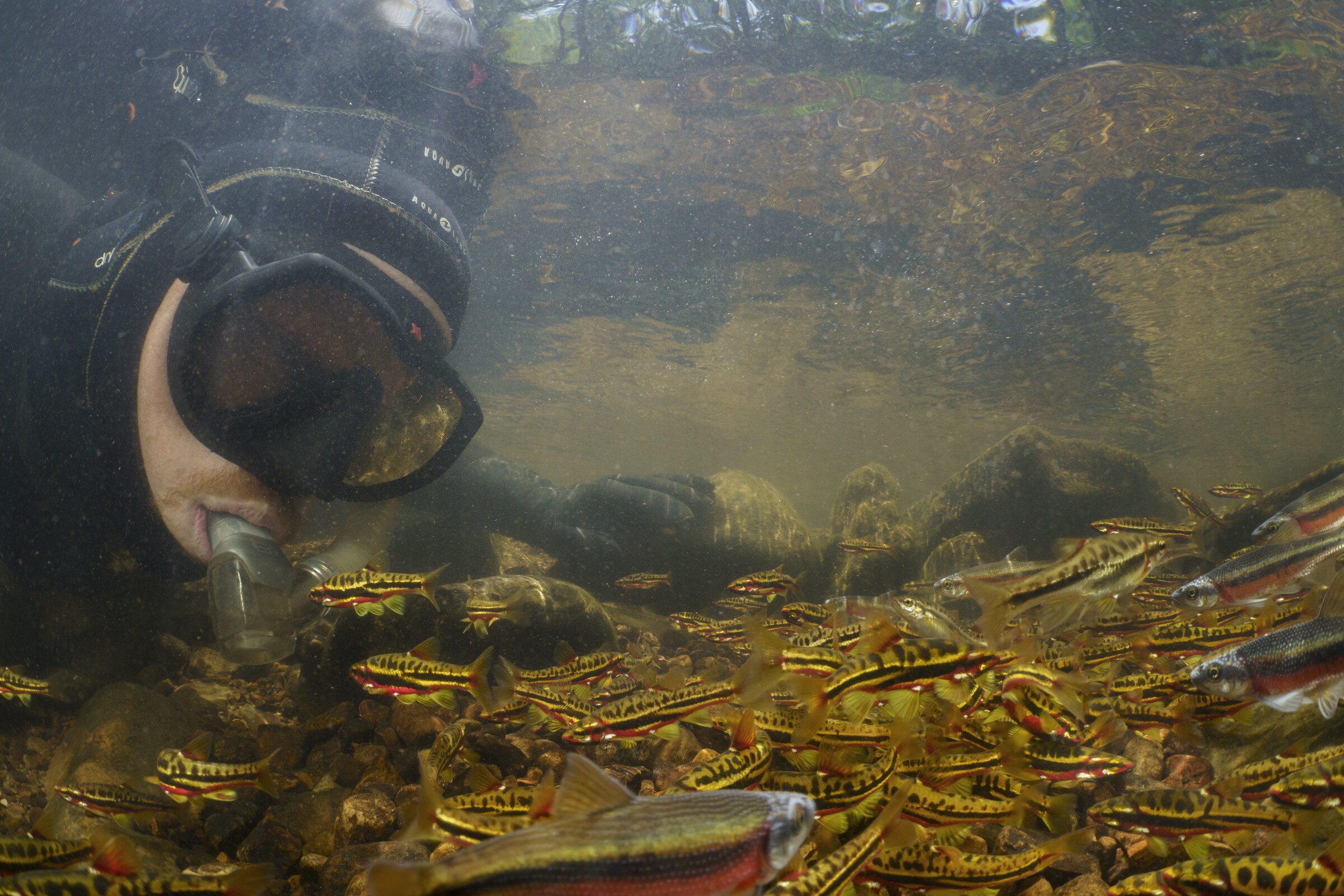
Photos by Andrew Zimmerman
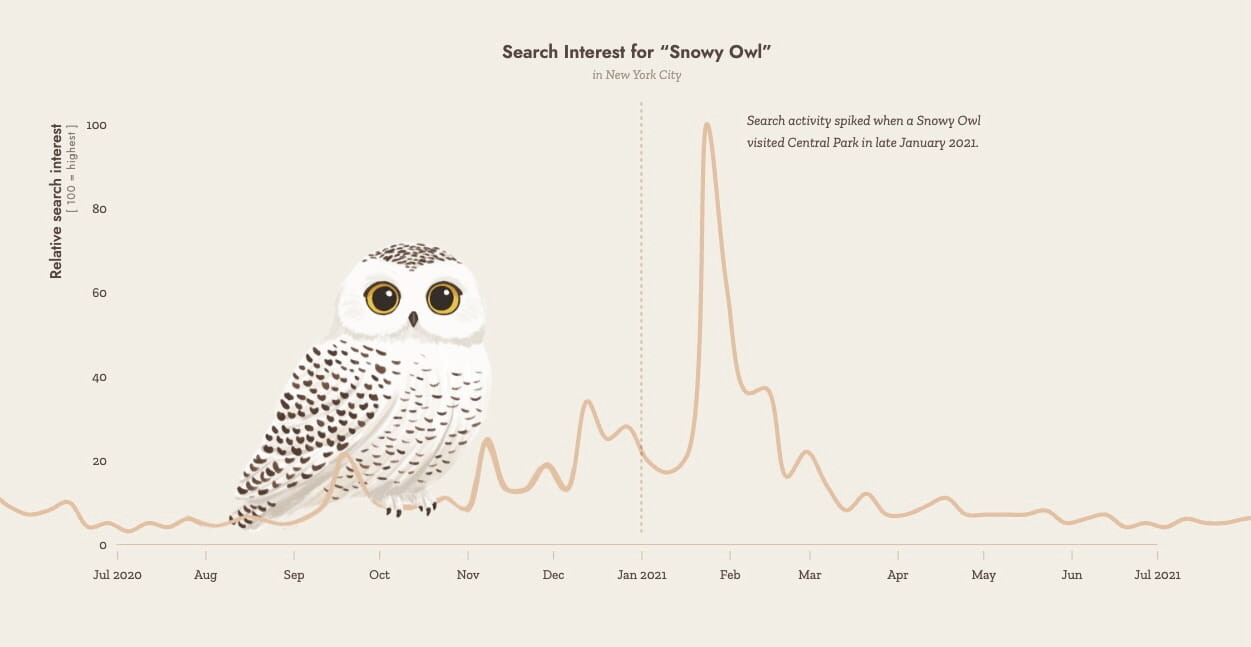
On a cold January day in 2021, a snowy owl appeared in New York City’s Central Park and sparked the curiosity of a claustrophobic, pandemic-bound city. The owls don’t drop by often; only fourteen thousand to twenty-eight thousand breeding adults exist, and they generally stick to the Arctic. New Yorkers, desperate to get out of their apartments, gathered in the park hoping to spot the rare owl. They also gathered on the internet—Google searches for “snowy owl” spiked that month. For a data artist, particularly one fascinated by birds, here was a thread to unravel.
Nadieh Bremer grew up a stargazer on the rural eastern side of the Netherlands. She later became a data scientist, an expert at recognizing patterns hidden in heaps of data—a bloodhound sniffing through a digital forest. She discovered elegance in that raw information and began making ornate data visualization pieces for Google, including cataloging how pet owners search for clues about their animal’s behavior.
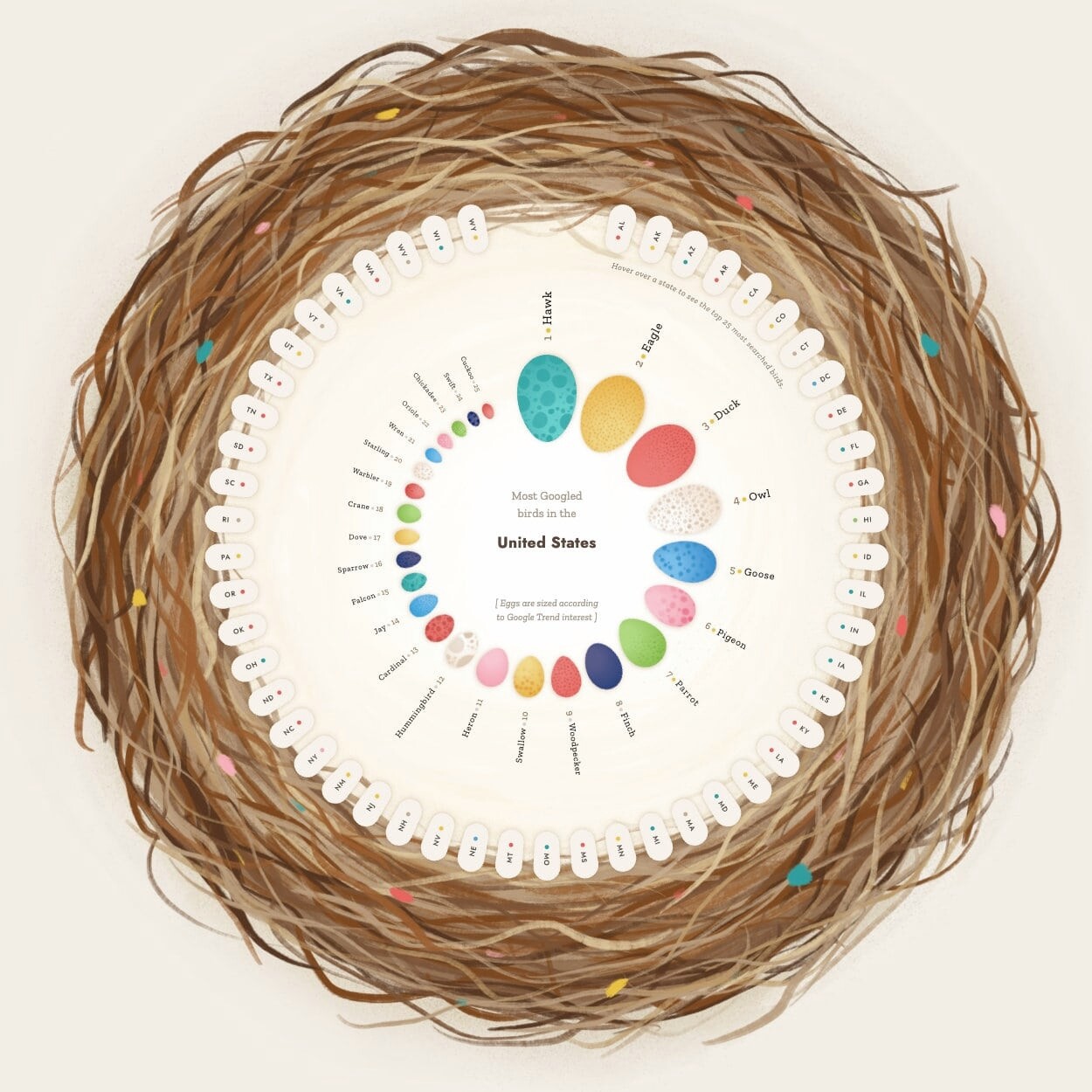
“Humans are very visual beings,” she says. “If we want to ‘feel’ anything about or through data, we need to see it.” A few years back, Bremer’s backyard garden was suddenly alive with birds she’d never noticed. She started researching the birds crowding her feeders and from this an idea was born: a data-based visual story of how people discover birds—like that snowy owl. Bremer called her project Searching for Birds. It uses internet search data to create a beautiful, pastel-colored interactive map showing where and when bird species appear across the country. It’s a narrative map, but rather than use tagged birds to track where species appear, it uses our searches.
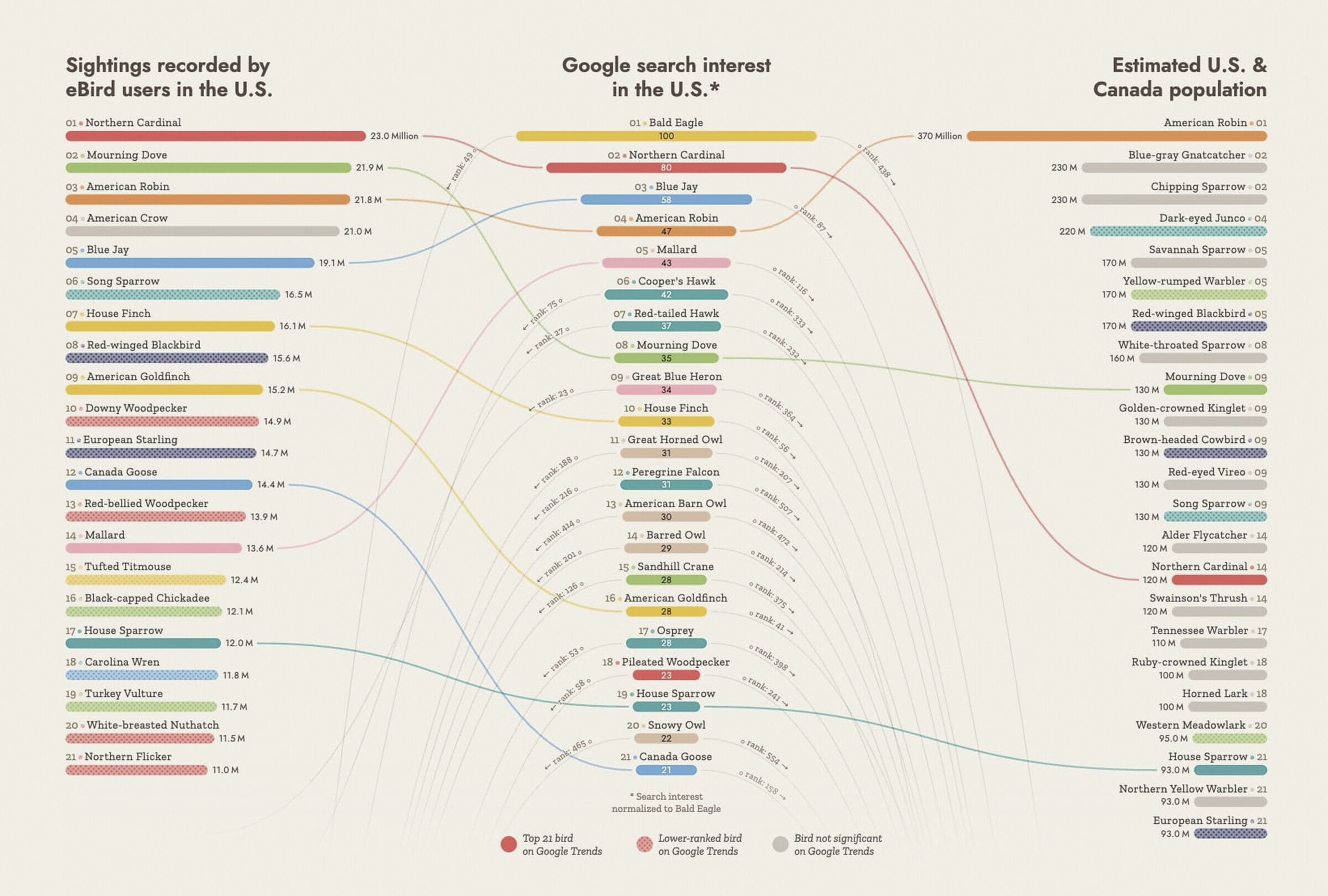
This reveals which birds draw our attention. Often, those are big, charismatic avians, like hawks and eagles, which appear far more often in searches than the little guys hopping through shrubs like gnatcatchers and warblers. The bald eagle is by far the most Googled bird in the country. Which is fitting: One of the coolest things the data in Searching for Birds shows isn’t even about birds, but about us. It shows that across the country, people are peeling their eyes from their screens to look up and be fascinated by the wild world flying all around.
Photos by Nadieh Bremer

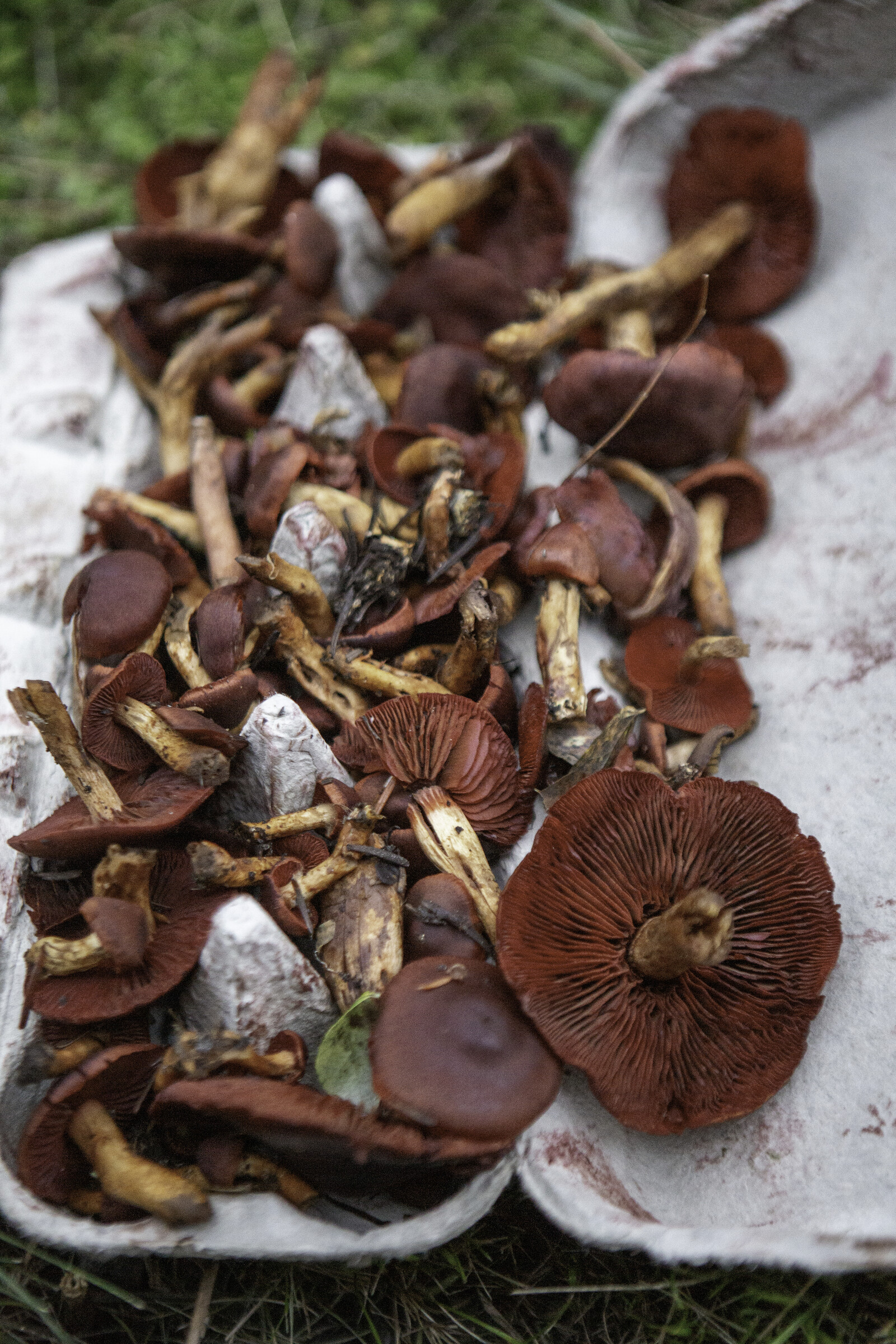
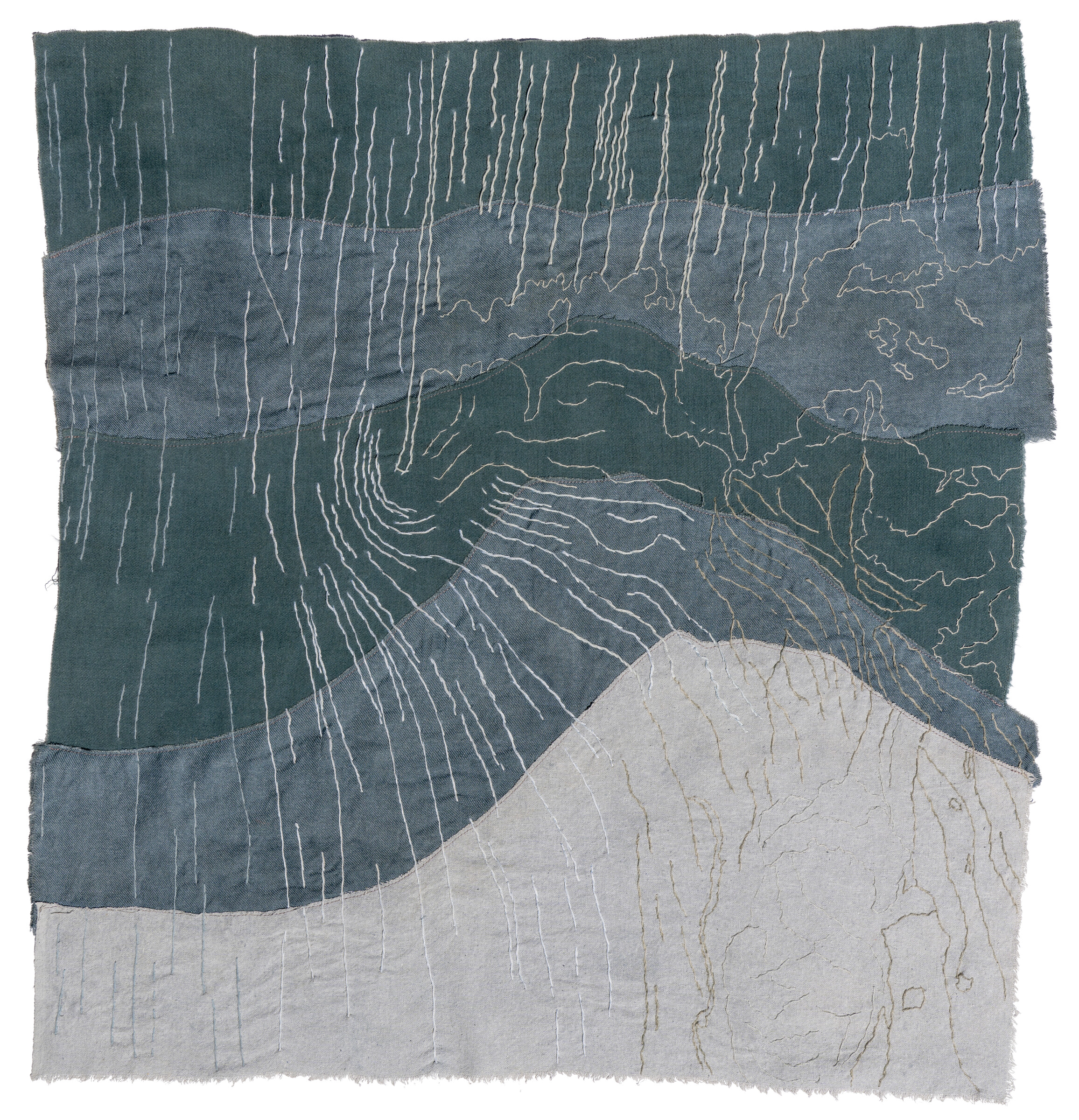
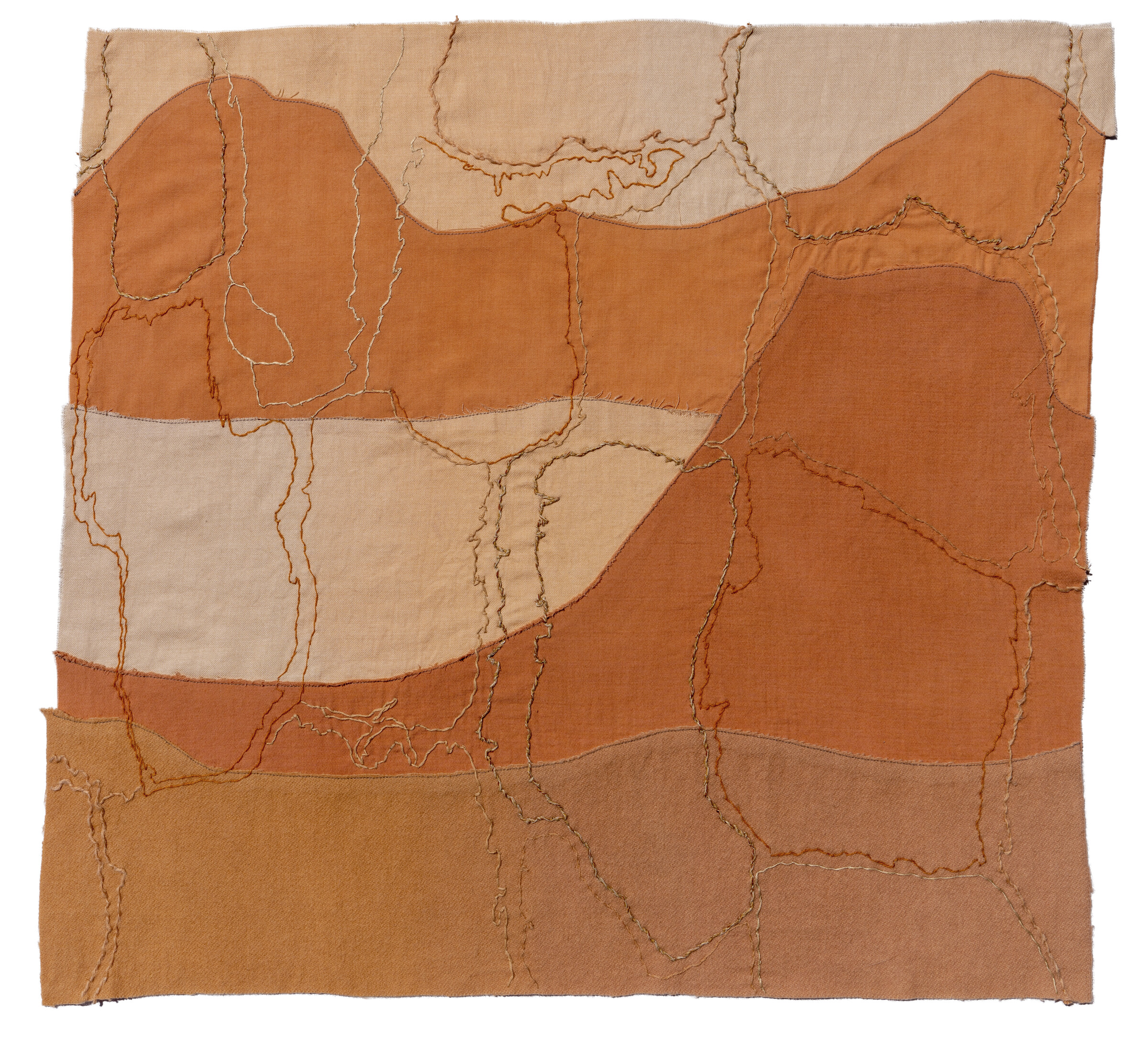
The next time you’re looking at a field of technicolor wildflowers, consider this: Many, if not most, of those flowers have only one or two pigment compounds inside them. The lowly mushroom, hiding in the forest and commonly presenting as tan or cream or off-white, might have up to a dozen or more pigments. It’s this banquet of colorful possibilities, little known outside the world of mycophiles, that enchanted Julie Beeler, creator of the Mushroom Color Atlas, and diverted her artistic practice.
In 2012, she and her husband sold their interactive design studio, and, with more time on her hands, she dove into her lifelong fascination with mushrooms and also shifted her textile work toward using natural dyes. Fungi, she found, had been used to color fabric since medieval times, but aside from three books, one each published in the sixties, seventies, and eighties, there was no comprehensive guide to which mushrooms produced which colors under which conditions. With that as her beginning, Beeler set down the path of foraging, testing, and recording what she found.
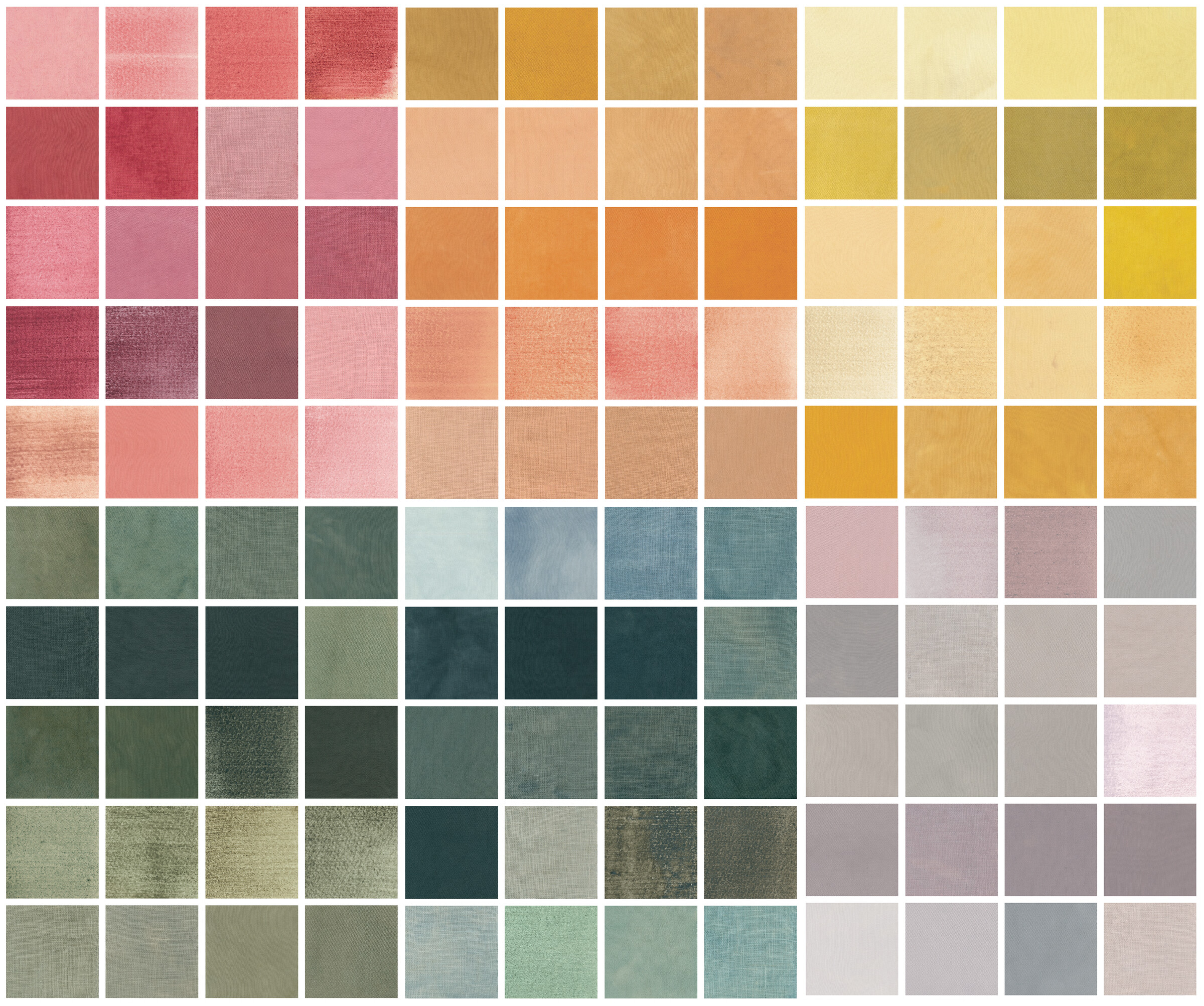
Before a decade passed, she had identified hundreds of colors derived from a mere handful of mushrooms and determined to share what she’d learned with the world. She knew web design from her studio days and had the tech contacts to create the underpinnings. After a lot of mushroom brewing, dye samples, and database-building, the Mushroom Color Atlas launched online in late 2021, followed by a book not long after. Beeler adds to the atlas every year, and today there are eight hundred twenty-five color samples created from just forty mushrooms, a ratio that suggests how much more tint is out there, given the one hundred fifty thousand known species of fungi.
And while that’s a big story, there might be even more wrinkles to the narrative of mushroom colors. In 2025, a researcher studying the lac insect, long used to create red dye, discovered the pigment comes from a fungal symbiont, not the bug itself. “That was the biggest news flash,” Beeler noted. “The scientists were like, ‘It’s a fungus that paints the town red, not an insect.'”
She’s gonna be busy: There are an estimated two million to four million fungi yet to be found.
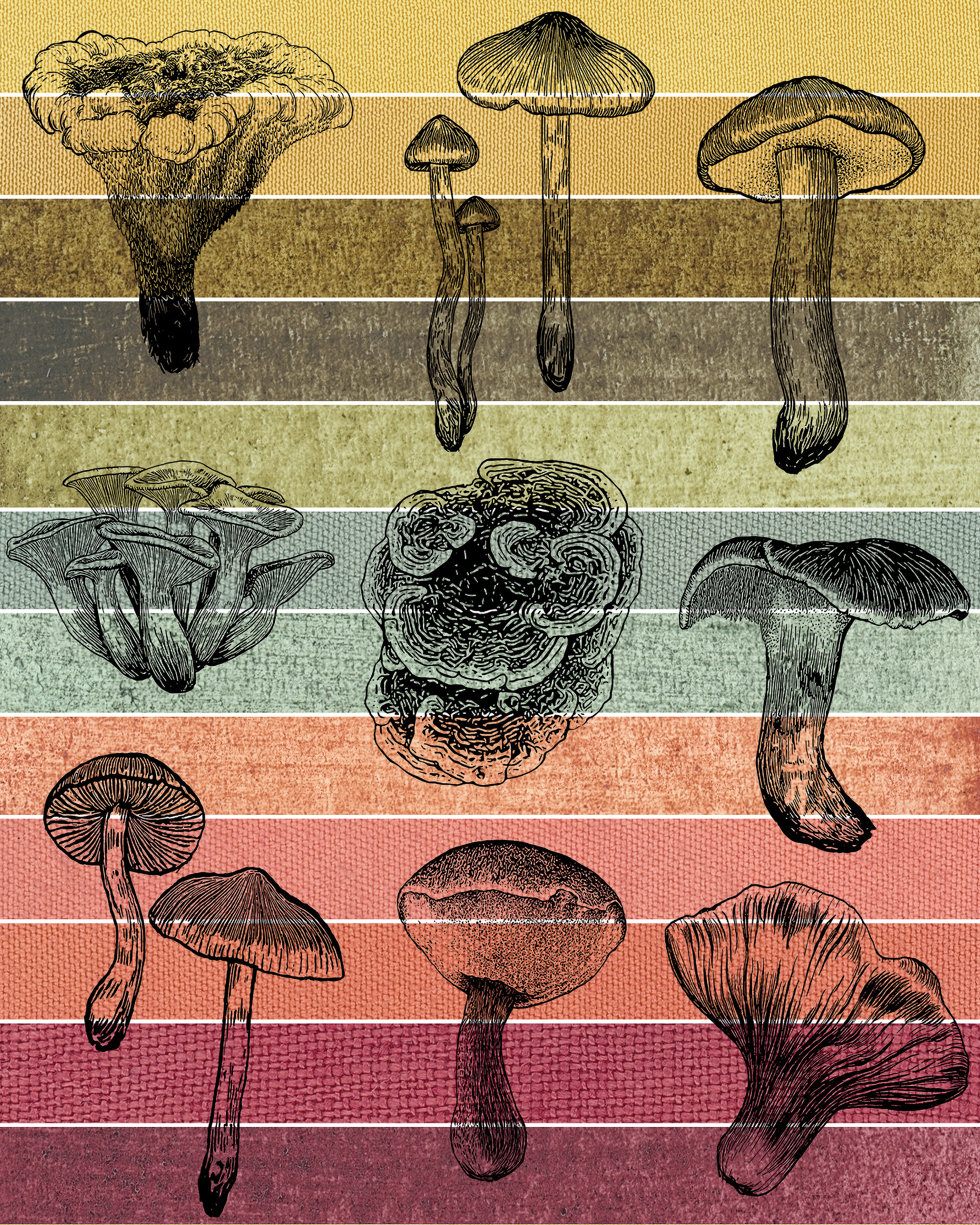
Photos: Kelly Turso / Julie Beeler / Mario Gallucci
42 issues. 11 years. Independently owned. Printed on 70lb uncoated paper with a soft-touch cover, solar-powered, and shipped in a brown paper envelope. Free domestic shipping.