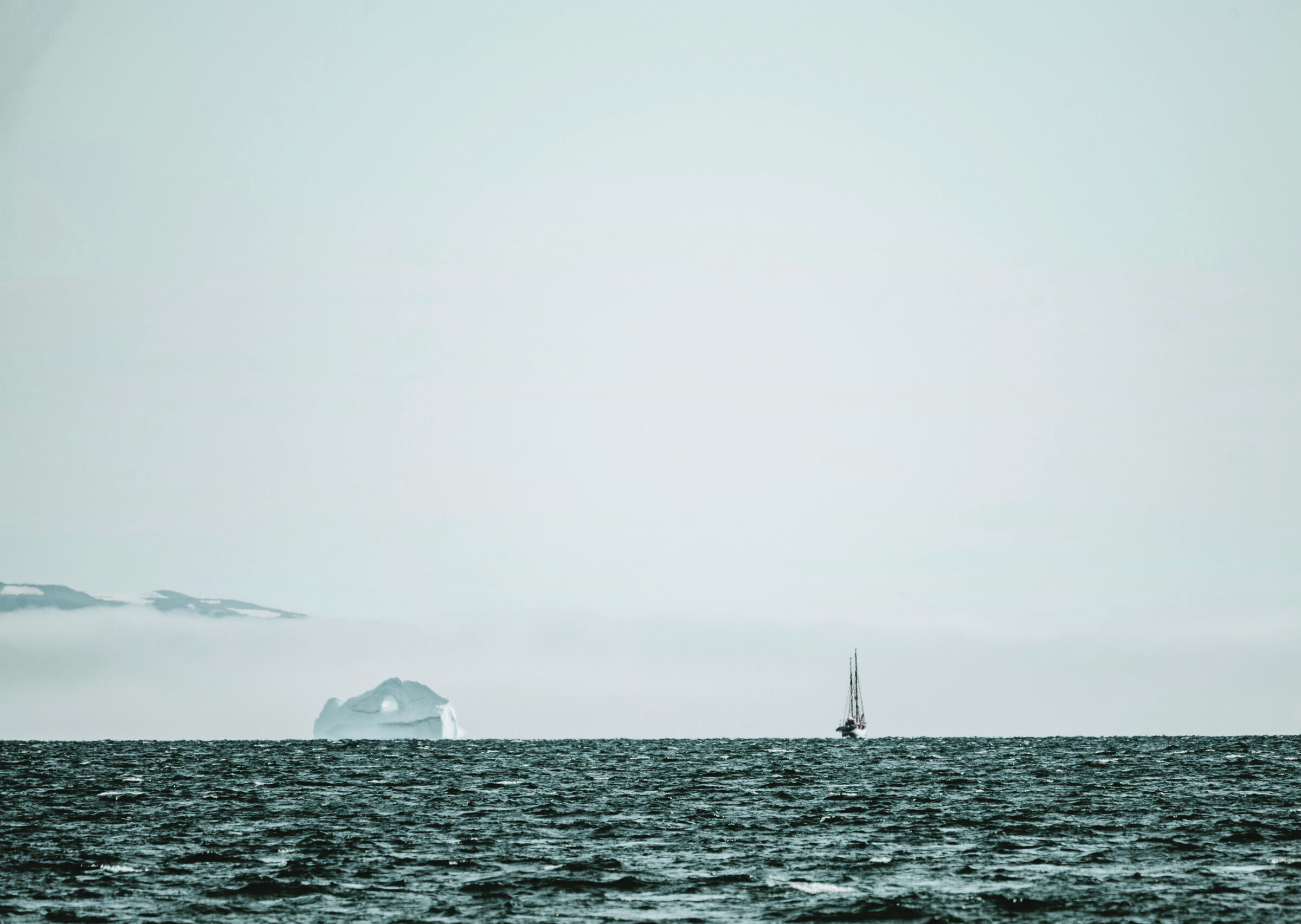
Greenland remains a place for proper exploring. Photo by Annie Spratt
The Art of Exploring
Proper adventure isn't about the self, but about the land, strange creatures, and the poetry of people
The true and original explorers, men and women who actually went where no humans had been, were those who walked out of Africa some sixty-five thousand years ago, embarking on a journey that in twenty-five hundred generations, roughly forty thousand years, carried the human spirit to every corner of the habitable world.
Since then, terrestrial exploration has rarely been divorced from power and conquest. Searching for a passage to the Indies, the French explorer Jacques Cartier is said to have discovered the St. Lawrence River in 1534, though the valley was clearly settled at the time, and the waters offshore were crowded with the Basque fleet, fishermen with no interest whatsoever in flaunting the location of their discoveries, a cod fishery that would feed Europe for three centuries.
History heralds Francisco de Orellana as the first to travel the length of the Amazon, a journey undertaken in 1541. It was documented by his companion and scribe, Gaspar de Carvajal, who wrote of fleets of native canoes
2,800 words to go
You’re just getting to the good part.
This story — and 42 issues of them — opens with a subscription.
Either one picks up right where you left off.
Join 7,000+ readers · Independently owned · Since 2008
Already a subscriber? Sign in
Adventure Journal — Print Quarterly
Stories like this, in your hands four times a year.
42 issues. 11 years. Independently owned. Printed on 70lb uncoated paper with a soft-touch cover, solar-powered, and shipped in a brown paper envelope. Free domestic shipping.