Mementos, Notes, and Fragments

I Spy, With My Big Painted Eye, Something That Begins With “L”
Here’s the thing about lions: They typically attack their prey from the back. Here’s the thing about cows: Their eyes are in the front. And here’s the thing about African ranchers whose cows are killed by lions: They often turn around and kill lions, any lions, poisoning or shooting them to protect their herds. Good if you’re a cow, not good if you’re a lion or preservationist trying to keep decreasing lion populations from decreasing further.
Enter Dr. Neil Jordan, an ecologist with the University of New South Wales and Taronga Western Plains Zoo in Australia, who theorized that predators might be deceived with a clever masquerade. He and his team painted eyes on the backsides of cows in northern Botswana, painted others with crosses, and left still others untouched. Over the four-year study, the results were remarkable. Fifteen of the eight hundred and thirty-five unpainted cows ended up as lunch. Just four of the “cross-cows” were killed. And out of the six hundred and eighty-three with big orbs on their butts? Every single one is still alive and preening around, mooing, “How do you like me now?”
Jordan theorizes that predators saw the “eyes,” thought they’d been spotted, and, having lost the element of surprise, abandoned their ambushes—something called the detection hypothesis. The “cross-butt” results suggested the conspicuousness hypothesis, in which predators just don’t know what to make of things—which the team wasn’t expecting to see. Either way, Jordan notes that results might have differed were all the cows graffitied. “It is unclear whether painting would still be effective,” he said, “if these [unpainted] proverbial ‘sacrificial lambs’ were not still on the menu.”
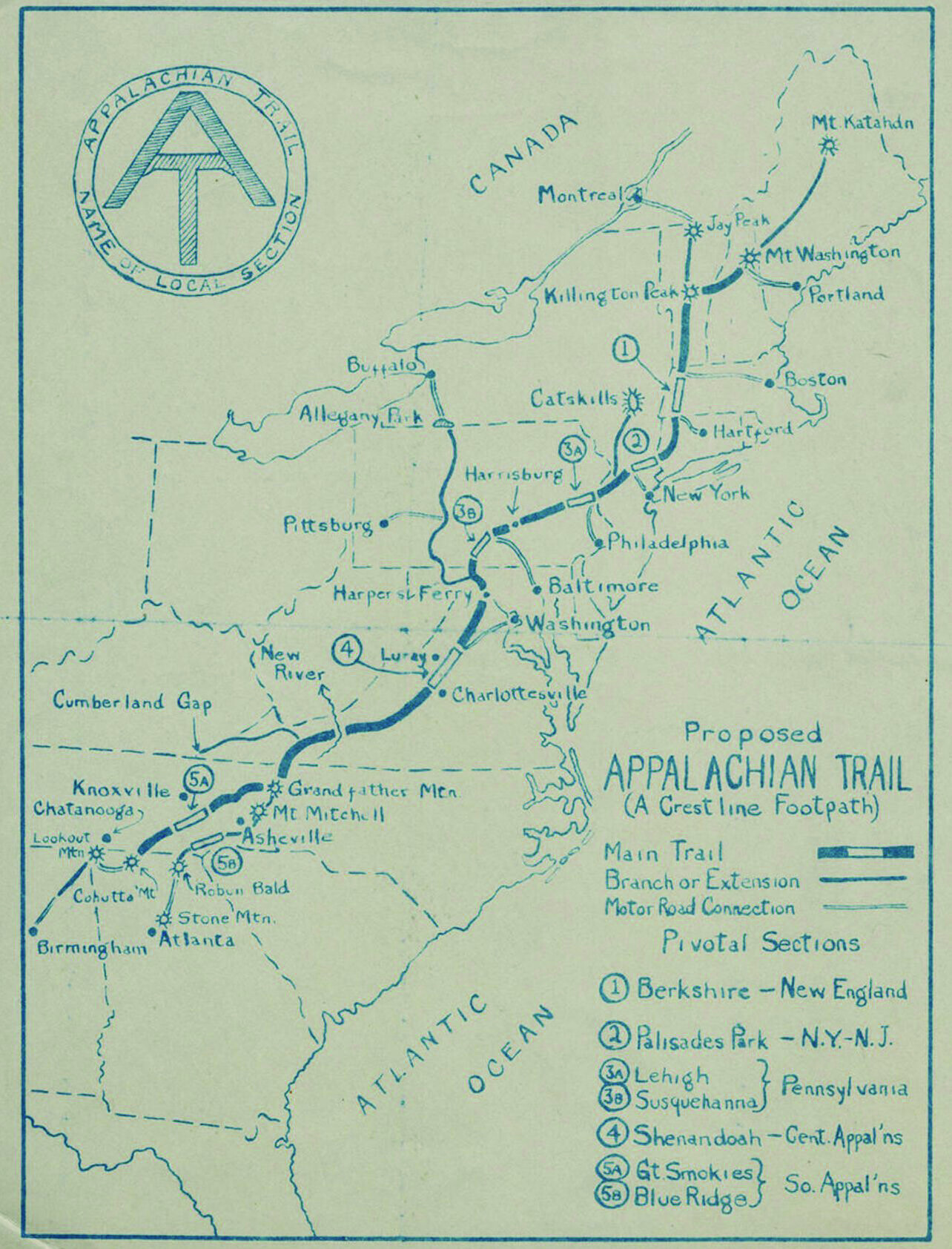
The Appalachian Trail Was Born as a Dream of Utopian Social Engineering
“The problem of living is at bottom an economic one,” wrote Benton MacKaye. “And this alone is bad enough…But living has been considerably complicated of late in various ways—by war, by questions of personal liberty, and by ‘menaces’ of one kind or another.”
That perhaps might remind you of today, but in fact MacKaye published those words in October 1921, with World War I and the 1918 flu pandemic still large in his mind. MacKaye was one of the first employees at the U.S. Forest Service and a member of a group of journalists, activists, and progressives who called themselves the Hell Raisers. His proposal, published in an architectural journal, envisioned a retrenchment of society built around what he termed “An Appalachian Trail: A Project on Regional Planning.” MacKaye was a dreamer, and eccentric as well, but his idea was rooted in the manifest problems of the day—not just war and pestilence, but the rapid urbanization and industrialization that were transforming America. With the Appalachians as backbone, he envisioned recreation camps and agriculture and sustainable forestry and migration back into rural areas, all correctives to the ills of modern culture.
MacKaye’s full dream didn’t come true. But over the next two decades, his titular proposal took shape through the efforts of countless trail lovers, and today use of the AT is booming. From 1936 to 1969, there were just fifty-nine complete thru-hikes of the 2,190-mile trail. From 2015 thru 2018, the average was more than eleven hundred a year, with a quarter million volunteer trail maintenance hours annually. The Appalachian Trail might not be utopia, but it’s very much the people’s hike, and when MacKaye died in 1975, he was proud of what the people had built.
Try to Read This Without Getting the Creeps, Just Try
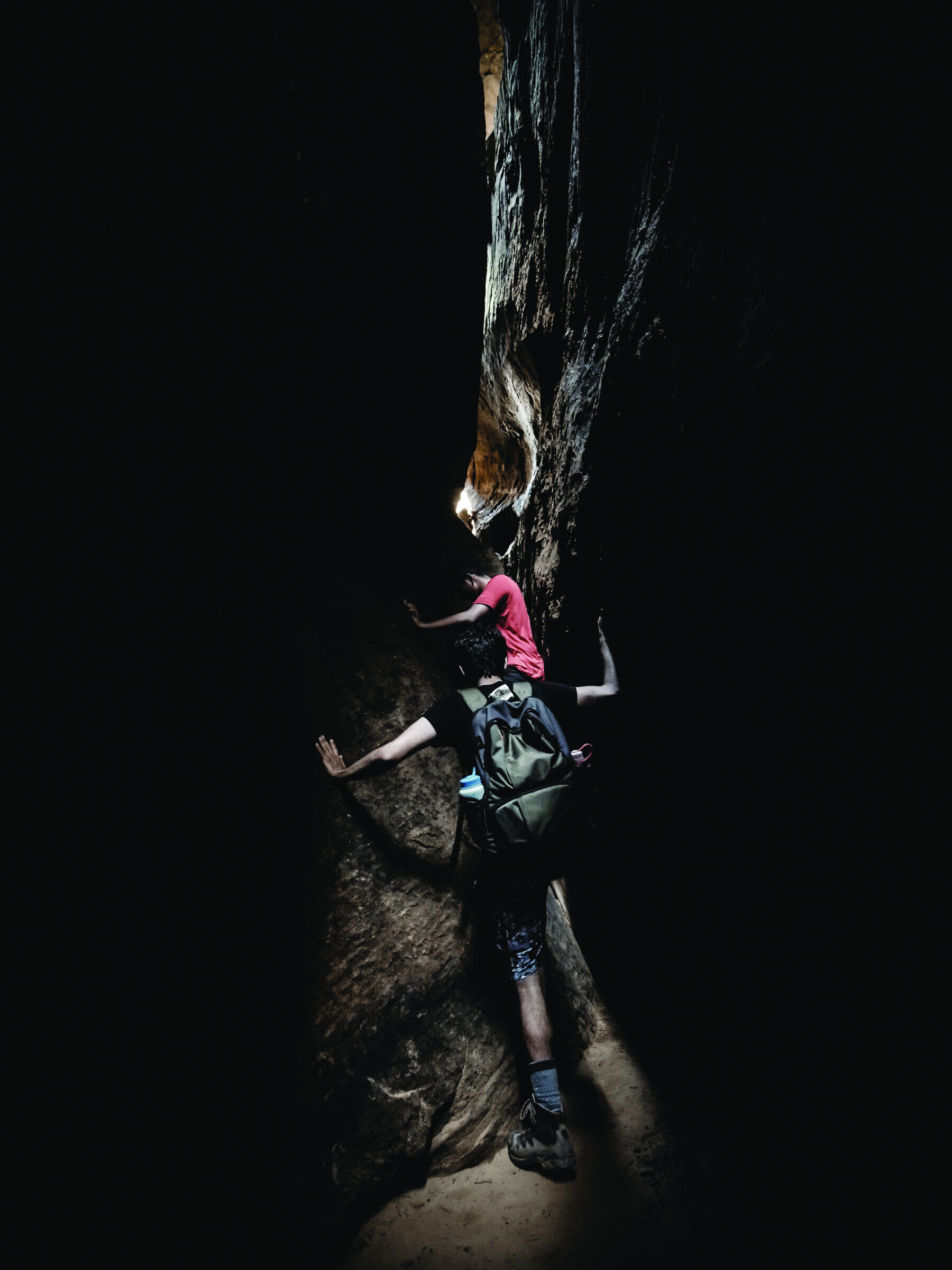
In his book Underland, about the worlds beneath our feet, Robert Macfarlane notes that “claustrophobia—much more so than vertigo—retains its disturbing power even when being experienced indirectly as narrative or description. Hearing stories of confinement below ground, people shift uneasily, step away, look to the light—as if words alone could wall them in.”
As evidence, he offers a passage from the novel The Weirdstone of Brisingamen by Alan Garner, about two children exploring a mining tunnel:
They lay full length, walls, floor and roof fitting over them like a second skin. Their heads were turned to one side for in any other position the roof pushed their mouths into the sand and they could not breathe. The only way to advance was with fingertips and to push with the toes, since it was impossible to flex their legs at all, and any bending of the elbows threatened to jam the arms helplessly under the body. [Then] Colin’s heels jammed against the roof: he could move neither up nor down and the rock lip dug into his shins until he cried out with the pain. But he could not move…
Oh, yes, and it was probably quite dark, too.

There It Is! No, THERE It Is!
In April 1915, a Dr. Terada traveled to the southwest coast of Honshu, Japan, with a collection of Helmholtz resonators. He was hoping to hear the mystical booming noises the area was known for and track down their source, but he might as well have used a flux capacitor: no noises, no measurement, no answers.
Mysterious aural disturbances—which sound like cannon fire, thunder, or sonic booms—have been noted all over the world for centuries, mostly along coasts, and there’s still no definitive explanation for their cause. In Belgium, they’re known as mistpoeffers (sea burps) and in 19th century Newfoundland as seefahrts (no translation needed). The Japanese call them uminari and the Italians use brontidi or mugito. In the Ganges delta they’re Bansal guns and on New York’s Lake Seneca (and in the Carolinas, funny enough) they’re Seneca guns.
What they have in common is a loud, low-frequency, well…boom, as no other word quite captures the sound. A boom originating from an indefinable direction. The most common supposition is that they’re coming from earthquakes—but today’s seismometers show no correlation between tectonic activity and reported sounds. In Japan, they’re sometimes associated with tsunamis, which can be accompanied by lantern-like fireballs moving from the sea toward the coast, leading to the idea that methane burps are being released from the seabed. That, too, remains unproven. Storm waves? Winds? Meteors? In 2011, U.S. Geological Survey scientist emeritus David P. Hill devoted twenty-five hundred words to his search for the answer. In the end, he basically shrugged his shoulders. This time, alas, no Boom.
42 issues. 11 years. Independently owned. Printed on 70lb uncoated paper with a soft-touch cover, solar-powered, and shipped in a brown paper envelope. Free domestic shipping.