Mementos, Notes, and Fragments

Smokey Bear Was Their Second Choice
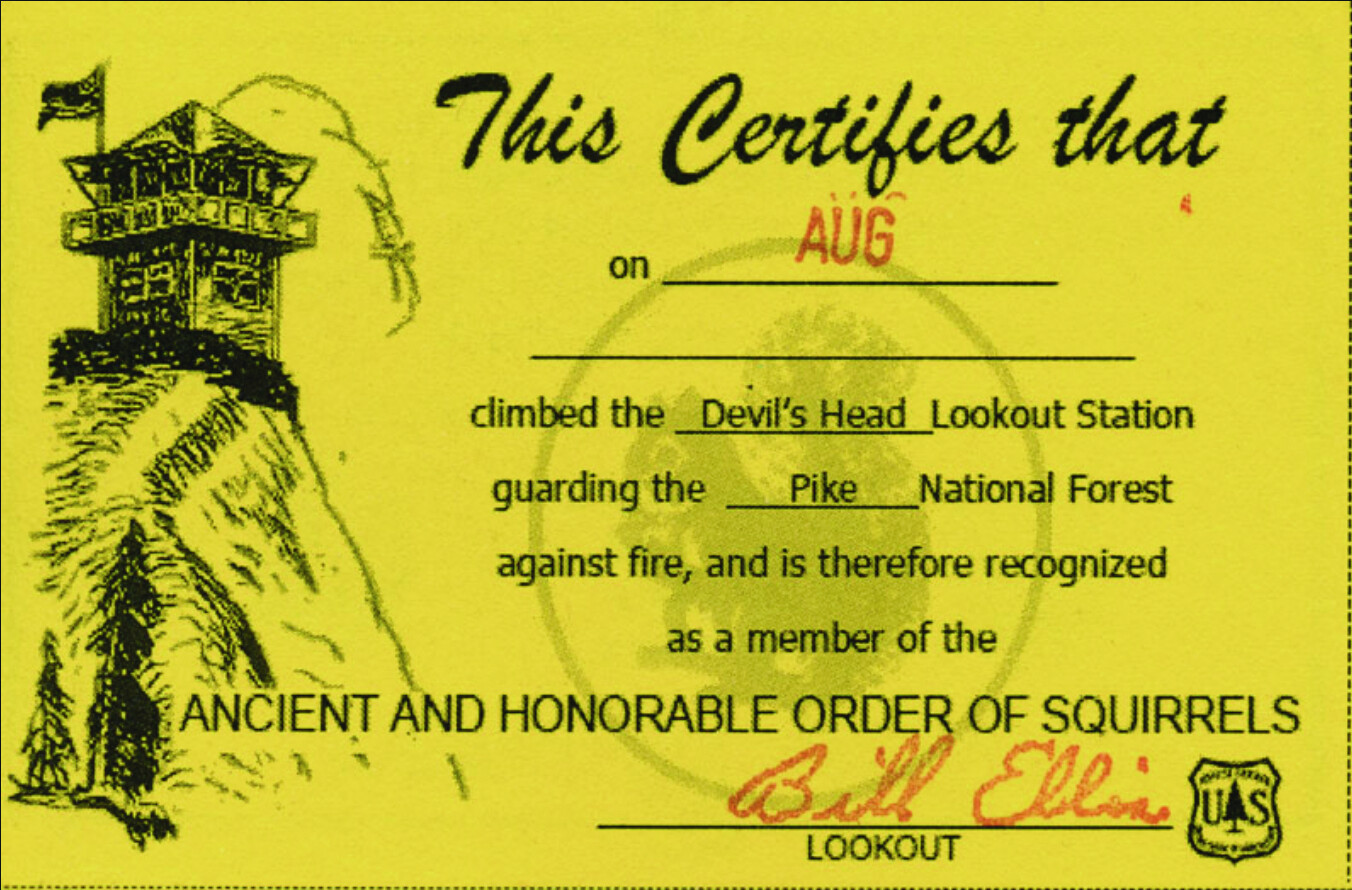
There are 143 metal steps ascending the fire lookout on Devils Head mountain in Pike National Forest, Colorado, and every summer since 1984 visitors who climb them have been greeted by Billy Ellis, the last Forest Service fire spotter in Colorado, and his wife Margaret. At the top, Ellis, now in his mid-80s, often hands them a small card declaring their membership in the Ancient and Honorable Order of Squirrels. The dues: climbing that fire tower.
In the 1930s and 1940s, the U.S. Forest Service was struggling to deal with the unintended effects of America’s boom in logging in the late 1800s and early 1900s—wildfires that burned across the land every summer, in particular across the West. The USFS built scores of lookout towers and soon after that there was a surge in lookout visitors. Here, the Forest Service spied a marketing opportunity.
“Fire is the greatest enemy of the forest,” declared a 1941 pamphlet, and along with fire-prevention educational handouts, the Forest Service started giving “squirrel” cards to visitors. On the back of each card, it said, “The hardest nut the U.S. Forest Service and the State Conservation Departments have to crack is the problem of man-caused forest fires. As a member of the Squirrel Club I volunteer to help crack this nut by using the utmost CARE WITH FIRE IN THE WOODS.”
Three years later, the Forest Service and Ad Council revealed a new spokesanimal, Smokey Bear, and that was that. Nobody could compete with Smokey, and the squirrels never really had a chance. But they live on, in the handful of towers still populated with spotters, and thanks to people like Billy Ellis.

Blackball Season
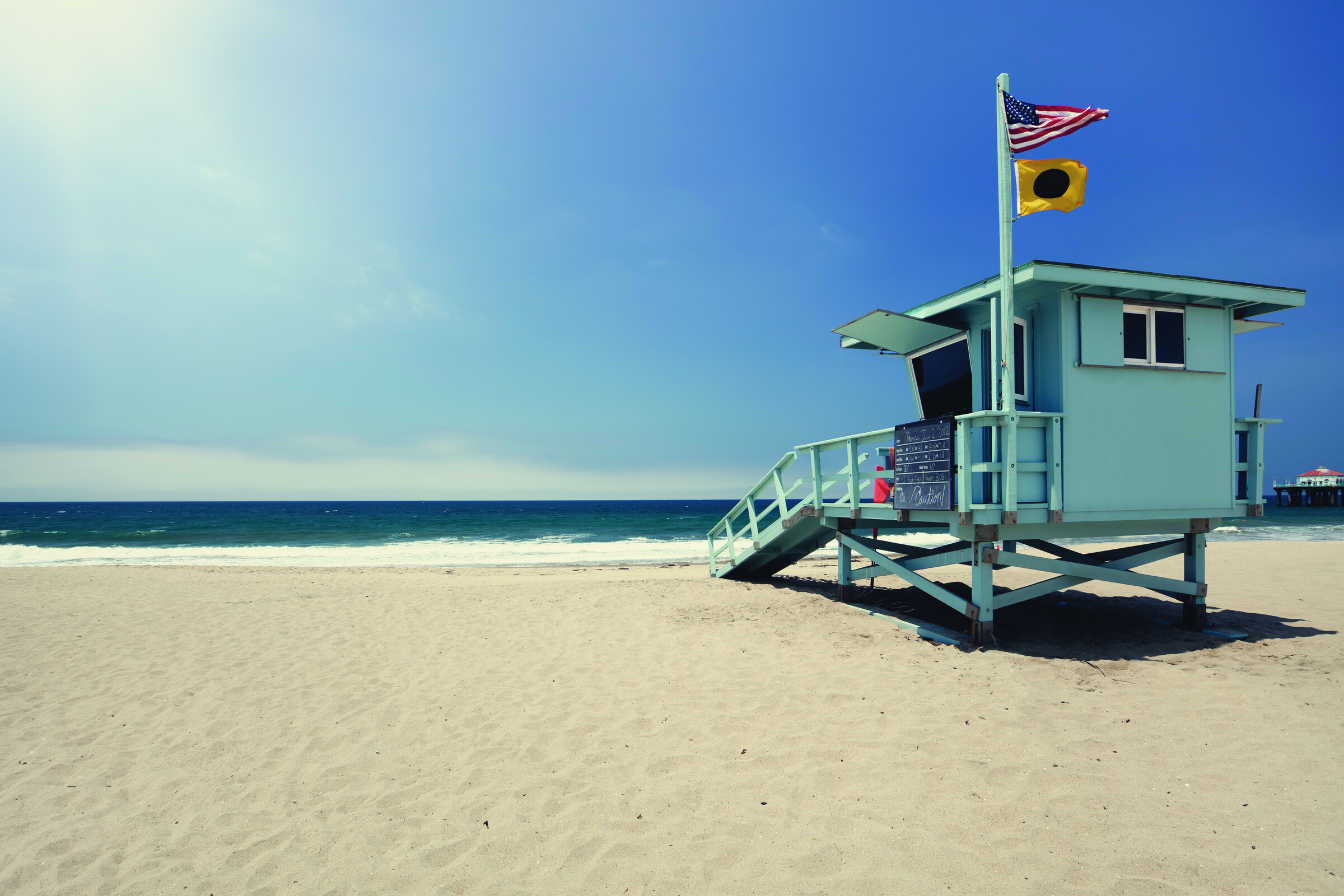
To surfers, a yellow flag with a black circle flying above a lifeguard tower is like the unblinking eye of Sauron: an orb as dark as the most lightless cave, floating on a sallow field of jaundice, signifying a daylong doom—no boards allowed. Never mind that the “blackball” flag segregates hard-board surfers from swimmers, bodysurfers, and boogie boarders, with everyone’s safety in mind. No surfboards allowed.
From late spring through fall, heavily visited beaches around the world use the blackball to prevent accidents and mayhem, though it’s most common in California, where the flag originated and the first bans on surfing were instituted, in the late 1950s and early 1960s. Surf culture was young then, the surf industry was in its infancy, and small elements of troublemakers were giving the sport a bad name. Cities responded with taxes (Newport Beach), surfboard licensing (Laguna Beach), and summer-long bans (widespread).
The term blackball derives from voting systems developed in social clubs and organizations like the Masons, where one opposing vote was enough to kill a proposal. These small, tight-knit orders wanted a way to cast and count ballots without creating tension within the group, so they gave members a supply of black and white balls, one of which would be dropped, under cover of cloth, into a box. One black ball was all it took to shoot an idea down.
Today, surfing has anything but an image problem. It still has the blackball, though, and all it takes is one to mess up your day. Unless you’re a bodysurfer, of course, in which case: game on.
Flashing Love in the Summer Night
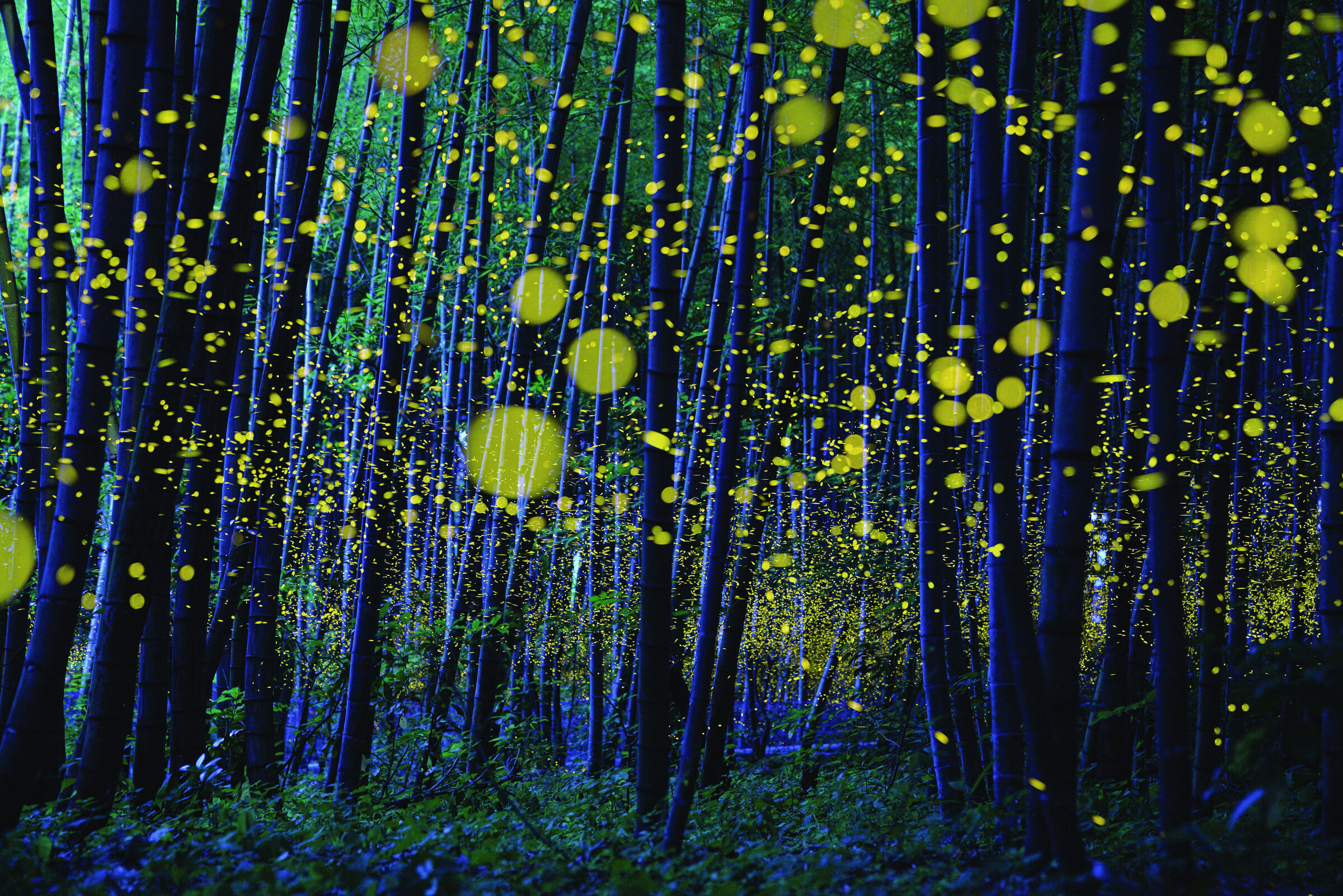
“Here come real stars to fill the upper skies,” wrote Robert Frost in Fireflies in the Garden, “And here on earth come emulating flies…” Emulating flies, indeed: Their golden-yellow luminescence sparkles summer nights like a galaxy fallen to our feet. It’s common knowledge that the flashing of lightning bugs is a mating call, but only recently have entomologists begun to understand how and why the two thousand members of the family Lampyridae differ in their pulses. There are single-pulse bugs and double-pulse bugs and even those who pulse five or six times. Any careful observer can spot the difference, but there’s more going on than just a simple count—the length of each pulse by male fireflies can vary, too, and females can recognize a difference as short 50 milliseconds.
Why does that matter? Because the males are advertising what’s known as their nuptial gift, the Victorian-sounding term for a package of 200-plus proteins that come along with fertilization during mating. There hasn’t been a ton of research on firefly nuptial gifts—the beetles themselves are mum on the subject and, you know, they’re pretty small—but it appears the package contains compounds that help sperm to live longer inside the female reproductive tract and also provide chemical defense against predators. And there’s a linear connection to fertility: The bigger the gift, the more eggs she lays. So, what of the flashing? Longer and more frequent pulses signify bigger nuptial packages, which, if you’re a female looking to start a family, is just what you want. Alas, as the males age, the size of their gifts declines, while the pattern of their pulses remains the same. Typical men. Sorry, lady bugs.
A Few Words About Adventure
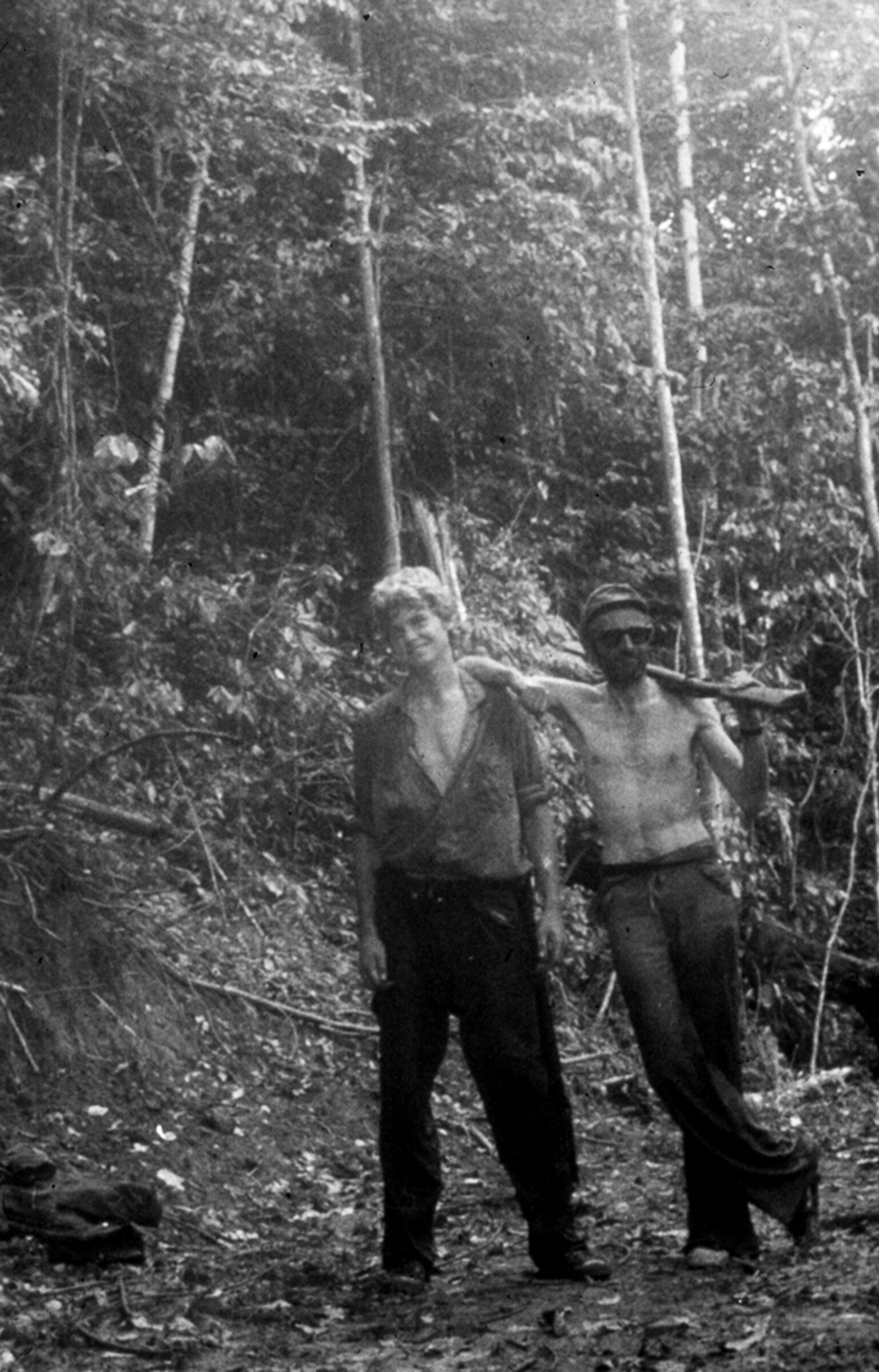
In 1974, Wade Davis, then a college student at Harvard University, now a member of the National Geographic Explorers Council, was sitting in a cafe with his roommate, staring at a giant world map on the wall. The roommate stretched out his arm and it reached to the Arctic. Within days, he left for the north. Davis extended his arm and it landed on South America. He headed south. Writing in the book Explorers Sketchbooks, he described it like this:
I left for South America with a one-way ticket, and no plans. I had just a small backpack of clothes, and two books, George H. Lawrence’s Taxonomy of Vascular Plants, and Walt Whitman’s Leaves of Grass. In the frontispiece of my journal I wrote “risk discomfort for understanding.” At the time I believed that bliss was an objective state that could be achieved simply by opening oneself unabashedly and completely to the world. Both figuratively and literally I drank from every stream, even from tire tracks in the road. Naturally, I was constantly sick, but even that seemed part of the process—malaria and dysentery fevers that grew through the night before breaking with dawn. Every adventure led to another. At one point on a single day’s notice I set out to traverse the Darien Gap. After nearly a month in the swamps and rainforest I became lost for a fortnight without food or shelter. When I finally found my way to safety I stumbled off a small plane in Panama City, drenched in vomit from my fellow passengers, with only the ragged clothes on my back and $3 to my name. I had never felt so alive.