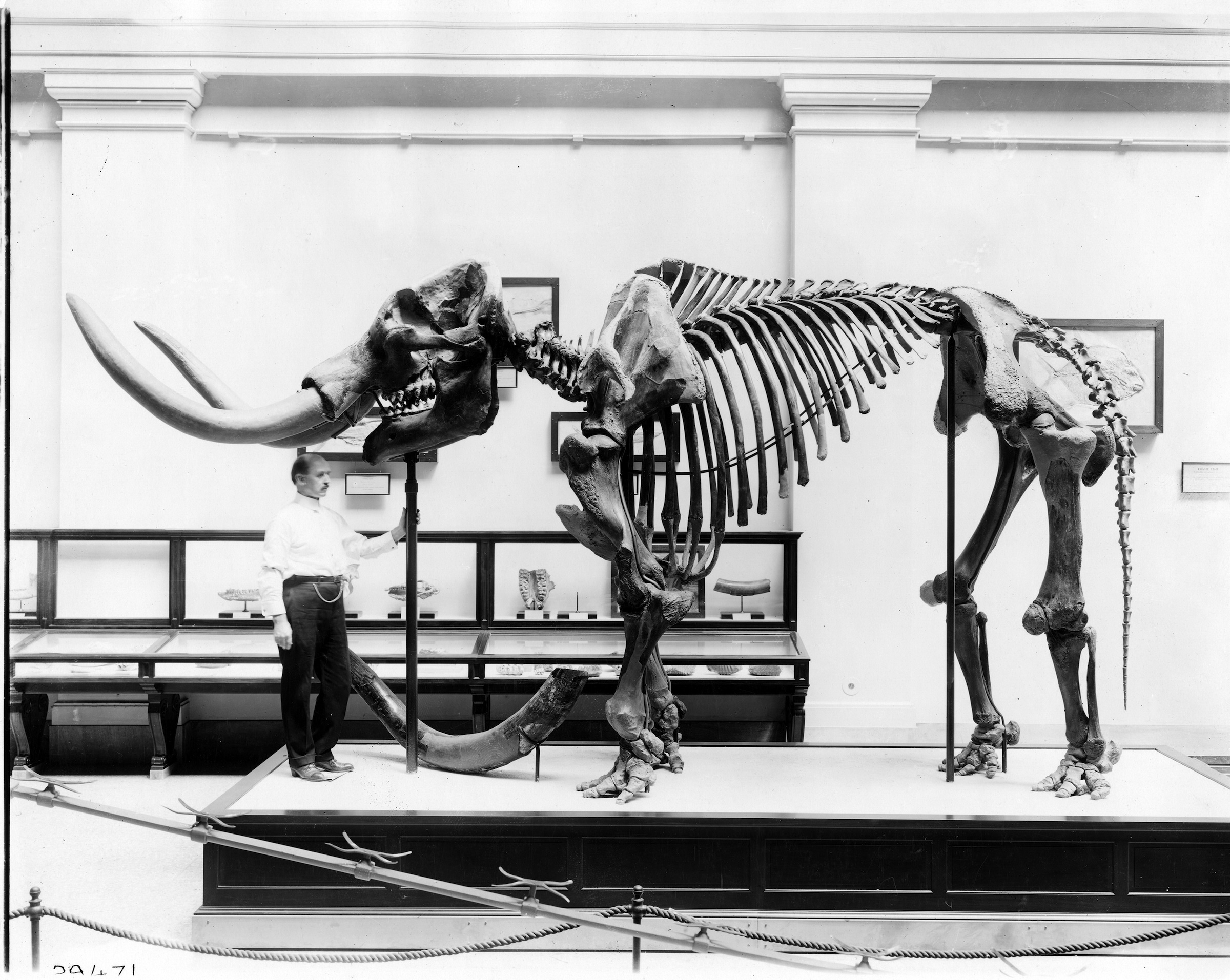
Mammut americanum, Winamac, Indiana, 1941. Photo: Smithsonian
Felling a Very Large Beast
A claim that would rewrite human history raises the question: Why are we so fascinated with archaeology, anyway?
One hundred and thirty thousand years ago, a mastodon died alongside a creek in a broad coastal plain that today lies beneath cement-smothered suburbs in southern San Diego. The jumble of bones this massive, now-extinct creature left behind rested undisturbed for millennia, until 1992, when a freeway construction project exposed them. A paleontologist named Richard Cerutti was called in to lead an excavation of the fossils and he noticed something interesting: The creature’s massive leg bones looked like they’d been broken while still fresh—as if someone hammered away at them trying to get to the marrow inside. Cobbles found near the fossils appeared to be stone tools used for the battering, and the attending scientists became convinced humans broke the bones. When researchers finally analyzed the fossils in 2011, they came back with a jaw-dropping date—the mastodon appeared to have died 130,000 years ago. About 115,000 years before there were supposed to humans anywhere near the Americas.
This is an astounding possibility.
If true, it wouldn’t just rewrite the history books for when people first
3,000 words to go
You’re just getting to the good part.
This story — and 42 issues of them — opens with a subscription.
Either one picks up right where you left off.
Join 7,000+ readers · Independently owned · Since 2008
Already a subscriber? Sign in
Adventure Journal — Print Quarterly
Stories like this, in your hands four times a year.
42 issues. 11 years. Independently owned. Printed on 70lb uncoated paper with a soft-touch cover, solar-powered, and shipped in a brown paper envelope. Free domestic shipping.