Historical Badass

Alexander Von Humboldt

The man who invented nature
Alexander Von Humboldt

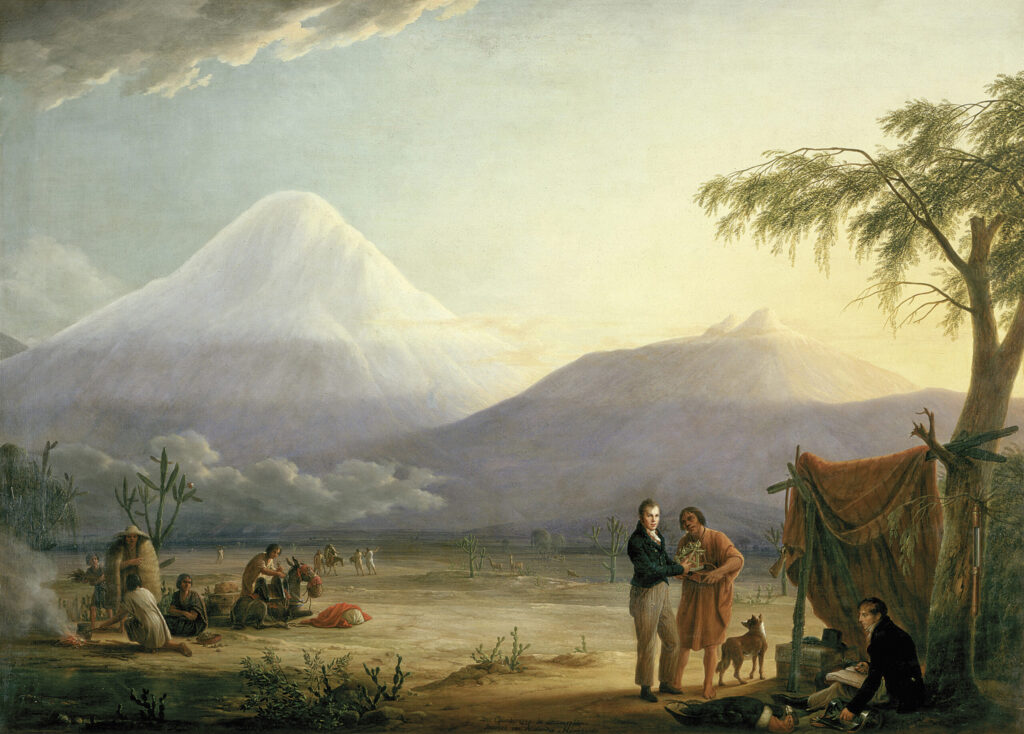
In June 1802, midway through his five-year scientific exploration of Spanish America, Alexander von Humboldt set out to climb Chimborazo, a 20,564-foot volcano in Ecuador’s Cordillera Occidental. At the time it was thought to be the highest mountain in the world, a claim recently thrown back into contention by scientists measuring from the center of the earth, where Chimborazo’s position on the equatorial bulge edges out Everest by about a mile.

Humboldt started up the mountain at the head of a party that soon shrank to four. “The Indians who were accompanying us had left, saying that we were trying to kill them,” he recalled in a letter to his brother. They slogged onward: Humboldt, the French botanist Aimé Bonpland, the young Ecuadorean hidalgo Carlos de Montúfar, and a servant loaded down with instruments. Lacking even the most basic climbing gear, the group continued their ascent on a knife-edged ridge, crawling on all fours in places, their hands torn and bleeding, their boots soaked

1,800 words to go

You’re just getting to the good part.

This story — and 41 issues of them — opens with a subscription.

Either one picks up right where you left off.

Join 7,000+ readers · Independently owned · Since 2008