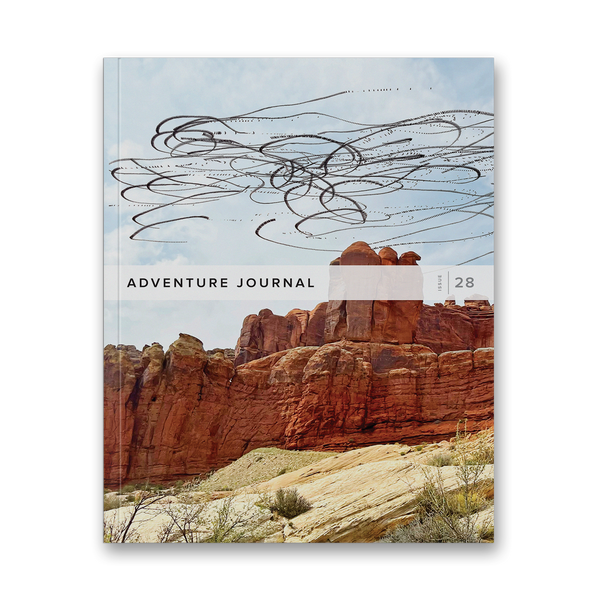
Under new rule, more riding like this section in Canyonlands could be available.
One month from today, the National Park Service will give its park superintendents the right to open their dirt roads to cyclists. By most measures it would seem a small step, but in the conservative, not particularly bike-friendly national park system this might be the most pro-cycling move it’s ever made. It might be huge.
But we’ll see — it’s not a rubber stamp to give knobbies free reign. New regulations published today by the Department of the Interior simply make the process of approving dirt-road bike use a lot easier for park superintendents. In parks with vast networks of goat paths and dirt roads, this likely paves the way for deeper access into the backcountry by mountain bike. And certain parks will likely see a progressive attitude adopted toward bike access — for instance, Big Bend, despite somewhat rocky recent history on allowing more mountain biking, which already has 300 miles of terrain open to bikes and could gain more under this new rule change. Or a park like Canyonlands, too, where there are plenty of dirt roads.
“This new rule gives park superintendents greater flexibility to determine where bikes can be allowed in a park and additional authority to shut areas where cycling is jeopardizing visitors or park resources,” said NPS Director Jonathan Jarvis.
The change doesn’t open the door to the creation of new trails, it simply makes it possible for superintendents to have more liberty to study whether opening existing trails — or sections of existing trails — would make sense.
For instance, because bikes can cover much more ground than folks on foot, opening a trail to bikes 20 miles from a park entrance could be logical, with access via fire road, since foot traffic on such a trail would be relatively light. In the soul-crushing language of bureaucracy, here’s the gist from a section of the 44-page entry in the Federal Register:
[The final rulemaking change puts...] greater emphasis on an individual park planning process that incorporates environmental compliance procedures and input from the public, rather than the special rulemaking process, to decide whether or not bicycle use is appropriate on a trail in a unit of the National Park System.
Environmental coverage made possible in part by support from Patagonia. For information on Patagonia and its environmental efforts, visit www.patagonia.com Photo by Shutterstock.
The Daily Bike: Mountain Bike Enduro World Series Kicks Off
Overlandia: Driving a 1936 Rolls Royce Across India
15 Seconds: Driving Indian Creek, Utah
The Man Who Skied Down Everest Climbs it at 80
National Avalanche Legend Doug Abromeit Passes Away
Smokey Is Fighting Fracking and the Feds Don’t Like It
Prickly, Beloved Mountain Gazette Print Version Shut Down
Historical Badass: Alpinist Alex Lowe
Volunteer Fired at Saguaro National Park for Reporting Graffiti
Sierra Club Joins Lawsuit Against Mountain Bike Park
Driver Busted After Bragging on Twitter About Hitting Cyclist
The Daily Bike: Les Granges du Galibier, Giro d’Italia 2013
15 Seconds: Boiling Clouds
The List: The 10 Things You REALLY Need on a River Trip


{ 5 comments… read them below or add one }
If it is open to cars I thought it was open to bikes.
We’re talking about roads that currently are closed to cars and bikes. Think service roads.
Dirt roads in the National Parks are already open to bikes. And in places like Canyonlands, unfortunately, all too many bikers can’t seem to restrain themselves from diverging onto the trails, slickrock and soil crusts.
What Johnny said…this will simply encourage braiding/social paths/side trails. Not saying I have not taken advantage of such, but it is important to be aware of this issue. Many people will find that parks are not particularly staffed enough to enforce any “no riding on service roads” policy.
I am not sure that when the rubber meets the road, so to speak, that this potential policy will have any impact on existing use.
Isn’t that White Rim Road? (long already open to MTB?)